A Piece of the Action

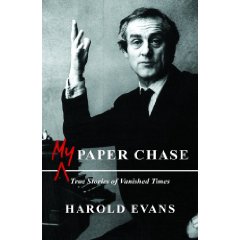
Harold Evans’s autobiography My Paper Chase: True Stories of Vanished Times carries the reader along with the velocity of a reporter on deadline, which of course Evans was for most of his career. As the former editor of the London Sunday Times and The Times of London (along with many other accomplishments on both sides of the Atlantic), reporting the news has been his lifeblood. As a child he met survivors of Dunkirk on the beach at Rhyl in North Wales. Their accounts were at odds with what he read in the newspapers and so started a lifelong interest in the role that journalism played in exposing propaganda and special interests. As a boy from a working class family in Manchester, he had to work hard to finesse the English school system in order to get the college education he knew he would need to become a reporter. 
He began working at newspapers in and around Manchester in the late 1940s, at a time when local newspapers competed fiercely for readership. It’s hard to summon up that time when print was the primary source of news; it was important for a paper to have a distinct  “voice” that would drive circulation. Evans was always looking for the scoop, the crusade, the expose, the local advocacy that would distinguish his newspaper from the rest.
Evans tells terrific stories about those scoops and crusades, but what I enjoyed most is his writing about the reporter’s craft and how rough facts and reportage are translated into print by “subs” (copyeditors in the U.S.). Evans himself admits that he is “addicted to print,” by which he means the actual sight of words on a page. In the front of the book is a full-page graphic called “The Vanished Newspaper Office” a wonderful representation of  how a newspaper used to be written and produced in the days of the linotype machine. He loved the pulse and flow of the newsroom, “…a news hub, a big central arena where people could be seen at work to the same clock and you could feel news rippling across the floor, a place for newspaper shoptalk and gossip, a place where directions could be defined, instructions shouted, enthusiasms raised, arguments concentrated, layouts examined, and disputes resolved by crossing a few feet to another desk.”
There’s something fascinating about that frenetic newsroom culture–and its hard-bitten, eccentric, often boozy participants–that’s why we love movies like The Front Page and Citizen Kane. There are several other memoirs about the newspaper business that capture some of that excitement of hunting down the story. Katherine Graham’s Personal History and Ben Bradlee’s A Good Life: Newspapering and Other Adventures are both about the Washington Post and both cover the story of the Pentagon Papers. Bob Green’s Late Edition: A Love Story is another paean to the joys of newspapering as does Edward Kosner’s It’s News to Me: The Making and Unmaking of an Editor.
Sink or Swim Parenting

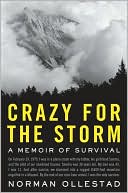
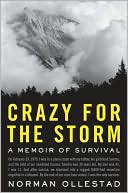
In Norman Ollestad’s riveting memoir Crazy for the Storm: A Memoir of Survival, you’re not sure if  “survival” refers to the plane crash he walked away from, or the fact that he survived childhood at all. I’m sure the ambiguity is intended, since Ollestad’s parents were spectacularly unconcerned about pushing their son into life-threatening situations to toughen him up.
At age 3, he began surfing off the California coast clinging to his father’s back. His father also pushed him early into competitive skiing with training that took them only on double black diamond trails, or to those slopes that were pristine because no one else was crazy enough to ski them. Ollestad idolized his father and feared his accusations of wimpiness when Ollestad was frightened, frustrated, or expressed his own needs.
His mother appeared unfazed by the extreme challenges, unwilling to interfere with her divorced husband’s adventures with Ollestad, and also unconcerned about the sporadic violence her son suffered at the hands of her alcoholic boyfriend. For most of  his boyhood they all lived in a laid-back California beach community, where surfers were stars and the state of the waves was the most important news of the day. It was a world where a conventional childhood was unlikely.
For me, maybe because I’m a parent, this is a memoir about parenting and the way that children accept what they’re handed, at least when they’re young, too young to know how it could be different. Ollestad believes that his father’s regime of toughness saved his life when their small plane crashed in the snowy mountains. That’s a good thing for Ollestad to help preserve the myth of the charismatic father who only had his son’s interests at heart. The Talmud tells us that one of a parent’s 3 most important responsibilities is to teach a child to swim; but there are many ways to teach survival skills. Ollestad alternates chapters about the crash with chapters about his childhood, a good device that keeps the tension ratcheted up. This is an engrossing addition to the already rich genre of father-son memoirs.
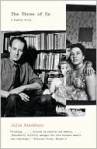
The Three of Us: A Family Story,  by Julia Blackburn looks at frightful family dynamics from a daughter’s point of view. Blackburn’s parents had their own demons and didn’t have a clue how their actions affected their young daughter. Her father, addicted to sodium amytal and alcohol for decades, was a poet, whose non-poetic rages eventually drove her mother away. But as Blackburn says, she wasn’t afraid of her father since he never struck her. It was her mother, an artist, who took in male lodgers for sex and confided in Blackburn like a sister, who did the real damage. In 1966, when one of the lodger-lovers began an affair with the 18-year old Blackburn, it was too much for her mother, who drove her daughter away. Blackburn’s writing is dispassionate, almost clinical.Her words are made all the more effective by illustrations–family pictures that look almost like photos of happy times and her mother’s bleak paintings which reveal the ugly reality under the surface. It’s one of those memoirs that had me studying the author’s picture, trying to see in her face some indication of how she lived through it.

My Favorite Books of 2009

‘Tis the season of best lists, so I’ll chime in with my own. It covers books I read this year, regardless of when they were published. I’ve divided it into fiction and nonfiction and provided publisher and date of publication.

FICTION

Arana, Maria. Cellophane. 2006. (Dial)

Atwood, Margaret. The Year of the Flood. 2009. (Nan A. Talese)

Boyle, T. Coraghessen. The Tortilla Curtain. 1995. (Viking)

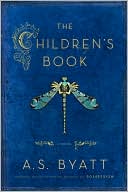
Byatt, A.S. The Children’s Book. 2009. (Knopf)

Carleton, Jetta. Moonflower Vine. 2009 reprint of 1962 title. (HarperPerennial)

Grodstein, Lauren. A Friend of the Family. 2009. (Algonquin Books)

Hoffman, Eva. Appassionata. 2009. (Other Press)

Kline, Christina Baker. Bird in Hand. 2009. (Wm. Morrow)

Livesey, Margot. The House on Fortune Street. 2008. (Harper)

Moore, Lorrie. A Gate at the Stairs. 2009. (Knopf)

Strout, Elizabeth. Olive Kittredge. 2008. (Random)

Petterson, Per. Out Stealing Horses. 2007 (Graywolf)

Robinson, Roxana. Cost. 2008. (Farrar, Straus and Giroux)

Walbert, Kate. A Short History of Women. 2009. (Scribner)

NONFICTION 

Alison, Jane. The Sisters Antipodes. 2009. (Houghton Mifflin Harcourt)

Austin, Paul. Something for the Pain: One Doctor’s Account of Life and Death in the ER. 2008. (W.W. Norton)

Eggers, Dave. Zeitoun. 2009. (McSweeney’s)

Fiennes, William. The Music Room: A Memoir. 2009. (W.W. Norton)

Grann, David. The Lost City of Z: A Tale of Deadly Obsession in the Amazon. 2009. (Doubleday)

Pollan, Michael. The Botany of Desire: A Plant’s Eye View of the World. 2001. (Random House)

Rogers, Douglas. The Last Resort: A Memoir of Zimbabwe. 2009. (Harmony)

Simon, Rachel. Building a Home With My Husband: A Journey Through the Renovation of Love. 2009. (Dutton)

Small, David. Stitches: A Memoir. 2009. (W.W. Norton)

Tamm, Jayanti. Cartwheels in a Sari: A Memoir of Growing Up Cult. 2009. (Harmony)

Umrigar, Thrity. First Darling of the Morning: Selected Memories of an Indian Childhood. 2008 (HarperPerennial)

Warmbrunn, Erika. Where the Pavement Ends: One Woman’s Bicycle Trip Through Mongolia, China & Vietnam. 2001. (Mountaineers Books)

Very English Childhoods

I was snowed in this past weekend–we had an unusual 2 feet of snow–and I was lucky to have several fat novels and memoirs waiting for me. I chose to read A.S. Byatt’s new novel The Children’s Book, which weighs in at 675 pages; it kept me completely absorbed for 3 days. It’s a sprawling historical and family saga, set in England in the period from 1895-1919 and filled with a huge and diverse cast of characters–artists and writers; bankers and anarchists; upper and lower classes; children and adults. 
Byatt does a wonderful job juggling their intersecting lives and tying them together with the fairy tales Olive Wellwood writes for her children and to support her family.  At the beginning, the Wellwoods, their extended family and friends all seem like a warm and welcoming clan, but, like Olive’s fairy tales, things are not what they seem. Some of the characters will break your heart, some will make you angry. Pottery, puppetry, madness, the rights of women, and a devastating war all mix together in this absorbing tale. I sensed echoes of the Bloomsbury group–the shifting relationships and fondness for country house parties with elaborate costumes and playacting.  Byatt, the omniscient narrator, provides a running commentary on the cultural and social changes in this era. 
If you want to know more about this period, I would recommend  The Perfect Summer: England 1911, Just before the Storm by Juliet Nicolson. It’s an engaging romp through social, cultural, and political events in England in a pivotal season.
Byatt’s story exists very much within its time period and it made me think of memoirs I’ve read of English childhoods throughout the twentieth century. Click here for an annotated list of titles.

Big-Hearted Rivers

I saw the film Big River Man yesterday, a documentary about Martin Strel, the fiftyish, overweight, beer-and-whiskey drinking Slovenian who swims the great rivers of the world. Strel has taken on the Mississippi, the Yangtze, and the Amazon, swimming them from end to end in great marathon gulps of about 50-60 miles per day to call attention to environmental issues.  Big River Man is about his Amazon swim, starting near Machu Picchu in Peru and finishing up at Belem, Brazil. In between there’s some beautiful footage of the Amazon jungle and an incredible story. The story is narrated by his son, Borut, his closest companion and chief dogsbody. Borut gets to watch his father push himself to a point of madness and imminent death, knowing that he can’t stop him. It’s intense, often funny, but it left me with a lingering sadness about Strel and the demons that drive him to such extremes.  See it if you can. There’s more about Strel on his website.
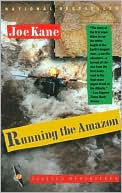
Strel’s feats made me think of other people who have taken on rivers–but they’re usually in boats. There’s Joe Kane, a journalist who joined the first expedition to kayak the Amazon from the source to the sea and wrote about it in Running the Amazon. It’s a terrific adventure story, full of suspense, as they navigate impossible rapids, but it’s also riveting for the interplay of personalities. These folks did not get along in spectacular ways. The book has become a classic in the adventure-memoir genre.
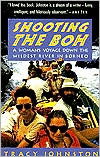
In Shooting the Boh: A Woman’s Voyage Down the Wildest River in Borneo, Tracy Johnston signed on for what was supposed to be a well-scouted trip down the Boh river in Borneo. When she lost her luggage at the very beginning, it was a signal that all would not be as promised. The rapids that the group encountered were far more dangerous than advertised, they were swarmed by sweat bees, suffered from jungle rot, and dealt with other rain forest delights. Johnston faced her worst fears yet managed to be a keen observer of the people and places she saw.

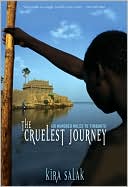
Kira Salak paddled solo 600 miles down the Niger River in Africa, retracing a trip made by the explorer Mungo Park, as she recounts in The Cruelest Journey: Six Hundred Miles to Timbuktu. Parts of the river are just as Park would have seen them two hundred years ago, and Salak coped with some of the same problems:  hippos, tropical storms, dysentery, and campsites in places of doubtful safety. Her account is filled with determination and the exhilaration that comes from testing limits.

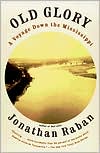
Jonathan Raban, in Old Glory: A Voyage Down the Mississippi, paddled the river’s length in a 16-foot motorboat, exploring the way the river changes and how it shapes the communities on its banks. Raban has written two other books about the boat trips he’s taken: Passage to Juneau: A Sea and its Meanings and Coasting: A Private Voyage, in which he circumnavigates England.

Rosemary Mahoney succumbed to the fascination of the Nile and determined to paddle solo along a 120-mile stretch despite warnings that a lone woman in Egypt could never do such a thing.  She faced major challenges in obtaining a boat, evading police patrols, and avoiding harassment from predatory males. Down the Nile: Alone in a Fisherman’s Skiff  records how she pulled off the journey.

Read On… Goes Down Under

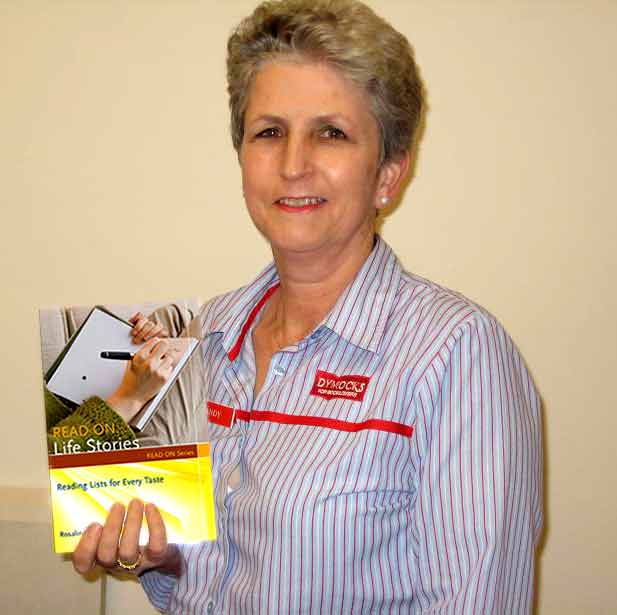
I met Mandy Macky at Book Expo last May at an author breakfast. She’s the franchise owner of Dymocks Bookstore in Adelaide, Australia and she was here with her buying manager Sophie Groom. Over rolls and coffee we talked about the book business in Australia and I told them about my forthcoming book about memoirs and how it included one of my all-time favorite memoirs, A Fortunate Life by A.B. Facey, an Australian classic. Mandy asked me to let her know when my book was published. Much to my delight she ordered it and sent me the picture at left. Mandy writes: My “staff really like the book and I know that it will be an invaluable resource for us all.” Thanks so much, Mandy!

Here’s a list of Australian memoirs–classic and recent.

Standing Fast in Zimbabwe

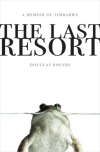
The albino frog on the cover of Douglas Rogers’s book The Last Resort: A Memoir of Zimbabwe is barely keeping his head above water. The same can be said for Rogers’s parents and their friends, who carry on despite constant threats of violence and loss in a country that no longer wants them.
Rogers grew up in Zimbabwe, on various farms his parents owned, but he’s been gone for some time, working as a journalist and travel writer in London and New York. His parents stayed on, living at Drifters, a popular backpackers’ lodge and game farm that they ran successfully for many years. In the current political situation, with the government encouraging blacks to freely appropriate white farmers’ lands, inflation running at thousands of percents daily, and gangs of thugs terrorizing blacks and whites alike, the country is in shambles. It’s clearly unsafe for Ros and Lyn Rogers to remain where they are. It’s also clear that they’re not going to give in–Zimbabwe is their home. Rogers writes about his frequent trips back to Drifters to visit and each time there’s new and fiendish turn in the already-nightmarish situation. The lodge turns into a brothel, then a hangout for illegal diamond dealers; the cottages that used to hold vacationers are now rented to friends who have been dispossessed. Government ministers and spies move into the area with designs on the Rogerses property. Through it all, his parents plan and hope, hatching schemes to carry on and survive. It is, after all, their beautiful home.
Rogers writes about what it was like to grow up in Zimbabwe; he also writes about the current political situation. But the book is is really Rogers’s poignant and funny tribute to his parents and their incredible resilience and optimism, their love of a beautiful place that was once a flourishing community.  The albino frog sits above the coffee pot in his parents’ kitchen, witness to the chaos and a touching symbol of their refusal to be dislodged.
There are many wonderful memoirs written by people who grew up in or spent time in Africa, revealing the incredible diversity of cultures, landscapes, and histories. For an annotated list of titles that I have enjoyed, along with some novels set in Africa, click here.  More about Rogers and his indomitable parents is at www.douglasrogers.org

Weekends at Bellevue

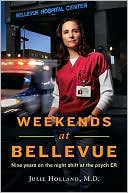
When I was growing up, the name “Bellevue” was shorthand for the hospital that took in the crazies. Reading Julie Holland’s new memoir, Weekends in Bellevue: Nine Years on the Night Shift at the Psych ER I learned that it still has that reputation. It’s the place where the police bring the naked guy who’s barking like a dog in Times Square, along with the bridge jumpers, the violent schizophrenics, and the ones feigning psychosis in order to get a meal and a warm bed. Holland, a psychiatrist, was always drawn to the extreme cases and enjoyed working two fifteen hour shifts each weekend to have the week off with her family. Her cool-girl, tough talking exterior served her well, or so she thought, with patients who were verbally and physically violent until she realized she wasn’t coping with the pain those traits masked. My favorite medical memoirs combine good storytelling with insight about the teller; Holland does both those things well.
I’ve put together a list of additional memoirs by doctors that I think are particularly interesting.

Memoirs for discussion, continued…

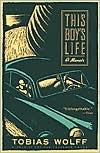
I was delighted to see a post about my book on Book Group Buzz, the Booklist blog, especially since I’ve just been thinking about the qualities that make a memoir appropriate for book discussion groups. For me, it’s the relationship between character and story. If you’ve read This Boy’s Life by Tobias Wolff, you’ll know what I mean. Wolff writes about his teenage years, when he’s trying on identities, giving in to bad impulses, hanging out with the wrong crowd but also dealing with his divorced mother and the series of wildly unsuitable stand-in fathers she lives with. His mother loves him, but she’s clueless about the appropriate way to bring up a child. His real father is a con artist who’s never on the scene. Wolff learns to define himself in opposition to his stepfather, making bad choices along the way, but he always has a dream, a core of himself that’s inviolate. Somehow he believes that despite his wildness, his acting out, he will escape unscathed into a better place; he’s somehow smarter, better, destined for other things. His memoir is far more than the recounting of abuse and bad choices that fuels so many dysfunctional family memoirs. Wolff’s self-awareness, his ability to make us understand how he fought to invent himself,  and the way he uses humor to defuse and describe the most scary and poignant episodes give This Boy’s Life depth and style. It has always intrigued me that Wolff’s next book, Old School, picks up where This Boy’s Life leaves off, but the story continues as fiction. Hmm, now wouldn’t that be interesting for a book group–to read and discuss those books together.
I’ve put together the first of several reading lists of memoirs that I think book groups would enjoy discussing. It’s  .pdf so you can print it off and take it with you.


Memoirs for book discussion groups

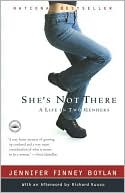
At my book group, one of the best discussions we had was about the memoir She’s Not There: A Life in Two Genders by Jennifer Finney Boylan. We couldn’t stop turning it around, looking at it from various angles. It’s filled with great storytelling and wonderful set pieces about family and friends that are funny and emotionally piercing. Boylan is writing about her sexuality, the way she knew from age 3 that she was trapped in the wrong body, but while there’s pain and struggle to her story, it’s a joyous, eye-opening book.
There are so many memoirs that are ideal for book group discussion. I just did a Q&A session on this topic for the blog at ReadingGroupGuides.com with Shannon McKenna Schmidt, so you’ll find title suggestions there. There’s an icon in my book, Read On…Life Stories to identify memoirs that are good for book groups. I’ll come back to this topic in the next few weeks with more titles of memoirs that are great for discussion.