Teens Need to Read Memoirs, Too

I read so many wonderful memoirs over the course of writing Read On…Life Stories, and a number of times I thought about how much I would have enjoyed many of these books as a teenager, how the stories of real lives are comforting, inspiring, enlightening, informational and often deeply satisfying because we know they’re written by the people who lived the experience. They’re heartfelt. I’ve posted a list of some memoirs that I think teens would enjoy–try them out on teens you know!

I’m not denying/ignoring the power of fiction here, which we all know, is undeniable. Certainly fiction can provide some of the most powerful reading experiences of our lives, but a good memoir is never a dry recounting of facts, a great memoir is literature, like fiction. A good memoir has a beginning, full of exposition and character development, a middle, often with climactic events, and an ending that ties up what came before, often with a satisfying resolution. If you think about Angela’s Ashes—that certainly is a piece of literature with all those qualities. We know that in fiction a writer has used memory, experience, and imagination, all the tools of creative writing. What we sometimes forget, is that memoirs are also shaped by these same literary devices.

There’s also a lot to be said for reading the right book at the right time. The teen years are a time when we need to read the right books–we need guidance from wherever we can get it! Memoirs and autobiographies, stories of real lives by the people who lived them—and survived to tell the tale—can help teens navigate a formative period when they need a bridge to the adult world. Many memoirs are coming of age stories that specifically deal with those years where teens are trying on identities and trying to understand what seems like the secret language of the adult world.

There’s often raw emotion and vulnerability in memoirs, like the music teens listen to and the poetry they write. There’s also the fascination of reading about how the world looks through someone else’s eyes, from inside someone else’s skin.

National Reading Group Program in New York

NRGM2I was lucky to be one of the moderators for this program last Wednesday–I love meeting authors and hearing them talk about their writing. In this case, since I had read and enjoyed all 5 books, I had a list of questions that I was burning to ask. The program was sponsored by the New York Chapter of the Women’s National Book Association, a professional networking and educational organization for people in all aspects of the book industry. The event was held at the Mint Theater, a small venue–only 100 seats–so everyone was close enough to feel that the authors were speaking directly to them. We had a wonderful discussion about writing and the writer’s life.
I’ve listed the authors and described their books below. I’ve linked the authors’ names to their websites or their publishers’ information.

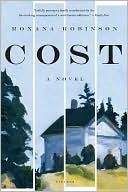
Roxana Robinson, Cost (Picador, 2009) A 2009 Great Group Reads Selection
CostA family gathered at their Maine vacation home is torn apart by the news of one son’s heroin addiction. Robinson is a master at using shifting viewpoints to reveal old resentments and hostilities as family members cope with Jack’s destructive behavior. Robinson’s depiction of the addict, Jack, is scarily realistic; I’m sure it comes extremely close to the truth of the experience. I was especially taken by the way Robinson described the emotions of the younger brother, a mix of guilt, responsibility, and anger, but all the characters step off the page as we listen in to their thoughts.

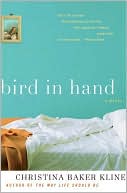
Christina Baker Kline, Bird in Hand (Morrow, 2009)
Driving home from her friend Claire’s book launch party, Alison is involved in a car accident. She’s not at fault, exactly, but a child is killed and her feelings of guilt are overwhelming. Bird in HandThis incident sets in motion the breakup of her marriage and Claire’s. The two couples, longtime friends, have a complicated emotional history, dating back to graduate school. The structure of the novel is fascinating: each chapter is written from the point of view of one of the four characters, but interspersed are short chapters which unwind in reverse chronological order, tracing the history of the relationships. The effect is like opening box after revealing box as we learn more about each character; at the conclusion they stand revealed.

Eva Hoffman, Appassionata (Other Press, 2009) A 2009 Great Group Reads Selection
AppassionataIsabel, a concert pianist, has an affair with a mysterious Chechnyan who is either a freedom fighter or a terrorist, depending on your point of view. The affair with Anzor forces her to re-examine her beliefs about passion, politics, and art. In gorgeous prose, Hoffman contemplates the violence of our age and issues of guilt and responsibility. I found echoes of Henry James’s Portrait of a Lady in this novel (note the name of the protagonist) and heard echoes of Yeats’s Second Coming. This would be a great book for group discussion! I loved Eva Hoffman’s memoir, Lost in Translation, about her feelings of loss when she moved from Poland to Canada as a young teen. It’s a great coming of age memoir.

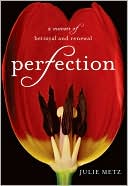
Julie Metz, Perfection: A Memoir of Betrayal and Renewal (Voice, 2009) A 2009 Great Group Reads SelectionPerfection
When Metz’s husband dies unexpectedly, she uncovers a trail of infidelities, exposing years of manipulation and self-deception. Her anger and obsession to uncover the truth make this an unusually candid and courageous memoir. Metz really bares her soul–and her anger–in this account in a way not often found in memoirs about marriage.

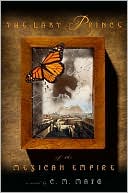
C.M. Mayo, The Last Prince of the Mexican Empire (Unbridled Books, 2009)
Last PrinceMayo has taken a little-known incident in the history of Mexico and fleshed out the characters and the times in a broad, lush style. We may remember learning in school about the Emperor Maximilian and his wife Carlota, the (ultimately) mad Empress, who ruled Mexico for a short while after France’s misguided invasion. It all seemed a rather bizarre historical footnote; what we didn’t know is that Maximilian and Carlota were given a young Mexican child whom they designated as their heir. The story of this child, Agustin, and how his parents allowed him to be taken away by the royal couple, is quite a remarkable story. Mayo, a longtime resident of Mexico, researched this story for years, in archives in North and South America.

Good books for book groups–Great Group Reads Selections

If you haven’t heard about Great Group Reads, well, it’s the first year that this list of books selected for their discussability is making an appearance. I volunteered to coordinate the group of readers for this new National ggr_logoReading Group Month initiative. It was hectic but fun! We were ten readers from around the country; we all read a group of books, discussed them virtually and chose nine titles, fiction and nonfiction. The list is below, but here’s a link to the Great Group Reads website with links to information about each book, including links to discussion guides.

Appassionata by Eva Hoffman

The Unit by Ninni Holmqvist

The Secret Diaries of Charlotte Bronte by Syrie James

The House on Fortune Street by Margot Livesey

Perfection: A Memoir of Betrayal and Renewal by Julie Metz

While I’m Falling by Laura Moriarty

Out Stealing Horses by Per Petterson

Cost by Roxana Robinson

Burnt Shadows by Kamila Shamsie

Nat’l Reading Group Month Celebration

National Reading Group Month is sponsored by the Women’s National Book Association, a networking and educational group founded in New York City in 1917 by a group of women booksellers when the all-male Bookseller’s League chose to remain all-male. There are chapters (not just for women) in NRGM_Logocities around the country. All the chapters hold programs in October and I am delighted to be co-moderating the New York program. If you live in the NY metro area, you can come and hear a great panel of authors at 6pm on Wed. Oct. 21st at the Mint Theater in midtown.

The authors are: Eva Hoffman (Appassionata), Christina Baker Kline (Bird in Hand), C.M. Mayo (The Last Prince of the Mexican Empire), Julie Metz (Perfection: A Memoir of Betrayal and Renewal), and Roxana Robinson (Cost). They will speak about their books and answer questions from the moderators and the audience.

If you’re not a WNBA member, the cost is $20 (students, $10), which includes a tote bag of books and other goodies from publishers, great refreshments, and the opportunity to buy the authors’ books, get them signed, and chat. It’s a lovely, informal evening. If you’d like to attend, please RSVP to programs@wnba-nyc.org.

A Good Month to Read

October is National Reading Group Month, a good time to think about books as tools for making connections among people. My mother was in a reading group for 40 years–a dozen women who met once a month in each other’s houses. They had a paid leader at the beginning, courtesy of a foundation that was promoting discussion groups in the 1930s, but they continued for many years without her, reading great books, eating (of course), and becoming fast friends. Book discussion groups do create community, there’s no doubt about that. They teach us to consider–even honor–other people’s points of view, something we could use more of in this world, right now.

I’m a member of a small nonfiction reading group–you can see our reading list. We struggle with how to pick our books, always wanting to find a great book that will promote meaningful discussion. But it turns out that even if the book doesn’t change our lives, the act of discussing it might. Getting together in someone’s kitchen or dining room and exchanging ideas, accommodating our very different approaches to literature, and our diverse life experiences turns out to be quite satisfying. Maybe it’s the particular group members, but I suspect it’s also the exchange of  ideas, even on the evenings when we don’t feel inspired or brilliant. Is that your experience too?

Out of India

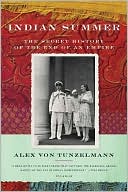
Indian SummerThe last book my book group read was Indian Summer: The Secret History of the End of an Empire. I had suggested it based on my own fascination with India. I started reading fiction about India when I was in high school, with Kamala Markandaya’s Nectar in a Sieve, a revelatory novel for me, a Brooklyn teenager living in a fairly sheltered world. I was hooked and have been reading about India  ever since, especially the great novels that deal with the British colonial period and its aftermath. I’ve created a reading list of some of my favorite fiction and nonfiction titles. 

So I was especially pleased to re-read Indian Summer for the book group and have a chance to discuss it with friends. Von Tunzelman tells the story of how the British government extricated itself from India after World War II, when the expense of maintaining the Raj was too great. Lord Louis “Dickie” Mountbatten, appointed as Viceroy in 1947, was charged with supervising the handover. Mountbatten may not have been the ideal politician for the job, which needed a statesman of Solomonic proportions. India was not a unified country where a transfer of power could occur with the lowering of one flag and the hoisting of another. Partition–the creation of East Pakistan and West Pakistan as Muslim states–which occurred simultaneously with Indian independence, was the signal for an onslaught of horrendous violence between Hindus and Muslims that still poisons relations between the two countries. Did the British haste to settle such a volatile situation create this permanent state of tension between India and Pakistan or was there no way to avoid a fiasco?

Von Tunzelman concentrates on the major characters in this political drama. On the English side, the social climbing, often clueless Mountbatten and his indefatigable wife Edwina, on the other, three very different charismatic Indian statesmen: Gandhi, Nehru, and Jinnah. So much of what happened is due to the confluence of these five people, who were caught up in a firestorm of political and religious fervor. Von Tunzelman, by blending the factual with the personal, enlivens the historical record and provides insight into the power of individuals to shape history. Indian Summer also reveals the seeds of current problems in this area, Afghanistan included. There’s plenty of food for thought here and a good story, too.

Half Memoir

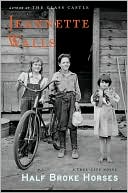
Jeannette Walls, author of the very popular memoir The Glass Castle  has a new book coming out next month titled Half Broke Horses: A True-Life Novel.  I held off reading The Glass Castle for a long time–my philosophy of half broke horsesreading is that if everyone else is reading a book, then I don’t have to. I’m a reader who feels most comfortable with midlist books; I look for the little gems that get the good reviews but not the marketing dollars, the books that are often staples of the backlist. I eventually did read The Glass Castle and enjoyed it, even though it’s hard to feel happy or even comfortable while reading about such a miserable childhood.  

I picked up an advance reader’s edition of her new book at Book Expo last spring and just finished it, with mixed feelings. Walls originally wanted to write about her mother, but her grandmother’s story proved too compelling and it’s her story that Walls tells instead. Lily Casey Smith was quite a feisty, determined woman, someone who took on whatever came her way and fought it at least to a draw. She lived on ranches in Texas and Arizona, working alongside her father to break horses, trekked 500 miles alone at age 15 to her first teaching  job, and when she saw an airplane, she jumped in for a flying lesson. She and her husband suffered the violent ups and downs that go with ranching which meant she was always looking for a way to make money, even if it wasn’t strictly legal.

Half-Broke Horses is a rousing story, well told, but it’s not quite a novel, not quite a biography. With Walls’s subtitle, “a true-life novel,” she’s trying to shoehorn it into both categories, fiction and nonfiction. She’s scrupulous about saying that she’s dramatized her  grandmother’s life based on her own childhood memories and the family stories she heard from her mother and other relatives. The book is written in the first person and I imagine that when Walls sat down to write, Lily Casey Smith just appeared on the page in her own voice. Maybe Walls felt that this was the only way to tell the story.

So, although you’ll remember Lily for a long time and enjoy reading about southwestern ranch life in the early 20th century, Half Broke Horses has very little narrative arc. It ends abruptly with the marriage of Walls’s mother Rosemary rather than with the resolution of a plot.  Not every life has a novel-worthy plot, although we all do have stories. If you read Half Broke Horses and feel cheated because you haven’t read either a novel or a biography, well, I told you so.

Two Cooks: Julie and Julia

I saw the movie Julie and Julia yesterday–a fun thing to do on a rainy afternoon with friends. Meryl Streep’s performance as Julia Child was quite remarkable and the Paris portions of the movie were magical. For those who are unaware–the movie is based on two books: Julia Child’s memoir My Life in France and Julie Powell’s memoir Julie and Julia about her experiences cooking through Child’s Mastering the Art of French Cooking in one year.

So the question is, can reading about food substitute for the real thing? I’ve updated my list of cooks’ and foodies’ memoirs–find out for yourself.

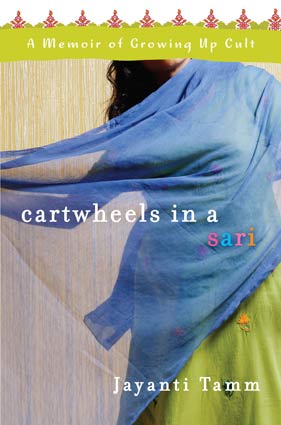
Cartwheels in a Sari: A Memoir of Growing Up Cult by Jayanti Tamm

Jayanti Tamm starts her wonderful memoir with the story about how her parents, total strangers to each other, were married by Guru Sri Chinmoy after a meditation session, agreeing to dedicate their lives to his cult. Tamm, the child of their supposedly celibate Cartwheelsunion, was hailed as the Chosen One, with a coveted relationship with the charismatic Guru. She grew up wearing saris, spending her nights at meditation sessions, competing for Guru’s attention and signs of his approval. Guru controlled the lives of his followers, distorted family relationships, chased after fame for himself, and eagerly sought celebrity converts. As a teenager, Tamm saw the hypocrisy in Guru’s world and desperately tried to separate herself from the cult. With the hard-won insights of a survivor, Tamm tells how she endured the ostracism of friends and family and the anguish of losing the only safe haven she had ever known. This is an unusual and very absorbing coming-of-age memoir.

I heard Jayanti speak about Cartwheels in a Sari, read the book, and was delighted when she agreed to an interview. You can find out more about Jayanti and her memoir at www.jayantitamm.com

Roz: What made you decide to write a memoir at this point in your life? Was it a difficult decision?

Jayanti: When I was banished from the cult in 1995, all of my energies were focused on trying to create a life in the ‘outside’ world. Attending college, forming relationships, and discovering the realms that had been forbidden to me, took all of my energies. I was also too angry and confused to be able to clearly analyze everything that I had gone through. In fact it wasn’t until after my parents were banished from the cult in 2002, that, for the first time, we were able to speak openly about our experiences. Prior to that, as ‘good disciples,’ we had always kept our concerns and feelings about the cult to ourselves. Therefore once my parents left, I felt as though it was safe to explore my past. I began therapy, which was extremely helpful. During that period, I realized that if I was ever going to be able to fully understand and process all that had happened to me, I needed to examine my past. As writing was always something that I had enjoyed—I’ve been keeping diaries since I was five—it seemed that writing my story would be a way to better understand my own life, and to possibly be able to help other people by sharing my story.

Roz: You recall some very personal memories in your book. Would it have been easier for you to fictionalize the names and places and write it as a novel?

Jayanti: I believe the best memoirs are the ones that honestly and openly head directly into the areas that are deemed as the most shameful, personal, and hurtful. It is exactly there, riskily venturing into those hidden and secret memories, that the writer finds the most important lessons.

For me, writing my memoir was part of my own healing, so I knew that trying to hide my truth through fiction would not serve my true purpose.

Roz: Guru discouraged normal family relationships: the most important relationship for you, your parents, and your brother was the one each had with Guru. Once you left Guru, how hard was it for you to understand what a good relationship between parent and child could be?

Jayanti: Since I never had a ‘normal’ family—the guru was the central figure in our lives, the one who made all our decisions—my family never partook in traditional family activities—weddings, birthday parties, and barbeques. It is only now that I have my own family—I’m married and have a baby daughter—that I am learning and testing out what it means to have a family on my own terms.

Roz: How did your parents react when you told them you were going to write a memoir? Have there been any unexpected consequences?

Jayanti: Because my parents had left the cult in 2002, when I told them that I was writing a memoir about growing up in the cult, they were incredibly supportive. Both my mother and father were gracious and generous about sharing their stories with me for my book. I’m so grateful for all of their support. Without their input, it would have been impossible to have fully told the story of my family.

However, not everyone in my family has been supportive. My brother and my aunt are still devout disciples, and they have not spoken to me in years. When the news leaked out that I was writing a memoir, my brother sent my mother an angry email, chastising her for supporting my efforts.

Roz: Has writing your memoir changed your view of that time of your life? Did you learn something new about yourself from writing your memoir?

Jayanti: Writing Cartwheels in a Sari has been a life altering experience. I have gained so much by the entire process, and I feel so humbled to have had my story published and to have received wide-spread critical acclaim. From both writing and later in speaking about my memoir, I have gained an understanding about just how complicated the subject matter truly is—there are no easy answers.

Often at book events, people ask me why a person would decide to join a cult? And why did the leader have such a powerful hold over the followers? In the memoir I explore those questions, and though I offer a series of possible explanations, there isn’t a single, clear answer. Much of what occurs in the memoir has to do with the amorphous issue of faith—when one possesses faith one views the world a certain way, and when that faith suddenly disappears, the world is permanently altered forever, even though, in a sense, nothing has actually changed. It’s truly fascinating.

Roz: Have your childhood experiences as a member of a cult made you skeptical about organized religion in general?

Jayanti: Currently, I have no desire to follow any type of religion. I’m extremely skeptical about placing my trust in any leader or teachings. I’m very happy enjoying the secular world and being my own teacher.

Roz: What was the one area of your memoir that you wondered if you should put in? Are you glad you did?

Jayanti: Every episode that I initially hesitated to use, that filled me with a sense of apprehension, even dread, was what I understood had to be included. A memoir is the last place to withhold and censor truth from the reader. It has to be open and honest, bearing all that has occurred.

Roz: Do you feel that your memoir is strictly faithful to what happened? Does it matter if memoir is not strictly faithful to what happened? Could it ever be?

Jayanti: Memoirs, of course, allow for the author to reconstruct events by splicing memories with emotions. The memoir presents the truth through a personal filter. My memoir is the truth as it happened to me and my family.

Roz: What are you reading now?

Jayanti: Because my new project is a novel, for inspiration, I am delving into novels by talented and prolific storytellers. I just finished reading Anne Tyler’s Digging to America, and now I’m reading Nick Hornby’s About a Boy.

Making Connections

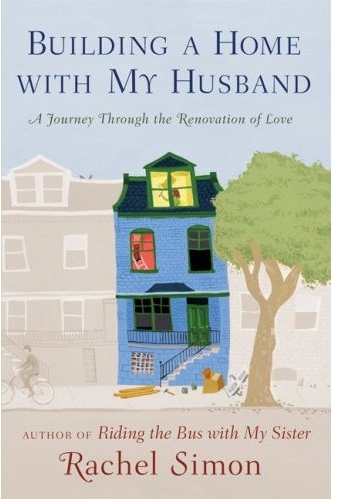
I just finished reading the memoir Bubuildinghome-largeilding a Home With My Husband: A Journey Through the Renovation of Love by Rachel Simon. Don’t be put off by the title, which doesn’t even hint at the emotional richness of Simon’s story about renovating an old row house in Wilmington, Delaware. I had read her earlier memoir, Riding the Bus With My Sister: A True Life Journey and knew that she’s someone for whom personal relationships hold the key to life’s joys and heartbreak. Simon can’t walk down the street without making a friend. She’s genuinely interested in everyone’s life but most particularly in scrutinizing her own and telling us the universal truths that she unearths. Her husband Hal calls her “The Girl From Epiphanema” and no nickname could be more apt.

As she and Hal renovate their house, every phase recalls a part of her life. When she feels a sense of emptiness as the house is stripped and rooms gutted, she searches through her fractured childhood and difficult relationship with her mother and siblings to make a coherent narrative of their present relationships. When she and Hal move out during the renovations, Simon remembers the dislocating moves of her childhood after her parents’ divorce and her move out of Hal’s apartment years ago.  As the rooms of their house are stripped, gutted, and put back together, she examines her connections with parents, siblings, and friends. Simon learns lessons–and has epiphanies–at every step of the way. Her insights will have you thinking instantly about your own relationships and how forgiveness, love, patience, tolerance, and commitment will make them better.

If it seems strange to you that the renovation process is a catalyst for such a profound trip into Simon’s psyche, you only need to recall that in dreams, a house represents our inner selves, our thoughts about how we feel about where we are in our lives.  Dismantling and repairing a house has the same effect on Simon–it’s a waking dream that we share with her. There’s more about Simon on her website.