Great Reads for book groups, 2010

For the second year, I had the fun of chairing the committee that reads and selects the titles for this list. We look for books that will be good for discussion, midlist books that may not get the big bucks for publicity. Since we read many titles pre-pub, we sometimes include a title or two that does turn out to be a bestseller. We’ll live with that! The list is mainly fiction, but this year and last year we picked one memoir. Here’s a link to the Great Group Reads website with all the titles, annotations, and links to reviews and publishers’ websites. The readers come from around the country and we have a great virtual conversation about the books.

Great Group Reads is part of National Reading Group Month, which is sponsored by the Women’s National Book Association, a great group that’s been around since 1917, when a group of women–ticked off by the all-male Bookseller’s League’s no-women members policy–formed their own group. Still going strong after 93 years, there are chapters in cities around the country. The NYC chapter is the founding chapter, and we host networking and educational events for our members, a great group of authors, editors, agents, publishers, librarians, and others involved in the book world.

All the WNBA chapters host events for National Reading Group Month (October); I’m moderating an author panel for the NYC chapter’s event on October 19th at Greenlight Bookstore in Brooklyn, starting at 6:30 pm. Come if you can–the event is free and there will be donations of books from publishers, refreshments, and book signings afterwards. Since Brooklyn now seems to be author central, we have a great group of authors: Susan Henderson, Sheri Holman, Rick Moody, Jackson Taylor, and Emily St. John Mandel. There’s a little more detail on the WNBA website events page; I’ll have more information as it gets closer.

Brooklyn Book Festival this Sunday

If you’re anywhere near Brooklyn this weekend, the Brooklyn Book Festival promises to be a treat for readers and writers. I’ll be there at the Women’s National Book Association booth, but I hope to get away to hear my favorite authors at some of the talks, panel discussions, and readings scheduled throughout the day. 
Some of the highlights of the day, for me: Myla Goldberg talking about her new novel The False Friend; Helen Simonson, author of Major Pettigrew’s Last Stand (one of my favorites from the past year); Gary Shteyngart (I haven’t read Super Sad True Love Story yet); Adam Haslett (Union Atlantic). The Festival runs from 10-6, rain or shine.

While you’re waiting…

..for your public library’s copy of Roseanne Cash’s new memoir Composed: A Memoir, you might want to try some of these older, also wonderful memoirs by singers,  songwriters, and other folks in the music business that are probably waiting for you on your library’s shelves.  
Cash: The Autobiography by Johnny Cash and Patrick Carr. A good companion to Roseanne’s memoir, Cash writes about the ups and downs of a very public life.
Sing Me Back Home: Love, Death, and Country Music by Dana Jennings. Growing up in hardscrabble, rural New Hampshire, born to parents in their late teens, country music  was the background to Jennings’ life.
Society’s Child: My Autobiography by Janis Ian. Success at 15, with the song that matches her book’s title, brought Ian into a world of fame that was too hot for her to handle. She endured years of off-stage hardships, all told here in a heartfelt and very honest memoir.
Love is a Mix Tape: Life and Loss, One Song at a Time by Rob Sheffield. The story of Rob and Renee and their shared passion for the music of the 1990s. Sheffield’s a funny, insightful, and affecting writer; he captures the role that music plays at a certain time in our lives. Sheffield has a new memoir, Talking to Girls About Duran Duran: One Young Man’s Quest for True Love and a Cooler Haircut . I’m still on the reserve list for that one.
Extreme: My Autobiography by Sharon Osbourne with Penelope Dening. Osbourne tells a raunchy insider’s tale, filled with the violence and music of marriage to shock rocker Ozzy Osbourne.
Clapton: The Autobiography by Eric Clapton. A major player in the music of the 1960s and 1970s, Clapton tells the story of those sex, drug and alcohol-filled years, when he jammed with everyone, from George Harrison to Muddy Waters.
Loretta Lynn: Coal Miner’s Daughter by Loretta Lynn and George Vecsey. One of the most influential country music singers, Lynn’s memoir tells how she grew up in Appalachia, was married at age 13 and a grandmother at age 29. Her affecting story was made into a movie of the same name.
And if you haven’t read Nick Hornby’s High Fidelity, you’ve missed one of the loopiest, most enjoyable novels about music.

A great conference in Seattle

I just returned from the Association of Jewish Libraries Convention at the Seattle Fairmont Hotel after 3 wonderful, stimulating days re-connecting with friends and talking about Jewish books. I’ve been to numerous AJL conventions and there’s always a point, usually after the first lunch, when I begin to think about how sorry I’ll be when it’s over.

I gave a talk called The Other Side of the Coin: Jewish Memoirs for Fiction Readers, linking up fiction genres with memoirs, i.e., if you like historical fiction, try these memoirs. I talked about wonderful memoirs like Adam Hochschild’s Half the Way Home, Ida Cook’s Safe Passage, Philip Roth’s Patrimony, and Lucette Lagnado’s The Man in the White Sharkskin Suit. You can see and print out the bibliography here.

I’ll write more about what I learned at the conference and from traveling around the Olympic Peninsula shortly.

Oh, that unreliable narrator!

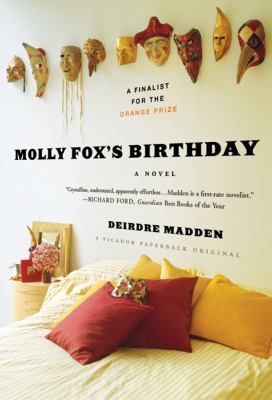
I just finished Molly Fox’s Birthday by Deirdre Madden and I may just have to read it again. I need to see if what I now know about the characters changes how I feel about them from the start. The story is told by the unnamed narrator who is staying in Molly Fox’s Dublin apartment while Molly is in New York. She tells the story of her friendship with Molly, an acclaimed stage actress, and the friends they’ve had in common while observing how Molly’s flat reflects its owner. The narrator is a successful playwright, a close observer, a writer who finds material in small, unusual incidents.

Over the course of one day her thoughts range over their friendship with its ups and downs and other (mostly male) friends and family members, particularly Andrew, a well-known art critic. Molly is something of an enigma to the narrator despite the fact that they are very close. But the narrator is something of an enigma to the reader, and we realize that these two women may be incapable of closeness because of the professions they’ve chosen. Or, because of their detachment, have the professions chosen them? Madden–and the narrator–dole out information in bits and pieces; maddeningly, tantalizingly, we don’t always have the information we need to assess what we’re being told. There’s no plot to speak of–the plot’s in our heads as we try to understand the characters and their motivations. It’s a very absorbing “take” on an old plot device. In addition, there’s great food for thought about the craft of acting and, by extension, the creation of character in writing. 

When it comes to memoirs, the unreliable narrator is the ground under our feet. If we used the same narrative device–following our thoughts and actions for a day–how much would we choose to tell when we sat down that night to write it up? What would we embellish, omit, analyze, forget, or misinterpret? If we imposed a narrative structure to make it interesting, would that edge it over into fiction? Maybe that’s the fascination of memoirs–the different ways that writers use their material. I’m thinking about this in the light of several memoirs I’ve just read. More to come…

Matchmakers

On Tuesday, April 27th, I’ll be speaking about how memoirs can be paired with fiction, to encourage librarians to suggest memoirs to their genre fiction readers. For example, if you enjoy reading fiction about different cultures, you might like  Marie Arana’s American Chica or Rory Stewart’s The Places in Between. Our handout lists the fiction-memoir matches we’ve suggested; it’s posted here.
The occasion is the New Jersey Library Association conference. Yvonne Selander, from Somerset County Library is the fiction expert. We hope our audience enjoys it as much as we enjoyed putting the talk together. I’m planning to add other lists that match memoirs and fiction in the next few weeks, so check back to see what’s new by clicking the Memoirs tab above.

Immortal Cells

The Immortal Life of Henrietta Lacks has received lots of wonderful press and will probably appear on many “best” lists at the end of the year. There’s a good reason: it’s quite special; an engaging human interest story that combines personal history and medical history. Henrietta Lacks, in case you haven’t picked up on the press for Rebecca Skloot’s book, was an African-American woman living in the Baltimore area, whose cancerous cells, by their amazing replicative abilities, helped drive advances in medical science via cell research.

All of our lives are better because of Henrietta Lacks’s unknowing contribution. That’s the problem; neither Lacks nor her family were aware that she was donating her cells. it wasn’t until 20 years after her death that her daughter discovered–by accident–that her mother was famous as the HeLa culture, found in labs all over the world, a source of profit for the companies that manufactured it, and the subject of conferences and controversies.

Skloot makes all of the science accessible, introducing us to the scientists she met during her research and their conflicted relationship with HeLa. Beyond the science, she tells the story of the Lacks family and their struggle to understand and come to terms with the appropriation of Henrietta’s cells. In addition, Skloot tells us how she got the story, overcoming the resistance of the Lacks family to talk to yet another intrusive white person about Henrietta. The combination of science, family history, and Skloot’s personal involvement works on all levels. It’s a wonderful tribute to a woman who’s been anonymous for far too long.

The heart of the story is the issues it deals with: medical research ethics, racism, cancer, and poverty. Skloot makes these isues personal and compelling. There was no informed consent in the early 1950s, when Henrietta’s cancerous cells were appropriated by a researcher. Skloot writes about the debate over the ownership of human tissue; despite the myriad of forms we sign in doctors’ offices and hospitals, you may be surprised with what she reveals.

I would be remiss if I didn’t mention that Rebecca Skloot is the daughter of another wonderful writer: Floyd Skloot. I particularly recommend In the Shadow of Memory, a wonderful memoir–in-essays about illness (his own). Skloot is one of the most elegant, graceful writers I know.

Explosions

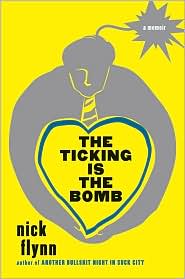
Some of the most compelling memoirs don’t follow the rules–I’m thinking of Nick Flynn’s The Ticking is the Bomb, which I read in one great gulp yesterday. Flynn’s narrative may be episodic, but he leads you straight to the heart of his life and the things that make him tick–and burn.

While Flynn is waiting for his first child to be born, the photos of torture committed at  Abu Ghraib prison are released. The book explores the coexistence of these two events, which define the heaven and hell of human behavior. His daughter Lulu brings redemptive love into his life, a fresh start, a chance for a stable family life to follow from his own shattering history. The Abu Ghraib photos, with their mockery of human interaction bring out a white-hot passion in Flynn. He goes to Istanbul with a group of lawyers and artists who interview Abu Ghraib survivors and collect their testimonies. 

In this riveting memoir, we do learn about Flynn’s childhood, his struggles with drugs, alcohol, and relationships, but those facts are not the point, or, they’re only part of the point. Flynn’s short chapters fly off the page at the reader, forcing us to make connections between the ordinary and the unthinkable.

There are several other unusually good episodic memoirs that I’ve recently read and enjoyed:
Jennifer Brice. Unlearning to Fly University of Nebraska Press, 2007.
Michael Chabon. Manhood for Amateurs: The Pleasures and Regrets of a Husband, Father, and Son. Harper, 2009
Michael Greenberg.  Beg, Borrow, Steal: A Writer’s Life. Other Press, 2009.
Floyd Skloot. In the Shadow of Memory. Bison Books, 2004.

A great Booklist review for my book…

Last Friday I was delighted to learn that the March 1st issue of Booklist has a review of my book Read On…Life Stories.  To avoid bragging, I’ll just say that the review definitely made my day. Here it is:

“Who sits around and reads a bibliography? Unlikely as it seems, pretty much anyone who picks up this entry in the Read On . . . series. For all those who enjoy reading memoirs, the 450 cogent annotations in this collection offer a wealth of options. The book is divided into five sections by defining characteristic—“Character,” “Story,” “Setting,” “Language,” and “Mood”—and more specific subsections further narrow the type of memoir. Categories include “Passage to Adulthood: Coming-of-Age Memoirs,” “Dishing: Stories from the Kitchen,” and “Taking It on Faith: Spiritual Journeys.” The recommended authors range from the absolutely classic (Mark Twain) to the contemporary (Augusten Burroughs), and all are annotated in stylish, attention-grabbing prose that could sell pretty much any book. Like others in the series, this is a readers’-advisory title that could be handed off to patrons to browse on their own—if you can get it away from the librarian. With both a detailed table of contents and an excellent index, this is a must-have tool for public libraries.” Ann Welton

More Memoir Quotes

I’ve noticed that many people who come to A Reader’s Place look at the quotes about memoir, so I’ve added several more. Here’s a link to the page.

I began collecting memoir quotes several years ago when I came across Jill Ker Conway’s comment “Why is autobiography the most popular form of fiction for modern readers?” (It appears in her book When Memory Speaks: Reflections on Autobiography.) I was delighted that in a few words she nailed the appeal of the memoir. If you haven’t read her own memoir The Road From Coorain, grab it–it’s one of the great coming of age memoirs. It begins with her childhood on a sheep ranch in the Australian outback and later move to Sydney, but it’s really about the intellectual and emotional coming of age of a remarkable woman.