A Sense of Place

Yesterday I spoke at the New Jersey Library Association annual conference about audiobooks with a strong sense of “place.” The talk was called “Around the World in Audiobooks.” I love to listen to books and I keep my little Sansa Clip full of books and podcasts. I have an adapter for my car so I’m always ready to listen to the next chapter. I’ve posted my handout with the complete list of titles here. Feel free to print it out and enjoy!

Book with a strong sense of place or a vivid setting are great for audio–that narrator’s voice in your ear creates a whole world that no one else can hear and it becomes a place you can escape to.  It’s the best kind of armchair travel: someone else has planned the itinerary, made the packing decisions, and gone through the security scanner for you.

In preparing for the talk I wanted a diverse group of titles, so I listened to audiobooks that I normally would have bypassed. Much to my surprise I was riveted by Matterhorn (Karl Marlantes), The Brutal Telling (Louise Penny), Agincourt (Bernard Cornwell), and Shanghai Girls (Lisa See) because of the combination of compelling story and vivid, insightful narration.

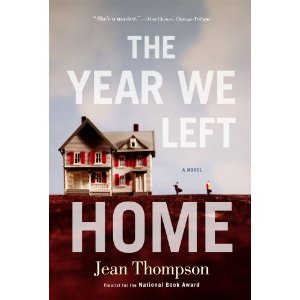
The Year We Left Home

I was having lunch with my cousin Jane last week and we were talking about the kinds of books we like to read and we both agreed that we don’t need closure in a novel, that in fact, we prefer ambiguous endings. Life goes on and there’s rarely closure and it’s satisfying to find those qualities in a novel. I think that’s why for me, reading mysteries is like eating candy (not a good habit). When you’re done reading (or chewing), the thrill is gone and you need another one to stoke your addiction.

My most recent favorite novel with an ambiguous ending is The Year We Left Home by Jean Thompson, coming out in May. Thompson follows a Midwestern family for 30 years, particularly the children who come of age in the early 1970s. Thompson’s descriptions of people and situations are fabulous: a disliked brother-in-law is “an undigested lump” in the family. The chapters are like punchy short stories, filled with character, incident, and the economic and social changes that reverberated in the lives of farming families in the Midwest.

Nothing in these characters’ lives can be predicted, but everything feels just right. At the end, there’s sadness, redemption, and some new beginnings, leaving us with lives we recognize as our own.

Moms

Last Friday, Jan 14th, Shelf Awareness reviewed the new book Battle Hymn of the Tiger Mother by Amy Chua and called it one of the growing genre of “momoirs,” memoirs about motherhood. It made me think about the other side–memoirs written about mothers, also a huge genre. Mothers loom large in our lives, so I began to think about what titles I would put on a short list of compelling mother-focused memoirs. These are older titles that bear reading in any year:
Rick Bragg’s All Over But the Shoutin’
Vivian Gornick’s Fierce Attachments
James McBride’s The Color of Water: A Black Man’s Tribute to His White Mother
Jackie Lyden’s Daughter of the Queen of Sheba
John McGahern’s All Will Be Well
Terry Ryan’s The Prize Winner of Defiance, Ohio
Mary Gordon’s Circling My Mother

My Top 20 Faves from 2010

Everyone’s been posting “best” lists so here’s mine, but it’s a little different than most. It’s not my take on the best books published in 2010. It’s  a list of some of the most memorable books of fiction and nonfiction I read this past year, no matter what year they were published. There are so many others, but I feel it would be overwhelming to list any more than this. So here they are, alphabetically by author, grouped into fiction and nonfiction. Forgive me for not ranking them, but they’re so diverse it just wasn’t impossible.

FICTION

Bender, Aimee. The Particular Sadness of Lemon Cake. Doubleday, 2010, 293p. A heartbreaker of a story told by a young girl who suffers from exquisite sensitivity to the emotions of the people around her. It’s haunting and lovely. This is on the Great Group Reads list for 2010.

Boyden, Joseph. Three Day Road. Penguin Canada, 2006, 400p.
Thanks to Katherine Johnson at NoveList for directing my attention to this remarkable novel about two Native Americans who enlist in the Canadian army in World War II. Spare and very affecting.

Gwin, Minrose. The Queen of Palmyra. Harper Perennial, 2010, 432p.
I’m so sorry this came out hard on the heels of Stockett’s The Help. I liked that one, but I liked The Queen of Palmyra even more. It’s set in the summer of 1963, in a town in the Deep South, where racial prejudice rules the lives of black and white like a nasty, pervasive drug. This is also on the Great Group Reads list for 2010.

Daniel, Susanna. Stiltsville. Harper, 2010, 310p.
When Frances Ellerby  goes to Miami for a wedding, she makes a best friend, Marse, and falls in love with Dennis DuVal, whose family owns a wonderful beach house on stilts in Biscayne Bay. No plot to speak of, except life itself with all the subtle and seismic changes that come from marriage, motherhood, and friendship. An author to watch.

Jones, Sadie. Small Wars. Knopf, 2009, 352p.
Hal Treherne, a young British soldier and his wife Clara are stationed in Cyprus in 1956 as part of the British occupying force. As the terrorist campaign escalates, Hal finds that his responsibility to quell the violence puts him in untenable moral situations while Clara feels the effect on their marriage and young daughters.

Lamott, Anne. Imperfect Birds. Riverhead Books, 2010, 278p.
Lamott’s a great, insightful prose stylist and this dissection of the life of a family in Marin County, CA is a stunner, a painful account of high school senior Rosie, drug addicted and unmoored and how her parents are unable–or unwilling–to push through the layers of lies and deceit that are dragging her down.

Moody, Rick. Four Fingers of Death. Little, Brown, 2010, 725p.
The story is loosely based on the 1950s scifi flick The Crawling Hand, but Moody turns it into a serio-comic dystopian tour de force. It starts with a voyage to Mars that goes horribly wrong; back in the U.S. we are treated to an outrageous vision of our future. You’ll love it—or not, but you won’t be indifferent.

Shteyngart, Gary. Super Sad True Love Story. Random House, 2010, 334p.
This almost indescribable sad and hilarious novel tells the story of 39-year old Lenny Abramov and his doomed love for Eunice Park. Lenny and Eunice live in some not-so-distant future USA where books are considered smelly artifacts and a constant stream of data from a device that you wear around your neck sends your rankings to everyone you pass on the street. Just read it.

Soli, Tatjana. The Lotus Eaters. St. Martin’s Press, 2010, 384p.
Soli recreates the moral quagmire that was the Vietnam War from the perspective of a group of photojournalists caught up in trying to convey the horrors to the folks back home. Unfortunately the concerns about war reporting that she raises are still quite relevant. This is on the Great Group Reads list for 2010.

Toibin, Colm. Brooklyn. Scribner, 2009, 262p.
Toibin tells this haunting story from the point of view of a young Irish woman, and it’s a triumph of character creation that we are completely inside Eilis’s head, seeing, hearing, and feeling what she does. Eilis leaves her village to come to Brooklyn in the early 1950s in hopes that she’ll have more opportunities here. Loneliness and inexperience combine to change her life. See my review.

Trollope, Anthony. The Way We Live Now. Orig. published 1875, many editions.
I read one of Trollope’s Barchester Towers novels a few years ago, but it just didn’t grab me. This is brilliant, with a cast of characters from all social classes, satire that’s still timely, and a plot that barrels along propelled precisely by the foibles and pretensions of the characters. It was the first book I read on my nook and I was totally absorbed. I’ll eventually get to the TV movie as I work through my Netflix queue, but I’m glad I read it first.

NON-FICTION

Chabon, Michael. Manhood for Amateurs: the Pleasures and Regrets of a Husband, Father, and Son. Harper, 2009, 320p.
I listened to Chabon read this collection of memoir-essays and was charmed by his voice, candor, and scintillating prose.

Flynn, Nick. The Ticking is the Bomb: A Memoir. W.W. Norton, 2010, 240p.
Riveting and raw, Flynn manages to combine some unusual topics. See my review.

Kennedy, Edward. True Compass. Twelve, 2009, 544p.
I listened to Kennedy’s memoir, written shortly before his death in 2009, and loved hearing his stories about growing up as the youngest brother, idolizing his older, charismatic brothers Joe, Jack, and Bobby. The portion about the 1960s is riveting; Kennedy’s recounting of his family’s losses in this decade is painful to hear but it also recalled for me the incredible energy of this time and our certainly that we were on the cusp of momentous change–in politics, personal relationships, and culture.

Pan, Philip. Out of Mao’s Shadow: the Struggle for the Soul of a New China. Simon & Schuster, 2008, 448p.
Pan personalizes issues of human and civil rights in China by telling the stories of people who have defied the government. My book group read it and loved it.

Skloot, Henrietta. The Immortal Life of Henrietta Lacks. Crown, 2010. 369p.
There’s hardly a “best” list that doesn’t include Skloot’s book and deservedly so. It has everything for a compelling read. See my review.

Property Values

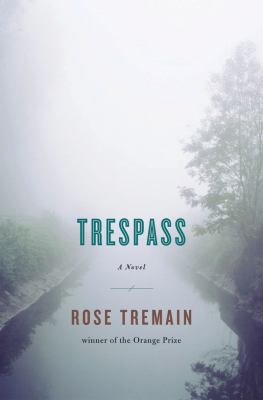
Rose Tremain’s 2010 novel Trespass is a dark story about two pairs of brothers and sisters with convoluted relationships and how property further entangles them in old quarrels and sorrows, with disastrous results. It’s also a tale of outsiders and insiders, as is often the case with novels set in France. (If you haven’t read Diane Johnson’s elegant, satirical novels Le Mariage, Le Divorce, and L’Affaire, now would be a good time.)

Trespass opens when a young girl, wandering away from a class trip, discovers a crime; Tremain uses this event to tell story of the roiling emotions that have led to this point. Anthony Verey, once a wealthy, celebrated British antiques dealer, decides that living near his cherished sister Veronica will cure his depression and give him a fresh start. Veronica lives in Provence with her lover, Kitty, who hates Anthony. He sets off to find the perfect house, one that will be an elegant setting for his “beloveds,” a few perfect treasures from his shop. Anthony’s quest made me think of David Sedaris’s comment about “the rejuvenating power of real estate.” (It appears in  Dress Your Family in Corduroy and Denim.) But lest you think that there’s humor in Tremain’s book, I’ll remind you right away that this is a dark story, filled with the awful baggage the characters bring from childhood.

Anthony is enchanted by Mas Lunel, an old stone house owned by Aramon Lunel, a dissipated, alcoholic wretch, who has relegated his sister Audrun to a makeshift cottage on the edge of the property. The rifts in their relationship are seismic and Mas Lunel looms as a symbol of all that went wrong. Anthony’s narcissistic interest in Mas Lunel as a canvas for his life sets in motion a chain of events with fatal consequences.

This bare outline of the story doesn’t reveal how Tremain’s damaged characters come alive on the page, with all their hopes and sorrows. I read an earlier novel, The Way I Found Her, several years ago and always meant to read more of her novels. Now I will.

Below I’ve put together a short list of novels and memoirs about houses and how they affect family relationships. It’s a common dream that the place we live in will change our lives. Anyone who reads the articles in the Sunday NY Times Real Estate section sees that weekly.

Novels:
Barker, Pat. Another World
Forster, E.M. Howard’s End
Lively, Penelope. Family Album
Mawer, Simon. The Glass Room
Memoirs:
Bechdel, Alison. Fun Home: A Family Tragicomic
Boylan, Jennifer Finney. I’m Looking Through You: Growing Up Haunted
Fiennes, William. The Music Room: A Memoir

National Reading Group Month

I was at a program yesterday at Piscataway Public Library celebrating National Reading Group Month where I spoke about reading books that deal with issues–social, political, religious–challenging book groups to (maybe) read out of their comfort zone. I’ve attached the bibliography, Something to Talk About! so you can print it off.

I forgot to mention one title that my reading group enjoyed: Justice: What’s the Right Thing to Do? by Michael J. Sandel. Each chapter reviews the work of a different philosopher–Bentham, Mill, Kant, Rawls, Aristotle, and others–and uses their philosophies to examine current social, economic, and political issues. I think a group could have a great time focusing on a few chapters. My book group found it very interesting. There’s also material from Sandel’s Harvard course on the web that provides additional discussion points.

Penelope Lively

Family Album by Penelope Lively
Lively has been one of my favorite authors through the years; she never disappoints me with her stories of the emotional turmoil  at the heart of her characters’ relationships. The family in question here is the Harpers, 6 children, two parents, and the au pair who stays on after the children are grown. Their large Edwardian house, Allersmead, is meant to be the gracious center of a warm and loving family, but harbors a shocking secret and painful heartaches. Lively shifts the point of view from one character to another and we get to know them all quite well. There’s no plot to speak of, just the rubbing together of a set of complex personalities,  which is quite engrossing enough.

Going Home

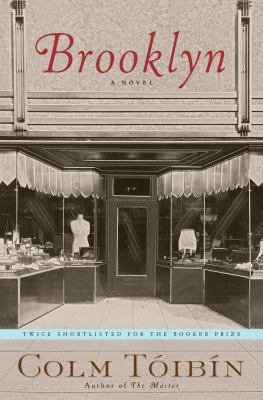
Brooklyn by Colm Toibin.
I started listening to this novel a while ago but at that time I wasn’t able  to slow myself down to its leisurely pace; I returned to it last month and found it full of rewards. Toibin writes about Eilis Lacey, a young girl who has the chance to leave her native Ireland in the early 1950s for Brooklyn and better prospects.  We see the world through Eilis’s eyes, her confusion and how she feels rootless and lonely in Brooklyn, torn from the familiar patterns of Enniscorthy, where she understood how to behave and what was expected of her.  Intelligent, but naive and unmoored, she makes an unexpected decision, and when she is called back to Ireland, she has to come to terms with the consequences of what she’s done. It’s a lovely, character-driven story, evoking a particular place and time but mainly allowing us to see the world through someone else’s eyes. I became so involved with Eilis’s thoughts that there was a point where I had to put the novel down for a day, worried for her and apprehensive about her future. A novel that can do that, well, it’s pretty special.

I grew up in Brooklyn, as did my parents, and I have a fondness for the novels and memoirs that recall the borough’s neighborhoods. Here are a few:
Snow in August by Pete Hamill, a gem of a story about the unlikely friendship between a young Irish Catholic boy and a Jewish Holocaust survivor in a Brooklyn neighborhood filled with violence and lost hopes.
In Case We’re Separated by Alice Mattison. Wm Morrow, 2005. Thirteen very affecting linked stories about several generations of the Kaplowitz family in 1950s Brooklyn: as they connect and spill apart throught the years, we learn of the secret loves, hopes, and despairs. Mattison uses the repeated imagery of six ordinary objects, echoing the poetic form of the sestina.
Now and Then: From Coney Island to Here by Joseph Heller. Knopf, 1998. In this nostalgic and very evocative memoir, Heller, author of Catch-22, recalls growing up in a bustling, thrumming Coney Island at a time when it was filled with immigrants, hustlers, strivers, and a very observant boy and his mother.
Motherless Brooklyn by Jonathan Lethem. Doubleday, 1999. Lionel Essrog, orphan and Tourette’s sufferer, recounts his efforts to solve a murder, in this tour de force of storytelling and language.
Sweet and Low: A Family Story by Rich Cohen. Farrar, Straus and Giroux, 2006. A hilarous look at the rather dysfunctional family that created the familiar sugar substitute.
No list of books about Brooklyn would be complete without including titles about Brooklyn’s two icons:
The Boys of Summer by Roger Kahn. Harper & Row, 1972. This classic of sportswriting, perenially in print, is Kahn’s inspiring tribute to the fabled team of his youth, ending with the 1955 season.
The Great Bridge: The Epic Story of the Building of the Brooklyn Bridge by David McCullough. This weighty book is filled with the drama and tragedy of the Roeblings, father and son, both brilliant engineers who gave their lives to build the Bridge. McCullough also explains in great detail how the Bridge was constructed and the risks to the workers toiling in the dangerous caissons.
And then there’s that great trio of short fiction and nonfiction about Brooklyn, published by Akashic Press: Brooklyn Noir, Brooklyn Noir 2: The Classics, and Brooklyn Noir 3: Nothing But the Truth.

What I’m reading now: My Hollywood by Mona Simpson

More memoir quotes

Many people find this site when they’re searching for quotes about memoir and autobiography, so I’ve added several more of my favorites. I’ll continue to add them to the quotes page as I find them, so feel free to check back periodically and see what’s new.

Summer reading

I been reading like mad since August 1, done with several required-reading projects and enjoying the chance to read serendipitously. I always have a folder filled with clipped reviews and handwritten notes about must-read books, reminders of favorite authors that I want to read more of, and recommendations from friends and colleagues. I’ve also been listening to audiobooks on my tiny MP3 player when I walk in the early morning, in my car through a nifty cassette player adapter, or when doing mindless work around the kitchen. As always, books remind me of other books–fiction crosses over to nonfiction and I remember books read years ago.

I’ll post about the most memorable books I read and the books they recalled, starting with…

The Debba by Avner Mandelman. (July, 2010)
Mandelman’s a terrific writer–tough-minded and good at creating tension and the expectation of violence. I discovered Mandelman several years ago when I was on the first Sophie Brody Medal selection committee and we chose his short story collection Talking with the Enemy for the prize. The first story in that collection was a perfect  thriller,  a little gem, and I was hooked. This new novel is also a thriller, and a mystery too, filled with twists and turns, enigmatic characters, and overlaid with the powerful myth of a shape-changing creature–the Debba–a hyena who can rise up and walk like a man. The novel is set in Israel, told in the first person by David Starkman, who returns from self-imposed exile in Canada to investigate his father’s brutal murder. Nothing is quite what it seems: art and politics mix in strange and wonderful ways, an old love is revived, and the mystery of the Debba’s identity is dangled before the reader until the end. Of course the story also concerns itself with the contradictions and paradoxes of Israeli history and politics–all in all a very satisfying and thought-provoking tale.

In The Debba, David stages a play written years earlier by his father, an incendiary play that is catastrophic for the people involved. It made me think about another novel where art (in this case music) and politics mix in incendiary ways–Appassionata, by Eva Hoffman, about a musician who gets caught up with a man who either a terrorist or a freedom fighter and the effect of their affair on her life. It’s another excellent and thought-provoking story.

What I’m reading now: Freedom by Jonathan Franzen and listening to The Wrong Mother by Sophie Hannah