The Books Overhead, part 2

Now for the books that are hanging around on my nightstand,  waiting on various coffee tables, and a few of the books on a particular shelf that just might as well be labeled “dream on, O foolish reader.” Library books, too, that need to be read in two weeks.

The Swerve: How the World Became Modern by Stephen Greenblatt. I’ve been reading this slowly; I’m now thinking I’ll go back to the beginning and take notes as I read it. I studied Greek and Roman history, literature, and art in college and I savor any opportunity to revisit those subjects. Often, when I go to the Metropolitan Museum I walk through the beautifully renovated Greek and Roman galleries. I still remember when the Greek vases were in the dusty basement, case after case of treasures. The Swerve is about the re-discovery of De Rerum NaturaOn the Nature of Things–the great philosophical and scientific work by the Roman Epicurean poet  Lucretius from the first century BC.  De Rerum Natura was Lucretius’s effort to make sense of the physical world, to prove that all things operate according to natural laws, not dependent on religion.  Manuscript hunters in the fifteenth century visited scriptoria in monasteries to find the classical works that were buried there, lost or swept aside when the Christian Church tried to wipe out all vestiges of ancient religion and philosophy. The copying and translation of De Rerum Natura had a remarkable effect, according to Greenblatt, inspiring artists, writers, philosophers, and scientists and creating the remarkable flowering we know as the  Renaissance. Greenblatt meanders through the story, filling us in on all kinds of history and philosophy; a great read. I also enjoyed his earlier book Will in the World: How Shakespeare Became Shakespeare, about how the complicated political and social changes in Shakespeare’s times affected the man and his plays.

The Grief of Others by Leah Hager Cohen. I was immediately drawn into this story of how grief and past mistakes can derail a happy family.  John and Ricky Ryrie’s third child died shortly after a premature birth and it’s clear to their two children, a year later, that although family  life goes on in the ways they’ve come to expect, their parents have lost their way. I read Cohen’s lovely memoir Train Go Sorry: Inside a Deaf World (it’s in my memoir book) a tender, fascinating account of growing up at the Lexington School for the Deaf, where her father taught. The Grief of Others is in some ways about people hearing what’s unsaid.

Just My Type: A Book About Fonts by Simon Garfield. When we all used typewriters, fonts weren’t something we thought about very much. Even the IBM Selectric, with its removable ball, had a limited selection of fonts and for personal use, e.g., term papers, we just didn’t care. But, of course, we were aware of fonts; we could always identify a New York newspaper just by looking at the typeface and layout without seeing the masthead. And who didn’t practice drawing fat “cookie letter” alphabets or messing around with various typefaces that looked so cool on our notebook covers? Now we casually accessorize our documents with fonts and scorn the overused ones, like Helvetica and Comic Sans. The reviews on Garfield’s book have been terrific; I’m looking forward to reading about the social and cultural history of fonts and how they’ve become part of the message. And for anyone who has an interest in letterpress printing, take a look at the website briarpress.org. Full disclosure here: my son Alex is the technical wizard who keeps it working.

Thinks… by David Lodge. I love David Lodge’s brand of satirical humor and have enjoyed several of his novels: Paradise News, Nice Work, and Small World. My husband just finished Lodge’s latest book, a sort of biography in novel’s clothing, about H.G. Wells, called A Man of Parts. Not sure I’ll read that one, although it does tie in with my interest in British writers of that period. We’ll see…

Cutting for Stone by Abraham Verghese. I read Verghese’s memoir My Own Country: A Doctor’s Story shortly after it was published in the mid-90s, probably because something in the reviews appealed to me. It is one of only a handful of books that I’ve rated a 5 on my Goodreads account. It was extraordinary: a beautifully written account of how a young immigrant doctor in rural Tennessee discovered his calling caring for the young gay men who were returning from the cities to their rural homes to die of AIDS. My copy of Cutting for Stone is signed; I got it at Book Expo after hearing Verghese speak at an author breakfast. Somehow, I’ve neglected to read it when everyone else already has. Soon, soon.

Ancestral Passions: The Leakey Family and the Quest for Humankind’s Beginnnings by Virginia Morell. We were in Tanzania in August and visited Oldupai Gorge, so I bought this in preparation for that trip, not realizing that Morell’s biography of the family is enormous and hugely detailed. It’s fascinating, more so now that I’ve been to the famous site, but it’s not clear when I’ll get back to it.

The Books Overhead, part 1

I often get into trouble by taking too many books out of the library at once, loading up my nook with too many books (and samples of books), downloading too many audiobooks to my mp3 player, and requesting too many ARCs from publishers. That doesn’t include other books people give me insisting that I’ll love them, and the huge folder that I keep dropping reviews into, certain that I’ll read those books shortly as well.

I suspect I’m not the only one who is deluded about the number of books I can read or listen to. I cart home armloads from the library and then return some portion unread; so sad. Then, of course, we forget about those titles, until they appear on “best” lists and then we cart them home from the library or download them to our devices once again.

So in several parts, in several days, here’s the list of what’s waiting for me, starting with the audiobooks on my mp3 player:

The Widower’s Tale by Julia Glass. I’m almost finished with this one and while I’m enjoying it, I think the hard copy would have been a better choice. The reader is very good, distinguishing all the voices in a wonderful way, but the story unfolds in a leisurely manner and Mark Bramhall’s careful reading makes it even more leisurely. I haven’t been driving or walking enough, so I’ve been listening for too long. It reminds me, in its themes, of her earlier novel, The Whole World Over; if you enjoyed that one, you’ll probably enjoy this one, too.

River of Smoke by Amitav Ghosh. Ghosh is one of my favorite writers; I listened to The Hungry Tide a several years ago and it still haunts me. River of Smoke is #2 in a trilogy; I read the first part, Sea of Poppies and was hooked into this sweeping tale of Indian history and society. Can’t wait to listen to it, although I’m concerned that I won’t be able to flip back and forth to manage the huge cast.

The Falls by Joyce Carol Oates. I listened to Oates’s Little Bird of Heaven and  downloaded this one hoping it’s as compelling. I have a hard time reading Oates because she’s so unrelentingly grim. We’ll see.

The Leftovers by Tom Perrotta. Sounded too intriguing to pass up. Haven’t read anything by Perrotta yet.

The Ask by Sam Lipsyte. Publishers’ Weekly called this a pitch-black comedy; sounds great for audio and the reviews were stellar.

The Broom of the System by David Foster Wallace. Well, I couldn’t resist this one, especially after just finishing The Marriage Plot; I’m told the manic-depressive Leonard Bankhead is modeled on Wallace. We’ll see.

The Cat’s Table by Michael Ondaatje. Ondaatje’s never one to miss and this book has been getting such great reviews. It will be an interesting contrast with River of Smoke (above) since both are set on ships in the Indian Ocean.

On Canaan’s Side by Sebastian Barry. I’m looking forward to listening to this one for the beautiful language.

The Paris Wife by Paula McClain. I spent many years reading about Gertrude Stein and the artists and expatriates and artists who circled around her, so I’m interested in this “take” on Hemingway in Paris from the point of view of his wife, Hadley.

Great Expectations and Oliver Twist by Charles Dickens. These are just in case I run out of books to listen to. Likely, huh? Not to mention that there are also 3 French language audio courses waiting too…

Reading Bytes: Online Resources for Readers’ Advisors

I was one of the speakers this past Wednesday at the workshop named above and thought it would be useful to post the handout, which lists links to book blogs and resources for librarians (and readers too). My part of the presentation was about online resources for finding good titles for book club discussion and resources for book group members. The presentation was part of the Adult Services Forum, organized by the Reference Section of the New Jersey Library Assoc.

The links on the list include sites for mystery, science fiction, romance, and literary fiction readers; sites like Early Word and Shelf Awareness to help keep up with what’s going on in the book world and publishing industry; and other interesting sites that will surely eat up your time but, hey, you probably won’t be sorry.

High Line book party

I’ve been a Friend of the High Line for several years and received an invitation to the party for the new book about the High Line written by the two guys who made it all happen, Joshua David and Robert Hammond. The book is High Line: The Inside Story of New York’s Park in the Sky. It was a lovely evening, so I headed over with my friend Sandy around 6:30pm. We’d been having a run of especially warm weather for mid-October and it was a beautiful evening. The quality of the light as the sun went down was extraordinary–kind of a peachy yellow. We walked south on the High Line to 16th St. where the party was held and we could see that beautiful view of the harbor that you get as you approach the Chelsea Passage with the streaky sunset behind it.

The area was roped off, but my name was on a list so we went in and had some of the hors d’oeuvres that were being passed around and I bought a copy of the new High Line book and had it signed for my husband, who couldn’t make it. We walked around for a while, enjoying what’s probably one of the last few days of summer temperatures, and then walked north for a while into the new part of the park that stretches up to 30th St. Even this first year, the trees there have grown so large that it’s like walking through a narrow wooded path . The landscape design continues to develop and enchant.

The narrative part of the book is in the form of a conversation between Hammond and David, tracing the inception of the idea to the reality of thousands of people wandering, eating, sleeping, jogging, and sunning themselves. There are a huge number of photographs, many of which I’ve never seen before, like the one that shows the “cowboys” that were hired to ride in front of the trains when they were at ground level on 11th Ave. to warn away pedestrians. In such a contentious city, where every project is hotly debated and so many never come to fruition, the High Line is literally, a breath of fresh air.

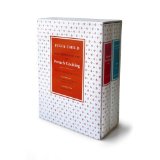
Celebrating 50 Years of Mastering the Art of French Cooking

My friend Polly and I attended this event last week at the National Arts Club–worth it just to get inside this gorgeous place on Gramercy Park! We arrived early, afraid of the usual crush of New Yorkers, but we had plenty of time to pick out choice seats before the room began to fill up. While we were waiting, there was a loop playing of the old Julia Child black-and-white TV programs; such fun to watch her slapdash style and hear her wonderful plummy voice.

It was a large panel–6 plus the moderator, and Molly O’Neill, who didn’t make it, would have made 7. I was so hoping to see and hear her, mainly because I included her terrific memoir, Mostly True: A Memoir of Family, Food, and Baseball in my book. I do feel a connection with all those memoirists!

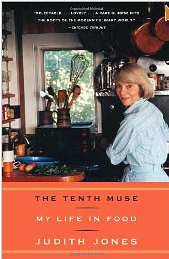
Almost everyone on the panel had met Julia and I loved hearing their stories about her: her generosity, her focus and attention to detail, her sincerity, and the way she welcomed people into her life. Her first editor, Judith Jones, spoke about how, after making the rounds of several publishers, all of whom felt that there was no U.S. market for a serious French cookbook, the manuscript came to her, a newbie in the Knopf offices and she realized how wonderful it was. If you’ve seen the movie Julie and Julia, you probably remember the scene of Judith Jones making boeuf bourguignon from Julia’s recipe. Jones’s own memoir of her stellar career in publishing, The Tenth Muse: My Life in Food, was published in 2008.

The other panelists were Dana Polan, Laura Shapiro, Dr. Amy Trubek, Geoffrey Drummond, and Priscilla Ferguson. The moderator was Andrew F. Smith.

I have a list of interesting cooks’ and foodies’ memoirs here.

Calvin Trillin at the Strand Bookstore

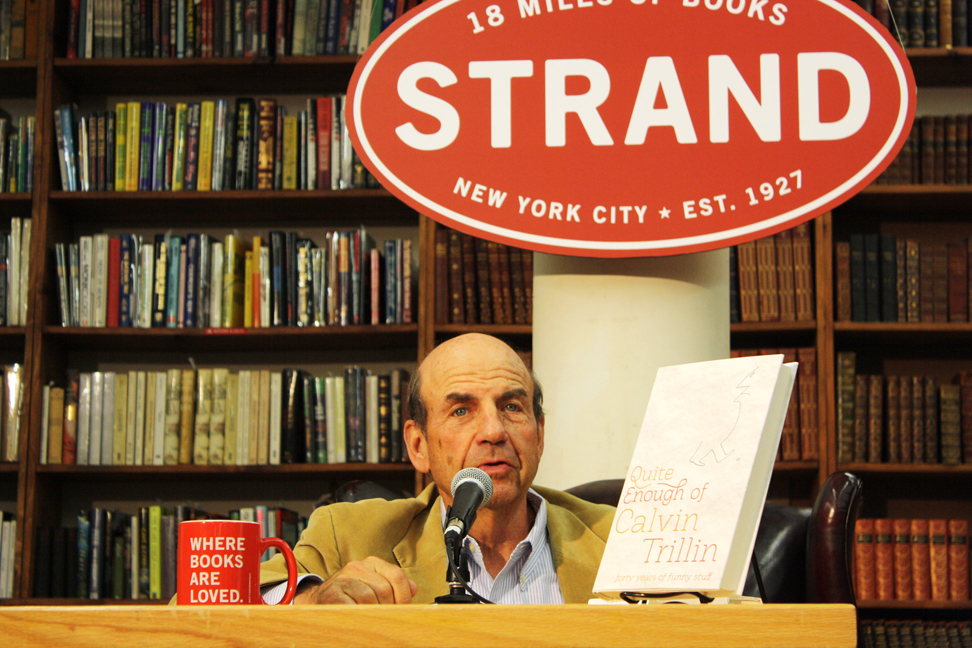
I love a chance to hear Calvin Trillin speak; there’s no one with a sense of humor quite like his: dry ,wry, and hilarious. He spoke at The Strand last Wednesday night to promote his new book Quite Enough of Calvin Trillin: Forty Years of Funny Stuff. The setting was the new third floor public space, filled with rare books and signed and inscribed books. It was just right. Several years ago I saw a video of a talk he gave somewhere in the Midwest. One of the lines that I remember goes like this: “The most remarkable thing about my mother is that for thirty years she served the family nothing but leftovers. The original meal has never been found.”

Someone in the audience asked Trillin for the secret of writing humor. He answered that it was important to put in specific details–if you’re eating a Philly cheesesteak while leaning against a car, it’s funnier if you describe the car as a Pontiac. For me, that’s the secret of Woody Allen’s humor, too, the absurd, telling detail. Like his line, “Not only is there no God, but try getting a plumber on weekends.” It’s the juxtaposition of the sublime and the mundane that gets the laugh.

National Reading Group Month Event

I’m moderating a panel in New York in celebration of National Reading Group Month this Thursday evening, Oct. 20th. This is my third year doing this and I love it. The five authors on the panel, in no particular order, are: Julie Otsuka (just nominated for the National Book Award for The Buddha in the Attic), Scott Spencer (Man in the Woods), Nayana Currimbhoy (Miss Timmins’ School for Girls), Annia Ciezadlo (Day of Honey: A Memoir of Food, Love, and War), and Aine Greaney (Dance Lessons). The program is sponsored by the Women’s National Book Association and it should be a lovely evening.

I’ve read all the books and enjoyed them–they’re very different from each other in style, language, setting, character, so I’m hoping to get some good discussions going among the authors that evening of the panel.  I’ve listened to podcasts and downloads of interviews with the authors where I could find them in preparation and now I’m really excited to meet them.

The titles above, with the exception of Scott Spencer’s Man in the Woods and Nayana Currimbhoy’s Miss Timmins’ School for Girls, are on the Great Group Reads list this year. They’d also work well for book groups–lots to talk about in both.

National Reading Group Month

October is National Reading Group Month, a good time to think about how much our lives are enriched by the discussions we have with friends–and even casual acquaintances–about books. I have to admit I have a special interest here; I chair the committee of readers who read and select the titles for the Great Group Reads list that comes out as part of National Reading Group Month.

I spend all spring and summer madly reading and (virtually) talking about the books that are candidates for that list. We vote in August and then the list is released in mid-September. I love the titles on this year’s list; they’re a more diverse group than we’ve had before (this year we picked more titles). It’s diverse in writing style, setting, plot, character–all the many ways that novels can differ from each other. And we have a few lovely memoirs.  I’ll write more about individual titles in later posts.

Agincourt

I was away for a few weeks, vacationing in Barcelona and Provence (pictures to come!), and of course I had to make the big decision about what to take along to read. A plane ride without a book is unthinkable. We were determined to travel with only carry-on bags, so that made the decision harder. I decided to bring my little MP3 player, which is always loaded up with audiobooks and podcasts.

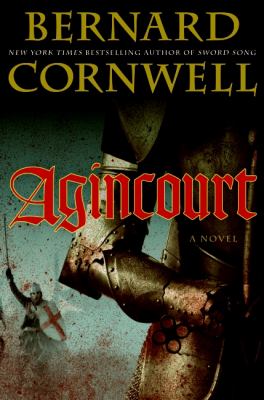
I was already nearing the end of Bernard Cornwell’s Agincourt, so Nicholas Hook and his adventures at the famous battle kept me company for the flight to Barcelona. A week later, when we arrived in France, Agincourt turned out to have been an ideal reading choice. Our first stop, after picking up our rental car in Montpellier, was Aigues-Mortes, a remarkably well-preserved medieval walled and fortified city.

Although the setting of the Cornwell’s novel is the northwest of France and not the south coast, Aigues-Mortes is contemporaneous with the walled city of Harfleur, the location of one of the battles Cornwell so vividly describes. At Aigues-Mortes, I could “see” what Cornwell was describing, a further reminder that the more we know about where we travel, the more meaningful the trip.

I don’t usually read war stories, but Cornwell has such a sterling reputation as a historical novelist that I thought I’d give him a try. He doesn’t spare the reader the descriptions of bloody warfare, but the characters he creates are real and compelling, their lives woven seamlessly into the beautifully realized historical setting. It also didn’t hurt that the narrator–Charles Keating–was superb, creating distinct voices for each character that captured the essence of their personality. It was a tour de force of writing and narration. I’m hoping that Agincourt is the first in a new Cornwell series–as the characters rode off into the sunset at the end, I had a strong feeling that Cornwell had more in mind for them.

Cathleen Schine and Adam Gopnik in Conversation

You can attend this event at the Museum of the City of New York at members’ prices if you mention A Readers Place. I’d love to be there but have another commitment. I read Schine’s last novel The Three Weissmans of Westport and thought it was delightful and loved Adam Gopnik’s Paris to the Moon. There are always too many book and literature-related things to do in New York. Sigh.