Historical Fiction: An Enduring Genre…

In preparation for the historical fiction panel I’m moderating tonight, I’ve been reading the novels by the two authors on the panel, Carole DeSanti’s The Unruly Passions of Eugenie R and Kathryn Harrison’s Enchantments. I’ve enjoyed both and I’m particularly delighted that there are such wonderful contrasts between the two. If you’re in New York, you can come to the event. Here’s a link to the registration page with all the details.

First for the similarities: both novels are set in the turmoil following the overthrow of governments in France and Russia. Both novelists chose to write in the first person from the point of view of young women. Eugenie and Masha are both caught in a floodtide of disastrous events. But then we start to see how novelists make choices and how a genre like historical fiction is endlessly fascinating because of the creativity of those choices.
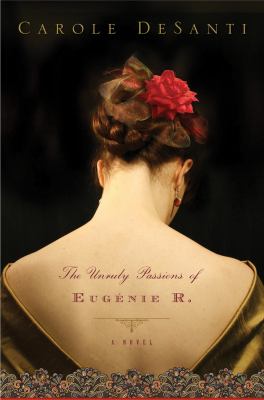
The Unruly Passions of Eugenie R is a richly detailed story about life in Paris in the 1860s when Louis-Napoleon Bonaparte was President of the French Second Republic, and the disastrous events in 1870 when his government was overthrown. Eugenie is a country girl who comes to Paris expecting her rich lover to follow and make her an honest woman.  She lives through the siege of Paris and the ensuing chaos; in the process she learns to survive. There are a few historical characters who make an appearance, but DeSanti focuses on the unrecorded lives of (mostly) women who scraped, fought, starved, and loved as best they could, hounded by a male bureaucracy that feared and desired unattached women. DeSanti’s familiarity with the detail of Paris in that era is remarkable; I can’t begin to imagine the quantity of research that was required.
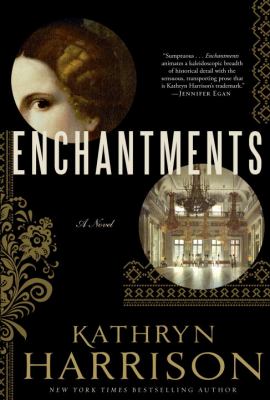
The characters in Kathryn Harrison’s novel Enchantments are almost all historical. The story of the end of the Romanovs, the last royal family of Russia, is  steeped in tragedy, romance, and legend. Alyosha, the heir to the throne, unlikely to survive childhood because of  hemophilia; Tsarina Alexandra, spending her days in a mauve-colored room, hoping that the Mad Monk Rasputin will heal Alyosha; and Tsar Nicholas who only wants to be a farmer.  When the Tsar is overthrown, the family is moved to the Summer Palace at Tsarskoe Selo, under house arrest, forbidden to leave or display any trappings of monarchy. Rasputin’s gruesome murder has already occurred when Harrison’s book opens and his daughters have moved in with the Romanovs for their own safety, or so they are told. Masha, Rasputin’s oldest daughter, teller of this tale, has been asked by Alexandra to be a companion to Alyosha.  Alexandra is hoping that Masha has absorbed her father’s healing powers, but Masha’s talent is as a Scheherazade–she tells Alyosha stories that transmute the pain and perplexities of his life into something else entirely. We also see Rasputin from her perspective, one that humanizes him, stripping away the legendary and comedic aspects and reinventing him as a loving father.

There are wonderful set pieces in both novels and both are absorbing in such different ways. I heard Kathryn Harrison speak last week at the Center for Fiction and she said that Masha was “her eyes to see into the story.” That’s a great way to describe the role of character in historical fiction–I’ll have to ask both writers more about how their characters evolved.
Writing About the Past

Later this month I’ll have the pleasure of moderating a panel on historical fiction, a genre that seems to have taken over the fiction lists this year. The New York chapter of the Women’s National Book Association is sponsoring the event and I’m thrilled to be the moderator of a stellar panel. The evening is free to WNBA members–a good time to join–and $10 in advance if you’re not a member. It will be at the Wix Lounge, 10 W. 18th St, 2nd floor, from 6-8pm on April 26th. We’ve subtitled the evening An Enduring Genre in a Changing Landscape since it’s about both writing and publishing.

We’ll have 2 authors on the panel, an agent, editor, and reviewer. I’ll write more about the panelists later; here’s the link to information and registration for the evening which will give you the cast of characters and all the details.

Since I’ll be asking the questions, I’ve been thinking about historical fiction and what questions would spark good conversation among our panelists. I’m a firm believer that if you need something, ask the universe, and true to form, I’ve found food for thought about the topic almost every place I turn. For instance, in the past week I’ve been re-reading Amos Oz’s masterpiece A Tale of Love and Darkness. Oz’s descriptions of the way memories surface, persist, and mutate in his writing is breathtaking as is the re-creation of his childhood in pre-statehood Israel.

There are many wonderful passages in the book about reading and writing, but the one that grabbed me is “…that selfsame urge I had when I was small–the desire to grant a second chance to something that could never have one–is still one of the urges that gets me going today whenever I sit down to write a story.” Isn’t writing historical fiction providing a second chance for characters to take the stage? That goes on my list of questions to ask.

How it All Began by Penelope Lively

I’ve been a fan of Penelope Lively’s novels for years; they’re rich with insight into human relationships and full of ambiguity and speculation about human behavior and motivation. She’s always interested  in the effects of our actions; in fact, one of my favorite novels of hers is titled Consequences. In the opening pages of How it All Began, Charlotte Rainsford is mugged on the street in London and thereby hangs a tale. The event ripples outward, changing the lives of several characters, each of whom steps off the page, fully formed: cranky, lovable, self-absorbed, decent, greedy, and maddening, they’re people we recognize.  More important, we want to see what happens to them as they are caught up in Lively’s web of consequences.

There’s satire, comedy, and tragedy, but also delightful insight into the role that reading, writing, and language play in our lives and inform our sense of self.  Charlotte, recuperating with a stack of books from the mugging in the novel’s opening scene, muses about the role of reading in her life:

“Forever reading has been essential, the necessary fix, the support system. Her life has been informed by reading. She has read not just for distraction, sustenance, to pass the time, but she has read in a state of primal innocence, reading for enlightenment, for instruction, even.  She has read to find out how sex works, how babies are born, she has read to discover what it is to be good, or bad; she has read to find out if things are the same for others as they are for her—then, discovering that frequently they are not, she has to read to find out what it is that other people are experiencing that she is missing.”

Passages like that are the reason I’ve always enjoyed Lively’s novels.

1493: Uncovering the New World that Columbus Created by Charles C. Mann

My nonfiction book group just discussed this book–it was fascinating. More details about what was so great about it are on my book group page.

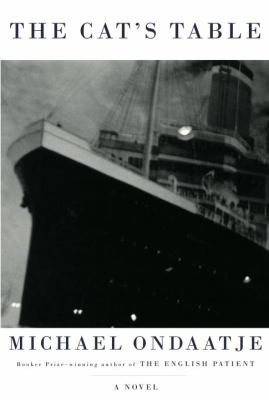
The Cat’s Table by Michael Ondaatje

I listened to this lovely novel, read by the author. There’s usually a good reason why actors with trained voices read fiction, but Ondaatje, with his low, lightly accented voice, who often slurs or even mispronounces words, is a remarkable narrator for this very personal coming of age story. I can’t imagine that I could have enjoyed it more–or even as much–on the printed page.

The narrator and main character is named Michael and he shares some biographical details with Ondaatje, so it’s hard in a story that’s appears so personal, so psychologically true, not to believe that we’re reading something close to memoir. But we’re not; we’re reading literature written by a master hand.

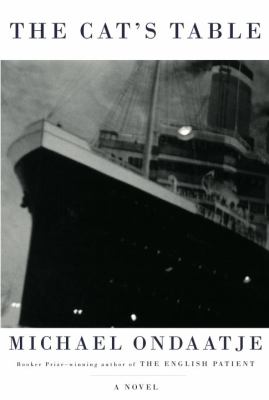
The novel takes place for the most part on a ship, called the Oronsay. Eleven-year old Michael is traveling from Ceylon (Sri Lanka) to England to join the mother he hasn’t seen in 5 years. On the ship he is seated at the cat’s table–the opposite of the captain’s table–and there he meets 2 other unaccompanied boys his age: Cassius and Ramadhin.  For 3 weeks, trying to fill up the long days, they study their fellow passengers and cause trouble on the ship, but in the process they learn who they are. They come of age and Michael, in particular, reaches that moment between childhood and emerging adulthood when, for the first time, he has a sense of who he is.

Ondaatje’s evocation of that voyage, geographical and psychological, is lyrical yet precise. What at first seems like a catalog of the boys’ mischief turns into a story of intrigue, crime, passion, betrayal, and sadness so haunting that it leaves the reader longing for more. Ondaatje gives us a glimpse into the future for most of the characters but leaves us with an ambiguous ending–and nostalgia for a journey we’ve only read about.

The Marriage Plot

Did  you see the article by Garth Risk Hallberg in last the NY Times on Sunday, Jan 13 titled Why Write Novels at All? I had taken a break from the Sunday Times that weekend (heresy, I know) and a friend in Israel emailed me a link to the article. We emailed back and forth during the week, talking about Hallberg’s comments on The Marriage Plot and the difficulties we both had reading it.  Sigh. I wanted to love the novel for many reasons, not least of all because I thought Middlesex was a tour de force and also because like many of us, I too knew some brilliant, unstable people in college and was hoping that Eugenides would capture some of the intense emotionality of that experience.  It didn’t happen for me.

Hallberg, in the Times article, writes that in The Marriage Plot (and other recent fiction by specific authors he mentions) “we encounter characters too neatly or thinly drawn, too recognizably literary, to confront us with the fact that there are other people besides ourselves in the world, whole mysterious inner universes.” I have to agree. There’s lots of great stuff in The Marriage Plot; there are still some sentences, that stick in my mind, but I felt that overall it was self-indulgent. I’m waiting for Eugenides’s next novel.

Books Overhead, part 3

Well, in addition to the books on my MP3 player and the physical books that are waiting to be read, I have an e-reader, a nook, and I love using it. The only drawback is that it’s entirely too easy to buy books–just a few clicks and  it appears in front of you. But then, um, you notice there’s that charge on your credit card. There are several ways I get around that–borrowing ebooks from the library via Overdrive or downloading them from NetGalley–but there are books that I just have to buy for one reason or another.

A while ago I requested a copy of Love and Capital: Karl and Jenny Marx and the Birth of a Revolution from NetGalley I couldn’t resist the glowing reviews and it was starting to appear on lots of “best” lists. Once I began reading it I could see why. Marx was charismatic, contentious, and arrogant; a loving father but also heavy drinker and an adulterer whose children grew up in grinding poverty. He was always scrounging money from friends and relatives, sometimes in the most disgraceful ways.  He committed to writing projects and publishers advanced him funds, but Marx was allergic to deadlines or to finishing projects at all. He was hounded from country to country for his political views but always lived in hope of the masses rising up and taking their due.  I grew up during the Cold War, when Marx was a bogeyman, so it’s been a revelation to have him turn into a real person, a brilliant economist and a very fallible husband and father. His long-suffering wife, Jenny, never wavered in her adoration of her scruffy husband or lost faith in his brilliance; she was the rock of his life.  Unfortunately I couldn’t finish the book before it expired so I put a reserve on it at the library. Now I have it sitting on my nightstand, waiting…

I read a review of Thrumpton Hall: A Memoir of Life in My Father’s House by Miranda Seymour and sensed that it was something I had to read. I downloaded a sample to my nook and was instantly absorbed by the author’s painful tale of her upper class dysfunctional English family. So I bought it, although I won’t be able to read it until I go on vacation later this year.

I also have lots of samples on my nook, impatiently waiting for me to make a decision: The Vertigo Years: Europe 1900-1914 by Philip Blom, War and Peace (!), The Darwin Economy: Liberty, Competition, and the Common Good by Robert H. Frank, Carpe Diem Put a Little Latin in Your Life by Harry Mount, Gilead by Marilynne Robinson, and Can You Forgive Her? by Anthony Trollope (I loved The Way We Live Now, hoping this is as wonderful).

Singapore

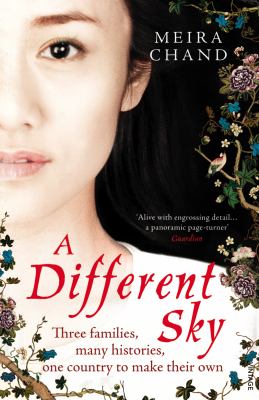
I just finished reading A Different Sky by Meira Chand; one of the best historical novels I’ve read in quite a while. I picked it up because of several excellent reviews and was absorbed immediately by the setting and the characters. It also helps that it’s set in Singapore, a place I visited 12 years ago, but I am drawn in general to historical novels set in Asia.

Chand’s story starts in 1926, when 6 people riding on a bus witness a demonstraton by a group of communists in which a British official is wounded.  That incident is a harbinger of things to come, and for those people on the bus, their lives are never the same, indeed, from that point they are hurtling toward catastrophic changes and unimaginable terrors. We follow these families’ interwoven stories from 1926 to 1956, sharing the changes those years brought in their lives and in the political realm.

In 1926, Singapore was a British colony, part of Malaya. Its polyglot population of Chinese, Eurasians, and Indians, with their various loyalties, traditions, and expectations, makes it a rich source for a good storyteller like Chand. Her particular gift, in A Different Sky, is to create characters that live and breathe and that we care about. They all go through searing experiences, losing much of what they value; Chand keeps us at their side with her astute descriptions of their psychological states. What I also loved about the book was  that Chand loves her characters–all of them–even the ones who don’t behave so well.

There’s lots of history in A Different Sky, all of it based on historical records and none of it dry. The brutal Japanese invasion and occupation of Singapore in World War II is central to the story along with the post-War agitation for independence. There are some historical characters, like Lee Kwan Yew, who came to play such a pivotal role in Singapore’s history for so many years.  I’ve always admired writers who can take the historical record and give it life; that’s Chand’s gift in A Different Sky.

A few other historical novels I’ve enjoyed with Asian settings: The Calligrapher’s Daughter by Eugenia Kim  set in Korea; The Glass Palace by Amitav Ghosh, set in Burma;  The Language of Threads by Gail Tsukiyama; and of course The Raj Quartet by Paul Scott;

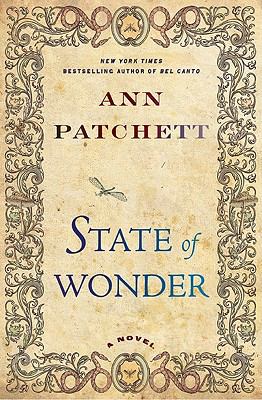
State of Wonder by Ann Patchett

I guess I’ve been reading too much domestic fiction lately, because State of Wonder was a delightful change of pace, a novel where there’s no possibility of domesticity. It’s set in the Amazon jungle, where Annick Swenson, a brilliant, ferociously driven doctor, has been studying a very interesting phenomenon among the women of a remote tribe, a phenomenon that could translate into a wildly lucrative drug for the pharmaceutical company that’s been funding her research.  Dr. Swenson is a researcher who refuses to be beholden to the crass commercial interests that provide her funding. She’s thrown away her cell phone and her infrequent letters reveal how shockingly self-absorbed and high-handed she has become.

A researcher is sent to Brazil to find her but something has gone terribly wrong and he is not going to return home. His colleague, Dr. Marina Singh, must go and sort it all out.  And here’s where we enter, dear readers. We accompany Dr. Singh, we see it all through her eyes: the stink and sweat of the jungle, the mesmerizing flora, the impenetrable native customs. It’s overwhelming and bewildering to Marina, but she soldiers on, hoping to unravel it all and we try to stay with her or one step ahead. It’s a great story of clashing personalities with the mystery of the jungle to lend atmosphere.

Patchett’s theme is familiar, but that’s not to belittle it, just to say that she’s in very good company. Novels, plays, memoirs, and films about the (often naive) outsider trying to navigate a strange culture are legion. Along these lines, other novels that I’ve loved: Amitav Ghosh’s The Hungry Tide and Ronan Bennett’s The Catastrophist. For me, Henry James’s novel The Portrait of a Lady, qualifies, even though the setting is not exotic and the culture not ostensibly strange. I’d also add The Tempest, for plays; and Apocalypse Now as one example of a huge genre of films.

Many travel memoirs exploit this theme and we love them. In The Lost City of Z: A Tale of Deadly Obsession in the Amazon,  David Grann tells how he went off to the South American jungle in search of a famous vanished explorer. In Down the Nile : Alone in a Fisherman’s Skiff, Rosemary Mahoney navigates a hostile environment to accomplish her goal. I loved Erika Warmbrunn’s Where the Pavement Ends: One Woman’s Bicycle Trip Through Mongolia, China & Vietnam, where she takes on multiple cultures in her heroic journey. And for great fun, you can’t do better than God’s Middle Finger: Into the Lawless Heart of the Sierra Madre by Richard Grant. A novel that continues to resonate for me as our country continues to get mired in unwinnable, shape-shifting wars, is The Lotus Eaters by Tatiana Soli.

I think many of us are armchair travelers and armchair anthropologists. I still have my old copies of Frazier’s Golden Bough and C.W. Ceram’s Gods, Graves, and Scholars. It’s the endless fascination of the new and unexplored.

A Few Readers’ Advisory Resources

Yesterday I gave a talk for the Monmouth Librarians Association called “Readers’s Advisory Without Tears” and I promised the attendees that I’d post some useful sites for readers’ advisory work. Here they are, in no special order and just five of them, so you don’t feel overwhelmed:

Shelf Awareness: Daily Enlightenment for the Book Trade a free Monday to Friday newsletter about books, authors, bookstores, publishing, and media matters.  Sign up for the professional edition. There’s also a readers’ edition which comes out twice a week and would be great to suggest to your patrons who want to keep up with the book world.

Omnivoracious is Amazon’s book blog, so it’s a good source for what’s selling, trending, or otherwise of intense interest to those power readers who must have the latest and best. At the moment there are several posts about “best” books in various categories: crafts, cooking, art/photography, bio and memoir, so it’s a good source for checking your own catalog and finding topics and titles for displays.

Early Word: The Publisher/Librarian Connection is a great blog/website and new book resource. It’s lively, timely and aims to give libraries the earliest information possible on new and forthcoming books.

Blogging for a Good Book is subtitled “A Suggestion a Day from the Williamsburg Regional Library”  and that’s just what it is–a review every day of a new or recent book. The titles are diverse as you’d expect since individual staffers are writing about what they’re reading and enjoying. In the last few days they’ve reviewed mystery, romance, teen fiction, literary fiction and science fiction. Something for everyone. I immediately put a reserve on Ready Player One by Ernest Cline. Here’s a case where you can let the folks at Williamsburg do some work for you. Read their reviews and pass them on to your readers.

Goodreads is a great social networking site for readers to exchange thoughts about the books they read and that makes it a good resource for librarians. I started using it just to record the books I read but there’s now so much more going on. As John pointed out yesterday, the Listopia feature would be very helpful for displays. Goodreads lets me know when there are new books coming out by the authors I’ve already read, allows members to set up discussion groups, publishes author interviews, and generally tries to make connections among readers. It’s worth spending some time getting to know the site.