The Books I Loved in 2012–Nonfiction

I didn’t read any political books this year, even though there were so many published. Reading the newspaper or the online news was enough politics for me. The seven books listed below are either history, memoir, or biography.

Nonfiction:

The Ornament of the World: How Muslims, Jews, and Christians Created a Culture of Tolerance in Medieval Spain  by Maria Rosa Menocal. 2002. Menocal starts by telling about the young Arab, Abd al-Rahman, only survivor of the massacre of his family–the Umayyad caliphs–in Damascus in 750, by their rivals, the Abbasids. Several years later, he turned up in the Iberian Peninsula, or al-Andalus as it was called in Arabic. This dramatic event set the course for the history that followed–the Islamic Empire in Cordoba known for its tolerance and rich culture. Jews and Christians participated in Arab culture, each group enriching the mix, creating art, translating the classics, and creating fabulous buildings like the Alhambra and the Mezquita in Cordoba. Not only was this a fascinating look at medieval Spain, but it provided insight into later European history–political and intellectual.

Behind the Beautiful Forevers: Life, Death, and Hope in a Mumbai Undercity by Katherine Boo. 2011. Boo immersed herself in this slum community next to the airport in Mumbai, where competition for food and shelter makes people into adversaries of their neighbors rather than co-competitors. It’s  a painful book to read but Boo’s attachment to the denizens of Annawadi makes for riveting characterizations. Your heart breaks for the young adults who yearn to escape. Winner of the National Book Award.

When We Were the Kennedys: A Memoir from Mexico, Maine by Monica Wood. 2012. Wood’s story of growing up in a company town in upstate New York doesn’t contain violence or addiction, just the insights of a good writer telling about a particular time and place, the 1950s and 1960s in a small town. Perceptive and rewarding.

Thrumpton Hall by Miranda Seymour. 2008. I was intrigued by the reviews of this, but my local library never bought it so eventually I put it on my nook and was delighted with Seymour’s memoir of growing up in a beautiful country house in Nottinghamshire with a father who made her life miserable. Of course, he made his own life miserable too. Funny, sad, and very entertaining.

1493: Uncovering the New World that Columbus Created by Charles Mann. 2011. The discovery of the New World had far-reaching effects, as species of plants and animals were transported from the Old World to the New and vice versa. This Columbian Exchange, as it’s called, shaped the world we live in today in so respects. Every chapter had an “aha” moment for me. Mann connects the dots, puts in perspective things that we may know as isolated incidents or events. Just a few of the things I found fascinating: that there was trade between South America and China in the 1500s; that there was a “Little Ice Age” in Europe from 1550-1750; that the glut of silver that flowed from South America to Spain in the 1500s made it easy for Spain to go to war in Europe; that until the end of the 18th century African slaves outnumbered Europeans in England’s American holdings by 2 to 1.  Mann repeatedly makes the point that 1492 was the beginning of globalization in so many areas, especially agriculture, which in turn led to massive cultural changes that we’re still experiencing today.

Too Close to the Sun: The Audacious Life and Times of Denys Finch Hatton by Sara Wheeler. 2009. If you’ve read and loved Isak Dinesen’s classic memoir Out of Africa, you’ll remember Denys, the romantic young Englishman that Dinesen loved and lost. The movie, with Robert Redford playing the role only made him more appealing and romantic. He was charismatic, but the truth, according to Wheeler, was somewhat different than the memoir and the movie would have us believe. Finch-Hatton was a charming, charismatic figure, inspiring love and loyalty in all he met, but he was a wanderer, never certain of what he was meant to do, never able to commit to anyone or anything. He left no diaries so Wheeler has put this bio together from the stories told by his contemporaries and her own astute surmises. She isn’t afraid to insert herself in the narrative, commenting occasionally on the process and I loved this informality.

My Korean Deli: Risking it All for a Convenience Store by Ben Ryder Howe. 2011. What a great New York story this is! Ben Ryder Howe and his wife move into his Korean in-laws’  basement in Staten Island to save up some money but decide to use their savings to purchase a convenience store in Brooklyn for his wife’s mother, Kay.  Howe works at the convenience store by night, keeping his day job at the very highbrow Paris Review, where he works for George Plimpton. The contrast between the two aspects of his life is hilarious, as is Howe’s descriptions of life at the deli. Only in New York.

The Books I Loved in 2012–Fiction

It’s always a good feeling to look back over the books I’ve read or listened to and see how varied they were. I also often remember the season when I read a book–whether it was hot or cold and if I read a book on vacation, it often recalls the place. I used to listen to Terri Gross on NPR every afternoon when I was commuting a long distance in the late 1990s. There are still places on the Garden State Parkway where I can recall the details of an interview, hear Terri’s voice and the voice of her interviewee. Funny how the mind makes those connections permanent.

So here goes my list from 2012–fiction first, nonfiction in the next post. I read a mix of new books, so not everything is from 2012. They’re not arranged in any order. I read more fiction than nonfiction this year; I’m hoping to change that in 2013. You can see all the books I read this year on Goodreads. (link)  Comments always welcome!

Some day I’ll do the other list we all have–what I wanted to read but didn’t get to.

Fiction: 
Toby’s Room by Pat Barker. 2012. Barker’s a great writer and this is one of her best. It follows the same cast of characters as her previous novel, Life Class, and coves some of the same time period; we learn more about the characters and subjects that were only touched upon are expanded. No one writes about World War I the way Barker does–the anguish of the soldiers, the trauma that follows them home, the anger, and the pointlessness of it all. Most of the characters are the artists we met in Life Class, and Barker combines art and war in the most startling and dramatic ways. There are some very powerful scenes in the novel–they’re almost painted on the page in some of the most vivid prose I’ve encountered. If you’ve read her Regeneration trilogy, you’ll know what I mean. Some of the characters and scenes from those books still haunt me.

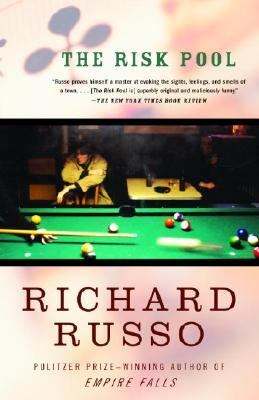
The Risk Pool by Richard Russo. 1988. At a talk I gave a few years ago, a guy in the audience raved on and on about this book and since I’ve enjoyed Russo before, I picked up a copy. It’s wonderful, so sorry it took me so long to get to it. It’s filled with terrific one-liners that ring so true you wonder why you didn’t think them up yourself. Well, there’s a reason. It’s a coming of age story with no plot, but who needs a plot with characters like these? There’s more about the novel in this post.

Fobbit by David Abrams. 2012. Reviewers were calling this a Catch-22 for the Iraq War; it’s in that vein, but on a smaller canvas. Very good. Publishers always like to provide a “hook” for readers, a readalike, particularly to a well-known author or book. That’s  what the marketing folks love to do, but this book stands on its own very nicely. I’m sure that this novel, and the one below, will be among the iconic books about the Iraq War.

Yellow Birds by Kevin Powers. 2012. This is the other kind of war novel– also about the Iraq War–the kind that’s painful but necessary. Beautifully written, not a word out of place; haunting. Two young soldiers, the older one promises to protect the younger. You know you’re in the presence of a remarkable writer from the opening, much quoted sentence: “The war tried to kill us in the spring.”

Beautiful Ruins by Jess Walter. 2012. There’s been a vogue lately for setting novels in several time periods and places, then tying it all up. For me, it doesn’t often work. It works here! In the hands of a lesser author, this story would be a frilly thing, hardly worth bothering about: starlets and superstars, romantic Italians, Hollywood sleaze–what, I’m reading this? It works and works wonderfully because Walter creates real people who have desires, suffer, remember, and love intensely. I want to read it again for the first time.

Cutting for Stone by Abraham Verghese. 2009. I’ve had a signed copy of this on my nightstand since it was published and despite my love of Verghese’s memoirs, I didn’t get around to reading it until this year, well, actually I listened to it. I guess I was afraid it couldn’t match My Own Country. It is wonderful; Verghese creates fabulous characters that will break your heart and an expansive, almost mythical story to match. It’s set in Ethiopia and New York. Some people I spoke to about the book felt that it lost steam in the NY portions–not so! I loved it from first page to last.  The audio version was marvelous; the reader created separate voices and personalities for each character. A treat.

The Unlikely Pilgrimage of Harold Fry by Rachel Joyce. 2012. If I tell you what this is about, you won’t read it, so just read it. It’s the book you need to read to make you a better person. I’ve been lending my copy to anyone who’s breathing.

The Song of Achilles by Madeline Miller. 2012. For a classics junkie like me, reading this book was like eating candy.  Miller retells the story of the Iliad from the point of view of Patroclus. There’s more about it here in my earlier post.

Salvage the Bones by Jesmyn Ward. 2011. So much better than Beasts of the Southern Wild. Sorry to all you fans, but I found the movie horrifying–for me it was an hour and a half about child abuse. I couldn’t see beyond that. Salvage the Bones is also about trauma, but so beautifully written, a powerful story with a brilliantly-written character at its center. National Book Award Winner, 2011.

A Land More Kind than Home by Wiley Cash. 2012. Southern gothic at its best, about a snake-handling preacher and the family he ruins. Structurally, almost a perfect novel, it’s told in several voices, each one necessary and distinct.

How it All Began by Penelope Lively. 2012. I’m a big fan of Lively’s novels and have read most of them. I love the way she takes an event and shows how the results form a widening pool of consequences, based on her characters’ personalities and proclivities. In fact, one of her novels is titled Consquences–a favorite of mine. This one follows the consequences of a mugging and how it affects the victim, her family, and the people she knows. Lively is a master at creating compelling, empathetic, unusual characters and setting them loose on the page. Here’s a link to my post on the book

A Different Sky by Meira Chand. 2011. A great, sweeping historical novel about Singapore in the twentieth century. I love historical novels where you learn history effortlessly, caught up in how the characters are tossed about by impersonal historical, political, and social forces. I’m surprised that this novel didn’t get more attention; Chand provides all of that and more. I visited Singapore and now when I think back to that visit, I see a slightly different city because of this novel. Here’s a link to my post on the novel.

The Cat’s Table by Michael Ondaatje. 2011. An unusual, haunting coming of age novel that must be close to memoir, it’s so vivid. I wrote more about it in this post.

Storm Reading, Part 2–the second storm, with snow!

This is the cruelest storm of all, following on the heels of Sandy, when so many people have yet to get power back and so many others have lost their homes. I worry about the residents of those barrier beach communities, in New Jersey and in Queens and Long Island that have been so devastated by Sandy, and now we’ll have 2 more days with the threat of power outages from wind, rain, and snow. My lights were flickering in the early afternoon, not a good sign and it’s been snowing steadily here since noon. The lights just flickered again!

I started reading an older Richard Russo novel, The Risk Pool, and I think it’s one of his best, if you don’t mind coming of age stories without plots. I’m about half way through it now and enjoying Russo’s language immensely. He’s done the hard thing: created characters that are dishonest, irresponsible, and unethical but you’re eager to spend time with them, can’t wait to see what they’ve done now.

The main character is Ned Hall, son of a charismatic, petty crook of a father and a mother who can’t cope. We follow Ned from about 9 years of age through college. Like most of Russo’s novels, it takes place in upstate New York, in the small town of Mohawk, where the denizens of the bars, pool halls, and greasy spoon diners provide the Greek chorus for Ned and Sam’s life. What a great cast of lowlifes, amiable and not-so-amiable drunks, misfits, and cardsharps Russo has created! Many of the characters have great nicknames, bestowed by Ned’s father, who is never at a loss for an insult or an excuse.

Ned’s growing up takes place among these folks and he learns lessons about human nature that are hardly to be found elsewhere. The novel reminds me of Tobias Wolff’s This Boy’s Life for its insight into the way children make use of the situations they’re put in. It also reminds me of Joyce Carol Oates’s novel Little Bird of Heaven, although Oates’s novel is the dark side of the story, the one Russo chose not to tell. The Risk Pool is very funny; we laugh because we want to assure ourselves that it can’t be true.

Storm reading, part 1–the first storm, Sandy

Fortunately, we only lost power for a day and a half, although some of my friends still don’t have power after a week. I’ve been checking in with family and friends who live elsewhere and some have flooded basements, trees that came down on their roofs, and no water to go along with lack of electricity. We were very lucky. With a gas stove, I was always able to make a pot of tea and keep it hot with an old quilted tea cozy. With no phone service of any kind for 4 days–landline or cell–it was a good time to read.

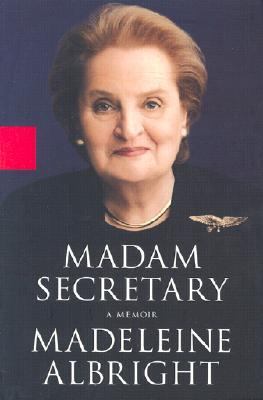
I tackled the next book for my book group–Madeleine Albright’s memoir Madame Secretary–a daunting book for its length, made even more so by the fact that the only copy I could get from the library was large print. Easy to read but literally heavy. In light of the upcoming elections, it was a timely book to read.

Albright spent the first Clinton administration as our ambassador to the UN; the second as Secretary of State. If you think back to the 90s, the issues were myriad, diverse, and extremely urgent. Albright separates them in her book, dealing with Iran, the former Yugoslavia, North Korea, and the Israeli-Palestinian conflict, among others, in individual chapters. It takes a while before you realize that she’s dealing with them all simultaneously, expected to be on the mark at every minute to respond to each. One of her appendices is a schedule of her overseas trips as Secretary of State–quite daunting. She writes about how she occasionally saved time on flights by mid-air refueling. It’s an accessible, engaging story and a good reminder of some of the recent background to issues we’re still dealing with.

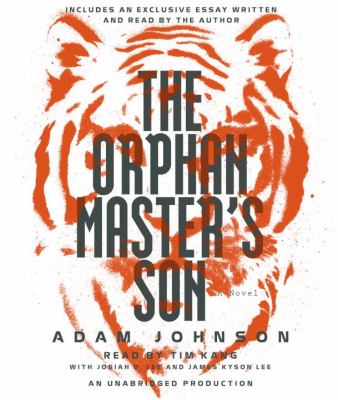
I also read The Orphan Master’s Son this past week, by Adam Johnson, a very dark, satirical novel about life in North Korea under Kim Jong Il. It’s hard to know where to begin to describe this tale. In some ways it’s Dickensian, in others it’s like 1984 or the movie Brazil. If I had known about some of the scenes of graphic violence I might not have read it, but I’m not sorry I did. It follows Pak Jun Do, the motherless son of the director of an orphanage. Pak’s adventures in the criminal underside of North Korean life bring him into conflict with the highest levels of government, and ultimately the Dear Leader himself. The first section of the book is a little slow but the rest is quite remarkable. Johnson depicts the way life in North Korea requires the suspension of disbelief and the suspension of rational thought.

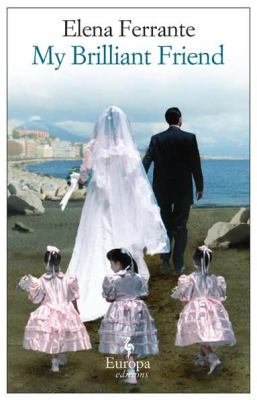
Then I read My Brilliant Friend by Elena Ferrante, a tour de force about the friendship between two girls in a town just outside of Naples in the 1950s. It’s the first in a projected trilogy. Beautifully translated, it evokes the particular place and post-war time, the changing mores, and the finely calibrated relationships among the neighboring families. The first-person narrator, Elena, is drawn to the wild and moody Lila, whose charismatic personality makes her a magnet for trouble as the girls mature. The title poses the question of which of the girls is the brilliant one and what that brilliance will mean for them as they grow up.

I also read two ho-hum thrillers, which have been getting, or will get, lots of publicity: Ghostman by Roger Hobbs and The Intercept by Dick Wolf. Daniel Silva’s espionage thrillers about the art restorer/Mossad agent Gabriel Allon are my standard for thrillers; neither of these two books measured up in terms of suspense, believability, or character development. Oh well, we’ll probably see one or both of them on the big screen anyway.

The Song of Madeline Miller

Last spring I listened to The Song of Achilles by Madeline Miller (read by Frazer Douglas) and was enchanted. Normally I delete the books I listen to once I’m done. I just can’t bear to let this one go. I know I’ll listen again. I’m a classics junkie–I studied Greek and Roman history, literature, and art in college and was one of those kids who thought the Greek and Roman myths were the best stories ever told. Miller’s retelling of the story of Achilles and Patroclus had me riveted from  beginning to end. When I had the chance last week to hear Miller speak at the Center for Fiction in NY not even Achilles’ scary goddess mother Thetis could have kept me from going. I had the chance to ask a question about how she managed to create such a frightening character as Thetis and also to tell her how much I enjoyed the book.

Miller retells the story from Patroclus’ point of view and in her hands it becomes a heartbreaking love story. Knowing  how it ends doesn’t at all detract from the beguiling pleasures of the trip. Miller takes the mythological and Homeric material and shapes it to her own ends. The way she gives personality and motivation to characters like Thetis, Chiron and Briseis, for example, only heightens the tension of her narrative.

At the Center for Fiction, Miller talked about the process of writing the novel, how she “set the moment of Patroclus’ death on my horizon and wrote toward it.” She spoke about some of the decisions she struggled with: whether to include the gods and how to end the novel after Patroclus’ death. She talked about how “generous” the Homeric material is, how much it gives a writer to work with and how she often returned to the Iliad for inspiration.

In the first chapter of The Song of Achilles, Patroclus, then a young boy, is sent off to a gathering of the Greek kings, where Helen is asked to choose a husband. One of the kings, as yet unidentified, begins to speak. Listening to it, I gasped in recognition: the speaker was Odysseus, there was no doubt. At that point I knew I was in for a great listening experience. Miller told me that she’s working on a novel about Odysseus; I’ll be watching for it.

Just a note about the audio version–it was wonderful. The reader, Frazer Douglas, creates voices and personalities for all the characters. His tour de force is Thetis, Achilles’ mother, a minor goddess. Even a minor goddess is terrifying to mortals, and Douglas had me scared each time the angry and vengeful Thetis appeared. I’m not quite sure how he did it, but I was truly frightened. At the Center for Fiction, Miller talked about the power of the gods, how encountering a god was never a good thing for a mortal  and how she tried to write that into Thetis’ character. After  her talk, I told her that I thought she’d be happy with the way Douglas portrayed Thetis.

National Reading Group Month

For the past several years I’ve chaired the reading committee that selects the titles for the Great Group Reads list that comes out in September in time for National Reading Group Month (October). There were 22 readers this year and we read like fiends all spring and summer. It was fun and exhausting at the same time and I really appreciate the readers’ their efforts. We put together a great list of books.

National Reading Group Month is sponsored by the Women’s National Book Association–the other WNBA–and to celebrate NRGM all the chapters around the country have author programs, highlighting the Great Group Reads books and other wonderful new books that will provoke lively discussions.

The New York WNBA chapter program is this Wednesday evening–October 17–at the Strand Book Store in their classy Rare Book Room and I’m moderating the panel of 5 authors. For me, this is the high that comes at the end of the hard work: the chance to talk to authors of novels and memoirs, to find out how they wrote those wonderful books, what they were thinking about when they wrote them, how they write, and maybe even why they write. If you’re in NYC, come to the Strand for the 7pm program–it’s only $10 and for that you’ll get a $10 Strand gift card–can it be possible that there’s a book you want to buy?

The authors on the panel are: Alix Kates Shulman whose current novel is Menage (Other Press), a wicked sendup of modern marriage. Shulman’s name ought to be familiar to you as the writer of the iconic feminist novel Memoirs of an Ex-Prom Queen. 
Elizabeth Nunez will be there too, author of Boundaries (Akashic Press), a lovely cross-cultural story of a woman coping with competing demands of family and career.
David Maine, author of An Age of Madness (Red Hen Press), a devastating psychological study of a woman doctor whose family life has gone horribly wrong. I was delighted that this title made it onto the Great Group Reads list.
I’m eager to meet Ben Ryder Howe and hear  more about his hilarious and heartfelt memoir My Korean Deli: Risking it all for a Convenience Store (Picador). I listened to this one and laughed out loud often. It’s more than just humorous–it’s a great New York story with lots of food for thought about who we are and the choices we make for the ones we love.
Marisa de los Santos will be there to talk about Falling Together (Wm. Morrow Paperbacks), a novel about three college friends who find that despite their close  friendship, they’ve been blind to some important truths.

So, come to the Strand if you can and say hello. There will be time to ask questions of the authors and talk to them after the program.

Great bad prose–the Bulwer-Lytton winners for 2012

It’s easy to write badly but hard to write this deliberately awful and hilarious stuff that wins the Bulwer-Lytton contest. If you been asleep and don’t know what this is, here’s the link to the website page with this year’s winners, recently announced: http://www.bulwer-lytton.com/2012win.html

My favorite this year–the one that made me laugh out loud–is the runner-up for Purple Prose: “Corinne considered the colors (palest green, gray and lavender) and texture (downy as the finest velvet) and wondered, “How long have these cold cuts been in my refrigerator?” submitted by Linda Boatright of Omaha NE.

Thanks go to my Israeli writer friend Pnina Moed Kass who sent me the link.

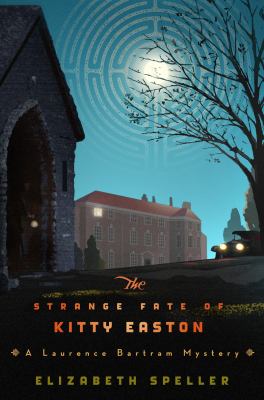
The Strange Fate of Kitty Easton by Elizabeth Speller

With this book I struck gold–an absorbing historical mystery in the English country house genre with great characters and atmosphere. It takes place just after World War I in Wiltshire, at a crumbling old manor house with the spooky name of Easton Deadall. The story is told from the point of view of Laurence Bartram, a World War I veteran and architectural  historian whose specialty is church architecture. Bartram’s been called in by an architect friend to consult on the creation of a maze to honor the village men who died in the Great War  and on the restoration of the old church on the property.

Right away Bartram’s drawn into the family tragedy: the disappearance, 13 years earlier, of 5-year old Kitty Easton, daughter of  Lydia, widowed owner of the manor. Kitty’s unsolved disappearance is still fresh and wounding; the Easton family is riven with subterranean anger and jealousies. Bartram’s own life is haunted by the loss of his wife and unborn child and he’s suffering from the aftereffects of his horrific trench warfare experiences in France. The spectre of the war hangs over the novel–almost all the village men were killed in a single battle in France, leaving the village in the hands of grief-stricken women and men too old or unable to fight.

In good country house mystery tradition, there’s plenty of intrigue, gossip, and secrets (personal and architectural) revealed, as well as dead bodies. I found that  many of the characters stepped off the page: besides Bartram, the architect William Bolitho and his wife Eleanor were especially compelling. Speller has all the elements right. If you’re not entirely clear on the outlines of the country house mystery, there’s a good explanation here. This is the second Laurence Bartram mystery–I’m eager now to read the first one, The Return of Captain John Emmett.

Tell the Wolves I’m Home by Carol Rifka Brunt

This book was well-reviewed so I was looking forward to reading it. It’s really a young adult book.I’m sure the publisher was hoping for a bigger market. It’s told from the point of view of a 14-year old girl about her conflict with her 16 year old sister who’s jealous of the younger one’s relationship with their uncle Finn, an artist who died of AIDS. Each sister is jealous of the other, each one thinks the other is more talented, loved, etc until a crisis reveals…well, you get the idea. Not enough depth for me and I thought this was a story that’s been told (too) many times. The PW reviewer, while praising the book, wrote: “moral conflicts that resolve themselves too easily and characters nursing hearts of gold.” For me, that’s a good characterization.

The Power of Habit: Why We Do What We Do in Life and Business by Charles Duhigg

Parts of this book are very, very interesting; other parts less so. The author covers habits from 3 perspectives: personal, corporate, cultural/societal. The section on how habits function in our personal lives was quite compelling–aren’t we always fascinated by how our own brains operate? Duhigg takes apart the triggers and rewards that create habits. I now feel like I have the tools to understand how habits are formed and how they can be broken–there are a few of my own I’m ready to tackle. The section on corporate habits was also very interesting–the Alcoa story was particularly fascinating. I’m bogged down in the final section on cultural stuff; somehow I think it’s more complex than the author’s explanations. I’m listening to the book and not sure I’ll be able to finish the last 2 CDs–the narrator’s not great so I’ve been slogging through despite lackluster narration, but now it’s really grating.