A Time of Gifts by Patrick Leigh Fermor

Time of GiftsSometimes you get to a book by a circuitous route. I had heard about Patrick Leigh Fermor when I was reading lots of travel writing in the 1990s  but didn’t read his books then. Recently I began reading more about the two World Wars and came across The Ariadne Objective, by Wes Davis, the story of a British undercover operation in Crete during World War II when a handful of amateur British  spies kidnapped a German general. One of those swashbuckling figures was Leigh Fermor; I was intrigued so I picked up a copy of his first memoir, A Time of Gifts, about his travels across Europe in the mid-1930s. I was not disappointed.

Leigh Fermor was only 18 when he hit the road with a knapsack, determined to hike from Rotterdam to Constantinople, using his wits and a few introductions to get by. His parents were willing to send him four pounds a month for expenses. He had been expelled from yet one more school for his free-spirited inability to conform to expectations; it was time for him to make his own way. His father was in India, his mother and sister in England. He tried, briefly, to support himself by writing, but it was no go. Europe beckoned. He bought a ticket on a steamer sailing from the Tower Bridge to the Hook of Holland. On a rainy day in late 1933, several friends saw him off.

The delight of this memoir–the first of  two volumes–is in Leigh Fermor’s brilliant, evocative writing and the adventures he had. Ready for whatever came his way, willing to talk to people of all types and stations in life, curious about everything, he made friends wherever he went and put up with all the privations of a life on the road with minimal cash. Of course, 1933 was when it all began to go sour in Europe, so we get some insight into the political situation as well.

The writing is extraordinary:  here are a few sentences from his description of traveling through London in cab on the rainy day he left:

“A thousand glittering umbrellas were tilted over a thousand bowler hats in Piccadilly; the Jermyn Street shops, distorted by streaming water, had become a submarine arcade; and the clubmen of Pall Mall, with china tea and anchovy toast in mind, were scuttling for sanctuary up the steps of their clubs. Blown askew, the  Trafalgar Square fountains twirled like mops…”

The book is filled with wonderful, vivid descriptions like this, as Leigh Fermor travels across Holland, into Germany, Austria, Czechoslovakia, and Hungary. In the process of discovering these countries, he learns about himself and I like to think that he made peace with his wild childhood and saw his way clear into the adult world. Here’s another wonderful passage about how the natural world helped him achieve that, as he settles himself under a tree for a night’s sleep in the open air:

” The fidgeting of moorhens and coots and of voles and water-rats doing the breast-stroke through the stems grew less frequent and every half-minute or so two bitterns–one quite near, the other perhaps a mile away–sounded across the vague amphibian world: loneliest of muffled cries, plainly to be heard above the shrill rise and fall of millions of frogs. This endless population, stretching upstream and down for leagues, made the night seem restlessly alive and expectant. I lay deep in one of those protracted moments of rapture which scatter this journey like asterisks. A little more, I felt, and I would have gone up like a rocket.”

There’s a new biography out: Patrick Leigh Fermor, An Adventure by Artemis Cooper and while I’m interested in reading it eventually, I’m more interested in reading Leigh Fermor’s own writings right now. The next volume of his memoirs, Between the Woods and the Water, takes him to Constantinople and I’m hoping to go along with him.

Game of Thrones by George R.R. Martin

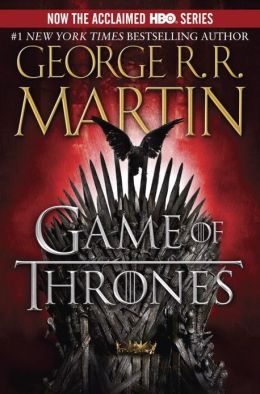
Game of ThronesSo, I don’t normally read fantasy, but… I picked up a copy of this first book in the series A Song of Ice and Fire a few months ago when I was browsing in a bookstore and read the first few pages, just to see what all the fuss was about. I immediately bought the mass market edition, hooked by the clarity of Martin’s writing and the vivid setting. And those characters! They just jumped off the page. I took the book with me on a trip down to the British Virgin Islands last month (we should have stayed there all winter, not just 10 days) and read it obsessively.

So now I have the second book, A Clash of Kings, but I’m finding it hard to slot it in. I have a pile of library books, a bunch of books on my kindle, and some books on my nook, as well as a pile of unread books on my office bookshelves that I’m determined to read, but not just now. Starks and Lannisters await my return and I’m worried about Theon, up north at the Wall.

Man Alive! by Mary Kay Zuravleff

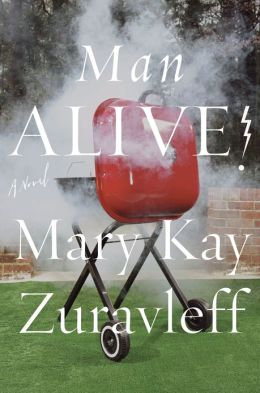
Man AliveI picked up this novel because of excellent reviews in various places (Publishers Weekly, Library Journal, and Kirkus) and was happily surprised. I’m always hoping that a good–especially a starred–review will translate into a novel I love, but it doesn’t always happen. Zuravleff has a great, zingy writing style which is fun to read.

Man Alive! (Farrar, Straus & Giroux) is a “domestic novel” which is a genre alive and well  and lately seems filled with stories of missing/kidnapped children or family secrets. Sigh. I’m tired of those plots. Man Alive! instead deals with a family literally struck by lightning and trying to recover its balance.  Dad Owen Lerner receives the blow as he puts coins into a parking meter on a blustery day; his physical and mental injuries strike deep into the heart of his family’s equilibrium. Wife Toni, college-age twins Will and Ricky, and teenage daughter Brooke find their lives spiraling away from the familiar patterns. And Owen’s not so sure that “recovery” means that he’ll be the same as before.  He develops a strange obsession with grilling meat and has less enthusiasm for his pediatric psychology career in the aftermath of his life-changing event.

In this lovely domestic novel, Zuravleff uses a family crisis to create real life on the page, characters that live and struggle in ways that are familiar to us, even if we haven’t experienced a bolt of lightning. It’s the finding of the universal in the domestic that works so well. Here’s one quote–a thought from Toni about raising three children: “With the kids, she tried to position herself midway between the poles of hovering and neglect, though it sometimes felt as if she were simply running to one pole, tagging it, and then running to the other.”  Nicely done.

Some other domestic novels that ring true, tell us something about ourselves that we maybe weren’t able to put into words:

The Grief of Others by Leah Hager Cohen (Riverhead)
When God Was a Rabbit by Sarah Winman (Bloomsbury)
A Friend of the Family by Lauren Grodstein (Algonquin Books)
Cost by Roxana Robinson (Picador)

Heir Apparent

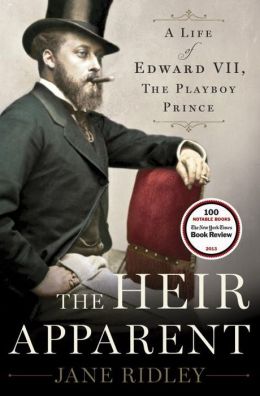
Heir ApparentI’m hoping to read more European history this  year and have just finished The Heir Apparent: A Life of Edward VII the Playboy Prince by Jane Ridley, the new bio of  Queen Victoria’s philandering son, who gave his name to the Edwardian era, the first decade of the 1900s.

It’s a huge book, and my thought was that I’d start reading and maybe not finish it, but I was riveted. Ridley has the wonderful facility of making masses of detail fascinating. She’s also managed to let you know that she’s there with you as you’re reading without really interposing herself.

There’s a cast of hundreds, since Bertie had a wildly active social life, and the reader can only turn the pages in disbelief as “Wales” (as he’s often known) gets into one scrape after another, rescued and shielded by his loyal staff. Even the Prime Ministers protected Bertie from disgrace. I was unaware how much anti-royal sentiment there was in Britain of the late 1800s; Queen Victoria wasn’t sure that the monarchy would survive her and it’s not clear that she cared. She didn’t believe that Bertie would make a suitable king and he never received the appropriate education and training. She was unwilling to relinquish an iota of power or monarchical privilege to him and was jealous of any success he had with the British public or overseas.

But when Victoria died in 1901  he rose to the occasion, although he regretted that the great opportunity came so late in life. Part of the fun of the book is re-visiting the convoluted relationships among the royals in Europe and Russia–so many were Victoria’s descendants and it affected late 19th and early 20th century politics in very interesting ways. For more about those relationships, I recommend reading King, Kaiser, Tsar by Catrine Clay.

Savage Continent

I’ve been reading about European history–it helps to understand the news, especially now as I watch Russia expanding its interests in Eastern and Central Europe, trying to recover influence in the old Communist bloc countries.

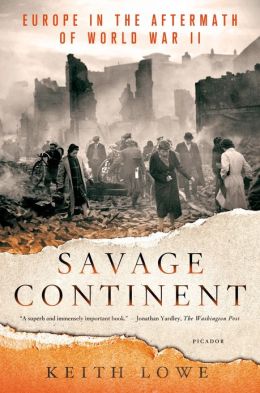
Savage ContinentLast month I read Savage Continent: Europe in the Aftermath of World War II by Keith Lowe. As Lowe points out in this excellent book, Europe after the war was a dreadful place. Infrastructure was gone: roads, bridges, canals, railroads, and buildings had been destroyed. Governments were non-existent in many places. Partisan groups that fought the Germans were fighting each other, eager to become the new rulers. Borders had been re-configured forcing  millions of people to uproot their already impoverished lives and move elsewhere. Collaborators and suspected collaborators were tortured and killed, especially women suspected of consorting with Germans. Many cities were filled with the rubble of destroyed building; for example, Lowe reports that in Budapest 84% of the buildings were damaged, 75% of Caen in France was obliterated. and 1000 villages in Greece were burned and became uninhabitable.

Governments were eager to embrace the enormous task of healing and reconstruction, so they supported the myth that there had been  a unified struggle against Germany. Anything that contradicted that interpretation was swept under the rug. Millions of people had been displaced during and after the war and were rounded up into DP camps where some stayed until the early 1950s, so enormous was the task of resettlement.

Lowe claims that this story hasn’t been told before in this detail and for all of Europe. It’s relevance is clear as I read about the way NATO and Russia are vying for influence in the old Communist bloc countries. It  makes me see Europe in a different light, with a longer perspective. This is a book that I’ll be reading a second time.

My favorite books of 2013

Everyone’s posting “best” lists at this time of the year, so here’s mine.  I’ve indicated where I listened to the book. A great audiobook novel–beautifully written with a great reader–is a treat. I often feel that I’ve enjoyed the book more for listening to it. Jhumpa Lahiri’s novel, The Lowland, is a case in point. The  narrator wrings every ounce of emotion out of every scene. It’s a tour de force of narration and though I’m sure I would have enjoyed reading the book, I’m also sure that listening was better. Trust me and get the audio if you can; if not, read it, but don’t pass it up.

Here’s the list, divided by fiction and nonfiction, in no particular order:   

Fiction
Breath by Tim Winton. Picador, 2009.
I read this in preparation for a trip to Australia, but it could have been set on the California coast. It’s a coming of age story about surfing and the word “breath” sums it all up–the way the ocean breathes the surfers in and out, the way the boys breathe with the waves, waiting for the moment of decision, and the way I held my breath as the story became more and more tense.

Billy Lynn’s Long Half-time Walk by Ben Fountain.  HarperCollins, 2012.
This was on all the best lists last year; if you put off reading it, as I did, go back  and read it, listen to it if you can.  I listened to this novel–the reader, Oliver Wyman, was terrific. I can’t imagine that it would be as fun to read as it was to listen to. Wyman distinguished all the voices and clearly conveyed every ounce of nuance in the text. There was also so much to love in the writing–one of my favorite lines refers to someone who “flounders in the swamp of self-expression.” Don’t we all at times?

Life After Life by Kate Atkinson. Little, Brown. 2013.
I’ve read everything by Atkinson that I can put my hands on, starting with Behind the Scenes at the Museum, her first novel and continuing through her 
Jackson Brodie mystery series. If I say that there’s time travel involved, don’t be put off; it’s a literary historical novel of the first order about a women whose empathic  nature puts her in mortal danger repeatedly and each time she returns to the beginning of her life to start again. The section set during the Blitz in London is wonderful, maybe the most evocative account I’ve read in a long time.

Brewster by Mark Slouka. W.W. Norton, 2013.
Set in upstate New York, this coming of age novel is so dark that you may want to read it in daylight. It’s not perfect but it’s close. Two male high school students navigate the minefields of their families in the company of a beautiful young girl. For fans of Daniel Woodrell, Tom Franklin, and Wiley Cash, add this to your list.

A Constellation of Vital Phenomena by Anthony Marra. Crown, 2013.
So hard to believe that this is Marra’s first novel; it’s so polished and right. Set in a village in a war-torn Eastern European country, it begins when a doctor watches as his neighbor is carried off by one of the factions. The doctor rescues his neighbor’s young daughter and takes her to a hospital for safekeeping. From this simple beginning, Marra weaves a story of the ambiguity of good and evil with mythic properties. It just gets better and better as you read, until the perfect last page. 

Wash by Margaret Wrinkle. Grove/Atlantic, 2013.
There have been so many books in the last few years set in the South during the period of slavery and now I’m sure the movie Twelve Years a Slave is set for Oscar nomination. How can I recommend another slave narrative? I feel strongly that this is the one to read; the writing is exquisite and the story unusual and totally absorbing.

Sparta by Roxana Robinson. Farrar, Straus and Giroux. 2013.
On the very first page, Robinson puts us inside the thoughts of Conrad Farrell, returning Iraq war veteran. I’ve read several excellent novels about the Iraq War (The Yellow Birds, Fobbit, and Billy Lynn’s Long Halftime Walk–see above—come to mind) but haven’t found anything that shows us how it feels to return to civilian life in quite the same way. The title refers to the explicit Marine attitudes that exalt the culture of war and soldiering. I thought it was brilliant and I was fortunate to meet Roxana Robinson so I could tell her!

The Explanation for Everything by Lauren Grodstein. Algonquin Books of Chapel Hill, 2013.
A fun suburban novel with a philosophical twist; I enjoyed Grodstein’s last novel, A Friend of the Family. I really like the way she develops character.

The Round House by Louise Erdrich. HarperCollins, 2013.
I hadn’t been reading Erdrich recently but heard good things about this one and was very glad I read it. It’s set on an Indian reservation in North Dakota; you could consider it a coming of age story about a teenage boy who tries to avenge a crime committed against his mother. It’s filled with the issues of the way we continue to mistreat Native Americans, but it’s not a polemic. 

Wolf Hall by Hilary Mantel. Henry Holt, 2009.
Bring up the Bodies by Hilary Mantel. Henry Holt, 2012. Read by Simon Slater.
I listened to both of these during the summer and was riveted by Mantel’s portrait of Thomas Cromwell. I had picked up Wolf Hall to read it and was impatient with the level of detail, but listening to it was an entirely different experience. Cromwell came alive for me as did the period and all the famous characters. I hope book 3 is coming soon although I’m not looking forward to Cromwell’s downfall.

The Ocean at the End of the Lane by Neil Gaiman. HarperCollins, 2013.
I listened to Gaiman read this–what a treat! I don’t normally read or listen to science fiction or fantasy–Gaiman’s the exception since he’s such a great writer. (Anansi Boys is one of my favorite books.) It’s short; just go read it. 

Sea Creatures by Susanna Daniel. HarperCollins. 2013.
I read Daniel’s first novel, Stiltsville and was enchanted. She just knows how to capture the spirit of a place. Sea Creatures had the same combination of strong setting (Miami) and interesting characters. Nothing earthshaking here, just people’s complicated lives, well done, a little edgy, a pleasure to read. I still think about the characters in both novels. 

You Should Have Known by Jean Hanff Korelitz. Grand Central, 2014.
Writing about this book is cheating since it won’t be published until March, 2014, but I received a copy from the publisher and thought I’d read it since I remember reading Korelitz’s first novel, Sabbathday River, years ago. I couldn’t put it down and read it obsessively over the course of 2 days, then passed it on to a friend who stayed up until 3am reading it. Now it’s with a third friend. I found myself thinking about the characters and the story when I wasn’t reading it. In brief, a woman psychologist, happily married, Upper West Side, with a son in a tony private school and a pediatric oncologist husband, writes a book about how we really know, when we find a partner, if there will be issues in the relationship, but we fool ourselves, so….thereby hangs the title of the book. It’s not too great a leap to figure out the plot, but it’s the character development and the writing that make the novel so compelling.  

The Story of a New Name by Elena Ferrante. Europa Editions, 2013.
See my review here.

The Lowland by Jhumpa Lahiri. Knopf Doubleday, 2013. (Audio read by Sunil Malhotra.
The death of a young man reverberates through the lives of his family members, setting them adrift in India and Rhode Island, unable to build stable lives. I listened to this haunting novel, so beautifully written and read, but so sad that it was often hard to go on. Lahiri has the remarkable ability to make her story relate to her readers’ own lives and choices, even if we’re not immigrants from Calcutta; she knows the human heart. 

Nonfiction
Far From the Tree: Parents, Children and the Search for Identity  by Andrew Solomon. Scribner, 2012.
It’s hard to know where to start to write about Solomon’s book about parenting children who are different–it’s such a huge accomplishment and so overwhelming to read. My nonfiction book group read this, although I suggested we read only certain chapters in order to focus discussion better. We read the chapters on deafness, dwarfism, Down Syndrome, and prodigies. Some of the chapters (like the ones on autism and schizophrenia) were so painful to read that I felt it would derail some of the group members.  This is a book that will change the way you think about disability. 

Ghost on the Throne: The Death of Alexander the Great and the War for Crown and Empire by James Romm. Knopf Doubleday, 2011.
Alexander died young and unexpectedly; there was no second-in-command to step into his shoes, only a group of generals and confidants. The empire stretched so far at his death–all the way to India–that is had become difficult to administer. Romm tells the story of how his generals (and others) fought to divide the kingdom. It’s a great story, nicely told, and the reader is left with an interesting picture of how the Hellenic world moved on without its brilliant leader. 

Dancing to the Precipice: Lucie Dillon, Marquise de la Tour du Pin and the French Revolution by Caroline Moorehead. HarperCollins, 2009.
A friend recommended this to me and I think it’s the best kind of biography, filled with details that make the era come alive for the reader and characters that step off the page. Lucie Dillon had the misfortune to live in interesting times: 1770-1853, and as a noblewoman, she experienced all the ups and downs that the era had to offer.

Savage Continent: Europe in the Aftermath of World War II by Keith Lowe. St. Martin’s Press, 2012.
Lowe’s book fills in the details of post-WWW II European history that we didn’t learn  in school. Europe was devastated: infrastructure gone, governments gone, millions of people displaced, partisans continuing to fight their own dirty wars of vengeance and ethnic cleansing. So much of what we see in the news today comes from that time. Ultimately, Lowe tells us that we should think about WWII in a different way. There was far more going on than defeating the Germans; the racial and ethnic conflicts that started during the war were not resolved by peace treaties but continued to smolder and burn and in fact, they still do. Read the newspaper.

The Fatal Shore: The Epic of Australia’s Founding by Robert Hughes. Knopf Doubleday, 1986.
I read this in preparation for a trip to Australia and found it fascinating and disturbing. Hughes, the great art critic, here turns his attention to the colonial period in Australia, roughly 1799-1840, when the British, out of prison space at home, shipped thousands of prisoners to the Antipodes, some guilty of no more than the theft of a loaf of bread. Convinced that these convicts were congenital criminals, the authorities placed no restrictions on the  treatment they could receive. Hughes’s catalog of floggings and other tortures is specific and horrible but there’s great stuff here as well about the events and landscape that formed the Australian psyche.

Team of Rivals: The Political Genius of Abraham Lincoln by Doris Kearns Goodwin. Simon & Schuster, 2006.
It took me a long time to get to this book; I wanted to make sure I had space cleared in my life to allow time for its daunting length. Goodwin, as usual, tells a great story and brings Lincoln to life in a wonderful way. When I was a child, I visited my mother’s parents every weekend. My grandfather idolized Lincoln and had several books about him. There wasn’t much for a child to do on those long afternoons when the grownups talked and drank tea, so I read those books. I especially liked the one called Lincoln Talks, which was full of funny stories attributed to Lincoln, and I read it over and over, so I’ve always had an affection for him. Goodwin’s portrait of Lincoln is so generous and warm, that it’s a delight to read. She also makes the details of mid-19th century politics fascinating. My book group read this one, although I missed the discussion.

Why Nations Fail: The Origins of Power, Prosperity, and Poverty by Daron Acemoglu and James Robinson. Crown, 2013. Read by Dan Woren.
Acemoglu and Robinson suggest that the difference between “inclusive” and “extractive” political institutions is key to how successful a society will be, whether it will thrive.  An inclusive society develops institutions that allow its citizens the liberty to become educated and pursue innovation. An extractive society erects barriers to personal freedom and seeks to contain power in the hands of a few who extract wealth from the society. Using examples from many countries and many eras, they make their thesis abundantly clear. It’s a great framework for looking at history and  reading the morning’s newspaper. Highly recommended. The audio version was very well done, although it’s a book that worth reading or hearing twice: I plan to read it in 2014.

Toms River: A Story of Science and Salvation by Dan Fagin. Random House, 2013.
I read this for my book group and found it quite an amazing story. Here’s the link to what I wrote on my book group page.

The Story of a New Name by Elena Ferrante

This is part two of a trilogy, The Neapolitan Novels, and after I read the first book, My Brilliant Friend, I kept my eye out for The Story of a New Name. Ferrante writes with incredible energy and passion about two friends: Lila (sometimes called Lina) and Elena, growing up in a neighborhood of Naples. Ferrante’s psychological insights about the nature of friendship drive this riveting story.

The first novel starts in the 1950s, with the two girls in elementary school, where they are drawn together by their academic brilliance, but driven apart by the competition between them. The story is told by Elena, who often has difficulty understanding why her volatile, ambitious friend behaves the way she does. That often puts the reader in a knowing position, watching and waiting for the proverbial other shoe to fall. The two novels are filled with the details of life in their poor neighborhood; all Elena’s and Lila’s friends want to do better than their parents, but they are often stymied about how to make that happen. Opportunities are just opening up after recovery from World War II but for the women it’s still difficult to believe they have choices beyond marrying early and having kids. Elena wants more and fights for the chance for education and a career; Lila wants more as well, but takes a different, more traditional road. She can’t extricate herself from the old expectations and this has devastating consequences for everyone who comes in contact with her. She’s a force of nature and one of the most fascinating literary characters I’ve encountered.

Warning: book two has a cliffhanger ending that brings the reader up short. After spending time with these characters it’s hard to wait for the final volume. I’m haunted by both women–Elena’s choices, Lina’s increasingly desperate decisions.

Another great memoir quote…

I was reading The Missing of the Somme by Geoff Dyer, and found this quote from John Updike: “Memory has a spottiness as if the film was sprinkled with developer instead of immersed in it.” A great image, although how long will it be before  the darkroom reference becomes obscure?

There’s a great exhibit of Julia Margaret Cameron’s portraits currently at the Metropolitan Museum in NY. Her daughter and son-in-law gave her a camera for her birthday in 1863, when she was 48 years old, and she became entranced with the medium, then, of course, in its infancy and a labor-intensive process for photographer and sitter. Her photographs capture her sitters’ small shifts in movement as they tried to hold still for the long exposures. The resulting out-of-focus portraits have a wonderful feeling of intimacy and and life as a result. Tennyson was a neighbor and there were several portraits of him in the exhibit; it was hard for me to connect the author of the poem Ulysses with the portrait of that rather staid Victorian gentleman. In traditional Victorian fashion, she staged and photographed scenes from literature, using her family and friends. Many of the full face portraits are riveting; I saw the exhibit twice the day I was there and will be back to see it again before it closes on January 5, 2014.

Margaret Fuller: A New American Life by Megan Marshall

Margaret FullerI just read this biography for my nonfiction book club and we had such a great discussion—one of our most memorable. Only a few of us had known about Fuller beforehand and one of our burning questions at the end of the evening was why she isn’t better known.

Fuller was associated with the Transcendentalist movement and was closest with Emerson from that group, but also William Ellery Channing, Thoreau, and Hawthorne. Fuller’s father, a frustrated Intellectual if there ever was one, tutored her in Latin and Greek as a young child, and taught her how to think on her feet and express herself in well-reasoned arguments. Equipped with such an unusual education for a woman of the time, and craving intellectual companionship, she was fit only for the company of her equals, all of whom were male. They acknowledged that she was often the smartest person in the room, but didn’t know what to make of her—women in the 1840s just didn’t behave the way she did, full of confidence in her own abilities. She had an on-again-off-again intense friendship with Emerson–was he jealous of her abilities or was he just unable to sustain close relationships?

Margaret was often deeply unhappy with a life of such apparently limited opportunities but always came back to the belief that she was mistress of her own destiny and forged on. She was a terrific writer, often prescient about social and political issues in the U.S.; there were many quotes in the book that stopped us in our tracks for their timeliness. Horace Greeley (bless him!) hired her to write a cultural column in the New York Tribune; it ran on the front page and was often her sole source of income. She eventually traveled to Europe where she became good friends with Mazzini, who was spearheading the Italian independence movement; she married an Italian soldier and had a child. The end is sad—she died at an early age, along with her husband and child when their boat sank off Fire Island on their return voyage to the U.S.

What would her life have been like on her return? Her family and peers would certainly have felt that she married below her station—would they have accepted her barely literate Italian husband? The organizers of the 1848 Seneca Falls Convention were eager to have her there to address the delegates; unfortunately her death prevented that, but they recognized her importance to the fledgling suffrage movement. Maybe she would have found acceptance and a new cause there. We’d like to think so; she deserves to be a heroine.

I’ve only scratched the surface here in describing this excellent biography. You may find the book a little slow at the beginning as Marshall describes Fuller’s early years, but that’s not to criticize the writing. We need the description of Fuller’s sad and lonely childhood to understand where she came from; once she’s out on her own, by her mid-teens, it’s a riveting narrative.

Daniyal Mueenuddin in The New Yorker

I went to a wedding in Toronto the other weekend and took along a bunch of New Yorkers that needed to be read, including the December 3rd Food Issue. Although I wasn’t certain that I’d be enchanted by any of the articles, I started at the beginning of the issue, as usual, and read my way through, coming to a screeching halt after I read Sameer and the Samosas by Daniyal Mueenuddin.  I needed to find someone to share this lovely personal essay with and since I don’t suffer from carsickness, I read it to MathMan on the drive back home.

Mueenuddin is the son of an American mother and Pakistani father. He spent his first 13 years in Pakistan and then came to the U.S. for the balance of his formal education. After college, hoping to find a place where he could write, where he “would  have leisure, would find subjects, color, conflict” and responding to his father’s cajoling letters, he returned to Pakistan. His father asks him to take over one of the family farms, in a rural area of Lahore. It happens to be the place he loved most to visit as a child. He agrees and sets off with high hopes that he can be a proper steward for the farm and become a writer.

“My God, how penny-bright and clueless I was, arriving at the farm that day in 1987” he writes. It’s a classic tale about how the servants who have fattened their own coffers in the absence of the landlord are determined to continue to hoodwink the new, young, and indeed very clueless heir.  Daniyal’s Groton and Dartmouth educations have hardly equipped him for the thievery that is disguised by the fawning, deferential behavior of the staff. He is a threat to their way of life, an outsider, and they will play him for a fool as long as they can.

As always, what makes this personal essay so enjoyable is the writing; it’s always the writing. In a leisurely way, Mueenuddin sets the scene, describing the landscape as he arrives at the farm, bringing the reader into the picture. His childhood memories of long sleepy train rides to Lahore, of shooting grouse with his six-toed shikari, all work together to create a picture of the rural idyll he cherished. Arriving as an adult to take over the farm is quite a different matter: he’s met by a line of managers–“suave, ruthless, cunning operators” who he likens to “a conclave of Renaissance cardinals” plotting his confusion.

I can’t tell any more; whether the young landlord finds a way to assert control or finds a way to make peace with their greed is for Mueenuddin to tell.  No matter the resolution, it’s the telling that shines.