
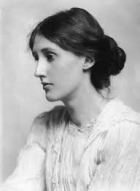
 Virginia Woolf famously wrote that in December 1910 there was a fundamental change in human nature. A startling remark, prompted perhaps by the dizzying pace of change in the period that led up to World War I. For Woolf, as well as many upper-class Britons, the political, economic, and social stability of the long Victorian era was crumbling. (Will we be able to look back and pinpoint a similar demarcation in our own times? There are lots of resonances with our own times in the books below.)
In Britain, industrialization, with the accompanying push for trade unions, was changing the relationships among the classes. Members of Parliament fought over an historic bill that would limit the power of the House of Lords and debated Home Rule for Ireland. Trusted servants were publishing exposés of their employers’ private lives and militant suffragists had taken to the streets. Motor cars, planes, and expanded railway connections had begun to change people’s lives in fundamental ways. In the political sphere, Russia and the European powers were engaged in an arms race that was supposed to guarantee peace but really ensured that armies were at the brink of war. Kaiser Wilhelm’s expansionist adventures and rhetoric, especially his vow to achieve naval supremacy over England, was a threat that spoke directly to the hearts of British Empire builders. Woolf’s perceptive comment recognized that, at least for the British, times were changing in irreversible and unexpected ways.
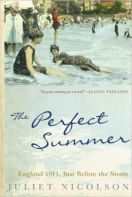 Juliet Nicolson, in her book The Perfect Summer: England 1911, Just before the Storm, uses the events of that unusually hot, dry season—almost the chronological center point of the era–to provide a snapshot of British life. A year after the death of King Edward VII, the festive coronation of King George V and Queen Mary led off the summer with an historic display of ceremony, royalty, and fashion for the delight of the lower classes. Diaghilev’s Ballet Russe arrived in London and the upper classes fell in love with the supple and sexually charged star Nijinsky; some saw their favorite ballets multiple times. Fabulous country house parties with eight-course dinners–all made possible by armadas of poorly paid servants–provided entertainment and a semblance of activity for the moneyed classes.
But there was more to that summer than conspicuous consumption. The unusually hot, dry weather created tinderbox conditions in the fields and on the streets of the cities. Farmers struggled to find grazing for cattle, trade union organizers and suffragists called for strikes that brought hundreds of thousands into the streets and brought some of the dreadful factory working conditions to public notice. Nicolson puts a personal face on all these events, following a diverse cast of historical figures, among them politicians such as Winston Churchill, writers such as Virginia Woolf and Rupert Brooke, nobility such as Lady Diana Manners, and union organizers such as Ben Tillett. Her witty and absorbing chronicle catches England on the cusp of the war that would change, if not human nature, then so much else.
 Many novelists have written about class relationships in the Edwardian period, but possibly none more brilliantly than E. M. Forster in Howards End, published in 1910, a story of three families and the house named Howards End, which draws them together. The upper-class Wilcoxes, who have made their fortune in business, are all about “telegrams and anger,” while the middle-class Schlegel sisters live for music, literature, and cultured conversation with friends. Leonard Bast, an unhappy insurance clerk, is accidentally drawn into their orbit with dire results. When Mrs. Wilcox bequeaths Howards End to Margaret Schlegel, Forster uses the bequest to expose the gulf among his characters’ values. Beautifully written, witty, and filled with great characterization and sense of the times, Howards End is a wonderful portrait of the contradictions of Edwardian England. The film version, made in 1992, is faithful to the novel and highly recommended.
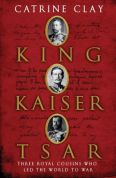 Queen Victoria’s children and grandchildren married into many of the royal families of Europe, creating a far-reaching network of relationships that influenced political alliances. Catrine Clay, in King, Kaiser, Tsar: Three Royal Cousins Who Led the World to War writes about George V of England, Wilhelm II of Germany, and Tsar Nicholas of Russia, first cousins whose tangled relationships contributed to the causes of World War I. Clay focuses on their personalities and the childhood experiences that shaped them and sheds light on their behavior as rulers. George was the younger brother who never expected to inherit the throne until his older brother Eddy’s unexpected death. Wilhelm and Nicholas were bound to the British royal family through their mothers, although the militaristic Wilhelm and his mother disagreed violently on politics. Tsar Nicholas, who married Queen Victoria’s granddaughter, was ill-equipped by temperament to navigate the violent changes of the Russian Revolution. It’s an enlightening story of how these three cousins affected the course of world history.
 I saw an article the other day about the various artists who have illustrated Alice in Wonderland. Sir John Tenniel drew the classic illustrations and even though they hold a sacred place in our hearts, I loved some of the others. Would we have the same feelings about Alice if we had always read it with different illustrations? Here’s a link to Maria Popova’s wonderful “
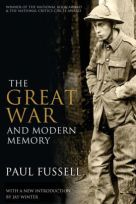 LitHub marked Wednesday as the day when Julian Grenfell, the British poet and soldier in the First World War, was shot. He died 13 days later and the following day, his poem, Into Battle, was published in the London Times. I was startled to see the note about Grenfell, which was accompanied by a picture of him in uniform. I was startled because he’s not someone you hear about often.
 Regarding my previous post “A Way With Words,” I was reminded by a friend that John Chadwick worked with Michael Ventris on the unraveling of Linear B and after Ventris’s death, he wrote
  I was also thinking some more about my recent post “Shakespeare in Our Time,” particularly Margaret Atwood’s version of The Tempest, titled
  I don’t know about you, but I receive many emails every day about cultural events and programs that are available free for listening or streaming. Of course, I want to enjoy them all, but at the same time I’m trying desperately to get away from seated activities. If I wore my Fitbit I’m sure a frowny face would show up on the dial at the end of the day.
 Yesterday I listened to one of the
 ![Roz-child-reading[1]](https://areadersplace.net/wp-content/uploads/2020/04/roz-child-reading1.jpg?w=137&h=194) I was a reference librarian at several libraries early in my career (before the Internet changed reference work forever). I loved the interaction with people who needed information. What would the next question be? Would I be able to help find the answer? What new piece of information would I learn from this person’s question? I loved telling people that, yes, I could help right now and we’d work together until we found the answer or the book they wanted. I could often see the relief in their faces. So many times–I’m talking before this virus–we navigate through phone trees that don’t have the option we want; we can’t find the staff in retail stores to help us find what we need; we wait for someone to notice that we’re waiting to ask a question; we speak to people on the phone who are reading from scripts that don’t pertain to our lives; we hear “no we don’t” or “no we can’t” or “we don’t have/do that anymore.”
I was a reference librarian at several libraries early in my career (before the Internet changed reference work forever). I loved the interaction with people who needed information. What would the next question be? Would I be able to help find the answer? What new piece of information would I learn from this person’s question? I loved telling people that, yes, I could help right now and we’d work together until we found the answer or the book they wanted. I could often see the relief in their faces. So many times–I’m talking before this virus–we navigate through phone trees that don’t have the option we want; we can’t find the staff in retail stores to help us find what we need; we wait for someone to notice that we’re waiting to ask a question; we speak to people on the phone who are reading from scripts that don’t pertain to our lives; we hear “no we don’t” or “no we can’t” or “we don’t have/do that anymore.” I’ve been reading a great deal since 2020 began, and while most of what I’ve read has been enjoyable (or I wouldn’t finish), only a few books have hit that high note that makes reading truly exciting. That’s why I had high hopes for Daniel Kehlman’s
  A Reader's Place