
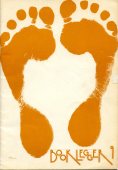
 In the late 1960s and early 1970s the countercultural movement, in its anti-establishment wisdom, pushed librarians to question library-work-as-usual. For example, librarians began to investigate–and change–the way things were named in our catalogs, making subject headings more authentic and relevant. (Now, of course, keyword searching, tags, and other techniques have made all that head-banging work almost irrelevant.) Since the library profession is largely female, Second Wave Feminism shook things up as well.
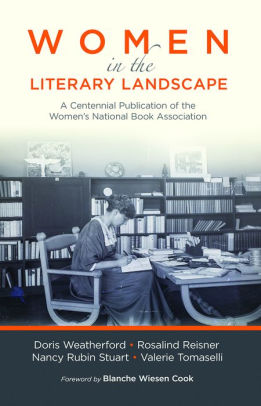
Women in the Literary Landscape, (the Women’s National Book Association publication I helped write), showcases those changes in the library, bookselling, and publishing worlds. I remember, as a young librarian in the 1970s, seeing the magazine Booklegger, put out by Celeste West, Valerie Wheat, and others. It would be correct to say that the scales fell from my eyes. I was working at that time for what was considered a very progressive library system but Booklegger and the subsequent book of essays, Revolting Librarians, went much farther in their efforts to disrupt complacency. They wrote, for instance, about libraries needing to provide access to non-mainstream literature, specifically, the little magazines and alternative newspapers that were expressing views not otherwise heard. The Berkeley Barb, East Village Other, and the LA Free Press, to name just a few of the more well-known publications, offered alternative ideas, opinions, and local news, addressing populations that were then mostly invisible. An article titled “I Never See Him Come Into the the Library Much Anymore” skewered the lack of a customer service focus in reference work.
There was countercultural change in the bookselling business as well. Below, from Women in the Literary Landscape, are a few paragraphs about the feminist bookstore movement.
“Women opened bookstores that served as gathering centers for book discussion, self-help groups, meetings, and performances, with chairs and tables to sit at and bulletin boards to advertise local events. The bookstores stocked non-sexist children’s literature, lesbian fiction, books that portrayed nontraditional families, writings on women and violence, and as women’s history developed into an academic discipline, they were sources of feminist scholarship. They were also safe spaces for women leading nontraditional lives. Publishers, ever conscious of the marketplace, recognized that these bookstores meant there were new opportunities in the field of feminist literature.
“In the 1970s and 1980s there were at least one hundred feminist bookstores around the country. The first two were Amazon in Minneapolis and ICI in Oakland. They were soon followed by New Words in Boston, Bookwoman in Austin (Texas), and Charis in Atlanta, among many others. Carol Seajay, one of the founders of Old Wives’ Tales in San Francisco, started the Feminist Bookstore News, creating a way for the bookstores to exchange news and ideas. In 1994 there were still one hundred feminist bookstores, but by the late 1990s with the arrival of chain bookstores and online sales, the number declined, and by 2014 there were only fourteen.”
I still have my copy of the first issue of Booklegger (that’s the graphic at the top of this post). It’s an artifact from an earlier era, but the energy that fueled it never goes out of style. For more information about the indomitable Celeste West, click here.
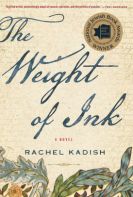 In the July 15th New York Times Book Review, in a review of Alexander Chee’s book How to Write an Autobiographical Novel, J.W. McCormack writes: “In Chee’s telling, the writer’s life always lurks just beyond the page…” I’m always interested in the writer lurking just out of reach and the relationship of the book to the writer’s life. I don’t mean that I expect incidents to reflect personal experience or characters to be modeled on friends and family. There’s a much more subtle relationship that I’m interested in.
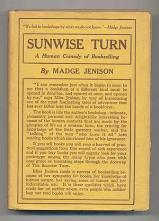 Last week I wrote about the book I co-authored, Women in the Literary Landscape, which contains an overview of the role of women in various fields related to books. One of the joys of doing the research was discovering Madge Jenison, known as a “minor novelist” and the co-owner of the Sunwise Turn Bookshop, which opened in New York City in 1915. Madge wrote a memoir about her bookselling experiences, called Sunwise Turn: A Human Comedy of Bookselling. Her personality shines through on every page: warm, buoyant, idealistic and exuding positive energy. Jenison felt that putting the right book in the hands of the right reader might just save the world. One of my favorite lines from the memoir is, “Books– do I made too much of them?”
 I read and enjoyed Mason’s
  I’m a member of the
 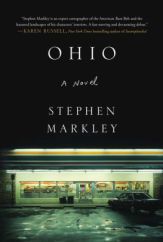 Sometimes a novel is just a story; sometimes it’s more than that. Sometimes a novel captures a place and time in such a way that it takes us beyond the characters’ lives. They’re part of the time and place, artifacts of it; their stories resonate with the social, political, and cultural environment. I’m thinking about Colm Toibin’s Brooklyn; The Girls by Emma Cline; City on Fire by GarthRisk Hallberg; and Emma Straub’s Modern Lovers to name a few.
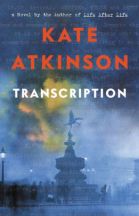 At the end of May I spent 2 wonderful days at the Javits Center in New York for the publishing trade show, Book Expo. If you’re unfamiliar with this annual book extravaganza, hundreds of publishers set up booths to promote their Fall titles and meet with booksellers from around the country. Advance copies of the titles that the publishers want to promote are given away, authors sign their books, and there’s lots of swag to be had. After 20 years of attending, I have a large collection of publisher-themed canvas tote bags. It’s a standing joke among friends and family.
 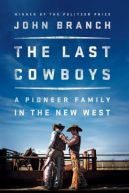 A good review led me to this book about a rodeo family, the Wrights of southern Utah. Famous on the rodeo circuit for three generations of championship saddle-bronc riding, the Wrights are a large close-knit family with a cattle ranch as well as a serious rodeo passion. Patriarch Bill Wright, no longer on the rodeo circuit, does his best to maintain the land that’s been in his family for 150 years. Changes in the weather that decimate grazing grounds, conflicts with the Bureau of Land Management, and offers from developers combine with Bill’s aging bones to make ranch upkeep difficult. All through the book Bill debates different scenarios if his sons can’t or won’t take over the ranch. He’s been a good steward of the land, but he knows that ranching on Smith Mesa may no longer be viable.
 I was in the gym last week riding a stationary bicycle called an Expresso, which has a video screen and movable handlebars. It allows you to pick a scenic ride and steer around curves, change gears, etc. It’s something to distract you from the boring activity you’re engaged in. A way to trick the mind and body.
 A Reader's Place