Category Archives: Uncategorized

How it All Began by Penelope Lively

I’ve been a fan of Penelope Lively’s novels for years; they’re rich with insight into human relationships and full of ambiguity and speculation about human behavior and motivation. She’s always interested  in the effects of our actions; in fact, one of my favorite novels of hers is titled Consequences. In the opening pages of How it All Began, Charlotte Rainsford is mugged on the street in London and thereby hangs a tale. The event ripples outward, changing the lives of several characters, each of whom steps off the page, fully formed: cranky, lovable, self-absorbed, decent, greedy, and maddening, they’re people we recognize.  More important, we want to see what happens to them as they are caught up in Lively’s web of consequences.

There’s satire, comedy, and tragedy, but also delightful insight into the role that reading, writing, and language play in our lives and inform our sense of self.  Charlotte, recuperating with a stack of books from the mugging in the novel’s opening scene, muses about the role of reading in her life:

“Forever reading has been essential, the necessary fix, the support system. Her life has been informed by reading. She has read not just for distraction, sustenance, to pass the time, but she has read in a state of primal innocence, reading for enlightenment, for instruction, even.  She has read to find out how sex works, how babies are born, she has read to discover what it is to be good, or bad; she has read to find out if things are the same for others as they are for her—then, discovering that frequently they are not, she has to read to find out what it is that other people are experiencing that she is missing.”

Passages like that are the reason I’ve always enjoyed Lively’s novels.

The Marriage Plot

Did  you see the article by Garth Risk Hallberg in last the NY Times on Sunday, Jan 13 titled Why Write Novels at All? I had taken a break from the Sunday Times that weekend (heresy, I know) and a friend in Israel emailed me a link to the article. We emailed back and forth during the week, talking about Hallberg’s comments on The Marriage Plot and the difficulties we both had reading it.  Sigh. I wanted to love the novel for many reasons, not least of all because I thought Middlesex was a tour de force and also because like many of us, I too knew some brilliant, unstable people in college and was hoping that Eugenides would capture some of the intense emotionality of that experience.  It didn’t happen for me.

Hallberg, in the Times article, writes that in The Marriage Plot (and other recent fiction by specific authors he mentions) “we encounter characters too neatly or thinly drawn, too recognizably literary, to confront us with the fact that there are other people besides ourselves in the world, whole mysterious inner universes.” I have to agree. There’s lots of great stuff in The Marriage Plot; there are still some sentences, that stick in my mind, but I felt that overall it was self-indulgent. I’m waiting for Eugenides’s next novel.

Books Overhead, part 3

Well, in addition to the books on my MP3 player and the physical books that are waiting to be read, I have an e-reader, a nook, and I love using it. The only drawback is that it’s entirely too easy to buy books–just a few clicks and  it appears in front of you. But then, um, you notice there’s that charge on your credit card. There are several ways I get around that–borrowing ebooks from the library via Overdrive or downloading them from NetGalley–but there are books that I just have to buy for one reason or another.

A while ago I requested a copy of Love and Capital: Karl and Jenny Marx and the Birth of a Revolution from NetGalley I couldn’t resist the glowing reviews and it was starting to appear on lots of “best” lists. Once I began reading it I could see why. Marx was charismatic, contentious, and arrogant; a loving father but also heavy drinker and an adulterer whose children grew up in grinding poverty. He was always scrounging money from friends and relatives, sometimes in the most disgraceful ways.  He committed to writing projects and publishers advanced him funds, but Marx was allergic to deadlines or to finishing projects at all. He was hounded from country to country for his political views but always lived in hope of the masses rising up and taking their due.  I grew up during the Cold War, when Marx was a bogeyman, so it’s been a revelation to have him turn into a real person, a brilliant economist and a very fallible husband and father. His long-suffering wife, Jenny, never wavered in her adoration of her scruffy husband or lost faith in his brilliance; she was the rock of his life.  Unfortunately I couldn’t finish the book before it expired so I put a reserve on it at the library. Now I have it sitting on my nightstand, waiting…

I read a review of Thrumpton Hall: A Memoir of Life in My Father’s House by Miranda Seymour and sensed that it was something I had to read. I downloaded a sample to my nook and was instantly absorbed by the author’s painful tale of her upper class dysfunctional English family. So I bought it, although I won’t be able to read it until I go on vacation later this year.

I also have lots of samples on my nook, impatiently waiting for me to make a decision: The Vertigo Years: Europe 1900-1914 by Philip Blom, War and Peace (!), The Darwin Economy: Liberty, Competition, and the Common Good by Robert H. Frank, Carpe Diem Put a Little Latin in Your Life by Harry Mount, Gilead by Marilynne Robinson, and Can You Forgive Her? by Anthony Trollope (I loved The Way We Live Now, hoping this is as wonderful).

Singapore

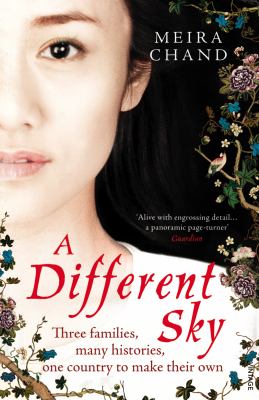
I just finished reading A Different Sky by Meira Chand; one of the best historical novels I’ve read in quite a while. I picked it up because of several excellent reviews and was absorbed immediately by the setting and the characters. It also helps that it’s set in Singapore, a place I visited 12 years ago, but I am drawn in general to historical novels set in Asia.

Chand’s story starts in 1926, when 6 people riding on a bus witness a demonstraton by a group of communists in which a British official is wounded.  That incident is a harbinger of things to come, and for those people on the bus, their lives are never the same, indeed, from that point they are hurtling toward catastrophic changes and unimaginable terrors. We follow these families’ interwoven stories from 1926 to 1956, sharing the changes those years brought in their lives and in the political realm.

In 1926, Singapore was a British colony, part of Malaya. Its polyglot population of Chinese, Eurasians, and Indians, with their various loyalties, traditions, and expectations, makes it a rich source for a good storyteller like Chand. Her particular gift, in A Different Sky, is to create characters that live and breathe and that we care about. They all go through searing experiences, losing much of what they value; Chand keeps us at their side with her astute descriptions of their psychological states. What I also loved about the book was  that Chand loves her characters–all of them–even the ones who don’t behave so well.

There’s lots of history in A Different Sky, all of it based on historical records and none of it dry. The brutal Japanese invasion and occupation of Singapore in World War II is central to the story along with the post-War agitation for independence. There are some historical characters, like Lee Kwan Yew, who came to play such a pivotal role in Singapore’s history for so many years.  I’ve always admired writers who can take the historical record and give it life; that’s Chand’s gift in A Different Sky.

A few other historical novels I’ve enjoyed with Asian settings: The Calligrapher’s Daughter by Eugenia Kim  set in Korea; The Glass Palace by Amitav Ghosh, set in Burma;  The Language of Threads by Gail Tsukiyama; and of course The Raj Quartet by Paul Scott;

A Few Readers’ Advisory Resources

Yesterday I gave a talk for the Monmouth Librarians Association called “Readers’s Advisory Without Tears” and I promised the attendees that I’d post some useful sites for readers’ advisory work. Here they are, in no special order and just five of them, so you don’t feel overwhelmed:

Shelf Awareness: Daily Enlightenment for the Book Trade a free Monday to Friday newsletter about books, authors, bookstores, publishing, and media matters.  Sign up for the professional edition. There’s also a readers’ edition which comes out twice a week and would be great to suggest to your patrons who want to keep up with the book world.

Omnivoracious is Amazon’s book blog, so it’s a good source for what’s selling, trending, or otherwise of intense interest to those power readers who must have the latest and best. At the moment there are several posts about “best” books in various categories: crafts, cooking, art/photography, bio and memoir, so it’s a good source for checking your own catalog and finding topics and titles for displays.

Early Word: The Publisher/Librarian Connection is a great blog/website and new book resource. It’s lively, timely and aims to give libraries the earliest information possible on new and forthcoming books.

Blogging for a Good Book is subtitled “A Suggestion a Day from the Williamsburg Regional Library”  and that’s just what it is–a review every day of a new or recent book. The titles are diverse as you’d expect since individual staffers are writing about what they’re reading and enjoying. In the last few days they’ve reviewed mystery, romance, teen fiction, literary fiction and science fiction. Something for everyone. I immediately put a reserve on Ready Player One by Ernest Cline. Here’s a case where you can let the folks at Williamsburg do some work for you. Read their reviews and pass them on to your readers.

Goodreads is a great social networking site for readers to exchange thoughts about the books they read and that makes it a good resource for librarians. I started using it just to record the books I read but there’s now so much more going on. As John pointed out yesterday, the Listopia feature would be very helpful for displays. Goodreads lets me know when there are new books coming out by the authors I’ve already read, allows members to set up discussion groups, publishes author interviews, and generally tries to make connections among readers. It’s worth spending some time getting to know the site.

The Books Overhead, part 2

Now for the books that are hanging around on my nightstand,  waiting on various coffee tables, and a few of the books on a particular shelf that just might as well be labeled “dream on, O foolish reader.” Library books, too, that need to be read in two weeks.

The Swerve: How the World Became Modern by Stephen Greenblatt. I’ve been reading this slowly; I’m now thinking I’ll go back to the beginning and take notes as I read it. I studied Greek and Roman history, literature, and art in college and I savor any opportunity to revisit those subjects. Often, when I go to the Metropolitan Museum I walk through the beautifully renovated Greek and Roman galleries. I still remember when the Greek vases were in the dusty basement, case after case of treasures. The Swerve is about the re-discovery of De Rerum NaturaOn the Nature of Things–the great philosophical and scientific work by the Roman Epicurean poet  Lucretius from the first century BC.  De Rerum Natura was Lucretius’s effort to make sense of the physical world, to prove that all things operate according to natural laws, not dependent on religion.  Manuscript hunters in the fifteenth century visited scriptoria in monasteries to find the classical works that were buried there, lost or swept aside when the Christian Church tried to wipe out all vestiges of ancient religion and philosophy. The copying and translation of De Rerum Natura had a remarkable effect, according to Greenblatt, inspiring artists, writers, philosophers, and scientists and creating the remarkable flowering we know as the  Renaissance. Greenblatt meanders through the story, filling us in on all kinds of history and philosophy; a great read. I also enjoyed his earlier book Will in the World: How Shakespeare Became Shakespeare, about how the complicated political and social changes in Shakespeare’s times affected the man and his plays.

The Grief of Others by Leah Hager Cohen. I was immediately drawn into this story of how grief and past mistakes can derail a happy family.  John and Ricky Ryrie’s third child died shortly after a premature birth and it’s clear to their two children, a year later, that although family  life goes on in the ways they’ve come to expect, their parents have lost their way. I read Cohen’s lovely memoir Train Go Sorry: Inside a Deaf World (it’s in my memoir book) a tender, fascinating account of growing up at the Lexington School for the Deaf, where her father taught. The Grief of Others is in some ways about people hearing what’s unsaid.

Just My Type: A Book About Fonts by Simon Garfield. When we all used typewriters, fonts weren’t something we thought about very much. Even the IBM Selectric, with its removable ball, had a limited selection of fonts and for personal use, e.g., term papers, we just didn’t care. But, of course, we were aware of fonts; we could always identify a New York newspaper just by looking at the typeface and layout without seeing the masthead. And who didn’t practice drawing fat “cookie letter” alphabets or messing around with various typefaces that looked so cool on our notebook covers? Now we casually accessorize our documents with fonts and scorn the overused ones, like Helvetica and Comic Sans. The reviews on Garfield’s book have been terrific; I’m looking forward to reading about the social and cultural history of fonts and how they’ve become part of the message. And for anyone who has an interest in letterpress printing, take a look at the website briarpress.org. Full disclosure here: my son Alex is the technical wizard who keeps it working.

Thinks… by David Lodge. I love David Lodge’s brand of satirical humor and have enjoyed several of his novels: Paradise News, Nice Work, and Small World. My husband just finished Lodge’s latest book, a sort of biography in novel’s clothing, about H.G. Wells, called A Man of Parts. Not sure I’ll read that one, although it does tie in with my interest in British writers of that period. We’ll see…

Cutting for Stone by Abraham Verghese. I read Verghese’s memoir My Own Country: A Doctor’s Story shortly after it was published in the mid-90s, probably because something in the reviews appealed to me. It is one of only a handful of books that I’ve rated a 5 on my Goodreads account. It was extraordinary: a beautifully written account of how a young immigrant doctor in rural Tennessee discovered his calling caring for the young gay men who were returning from the cities to their rural homes to die of AIDS. My copy of Cutting for Stone is signed; I got it at Book Expo after hearing Verghese speak at an author breakfast. Somehow, I’ve neglected to read it when everyone else already has. Soon, soon.

Ancestral Passions: The Leakey Family and the Quest for Humankind’s Beginnnings by Virginia Morell. We were in Tanzania in August and visited Oldupai Gorge, so I bought this in preparation for that trip, not realizing that Morell’s biography of the family is enormous and hugely detailed. It’s fascinating, more so now that I’ve been to the famous site, but it’s not clear when I’ll get back to it.

Cathleen Schine and Adam Gopnik in Conversation

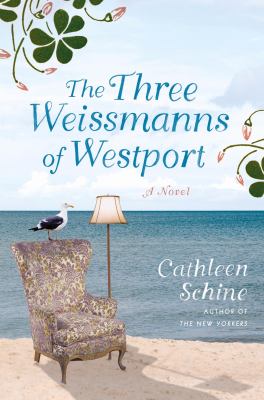
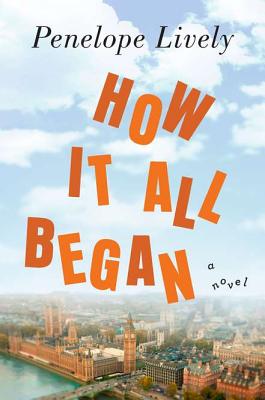
You can attend this event at the Museum of the City of New York at members’ prices if you mention A Readers Place. I’d love to be there but have another commitment. I read Schine’s last novel The Three Weissmans of Westport and thought it was delightful and loved Adam Gopnik’s Paris to the Moon. There are always too many book and literature-related things to do in New York. Sigh.

More Memoir Quotes

I’ve noticed that many people who come to A Reader’s Place look at the quotes about memoir, so I’ve added several more. Here’s a link to the page.

I began collecting memoir quotes several years ago when I came across Jill Ker Conway’s comment “Why is autobiography the most popular form of fiction for modern readers?” (It appears in her book When Memory Speaks: Reflections on Autobiography.) I was delighted that in a few words she nailed the appeal of the memoir. If you haven’t read her own memoir The Road From Coorain, grab it–it’s one of the great coming of age memoirs. It begins with her childhood on a sheep ranch in the Australian outback and later move to Sydney, but it’s really about the intellectual and emotional coming of age of a remarkable woman.