Category Archives: Uncategorized

Reading lately…fiction

Here are three very different novels–maybe something for everyone? 
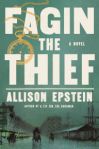
Fagin the Thief by Allison Epstein. I never read Oliver Twist, so I only knew that Fagin was a criminal mastermind, a trainer and taskmaster of thieving children, an anti-Semitic character written by a racist author. So I opened the book, determined that if it didn’t grab me right at the beginning, I’d put it aside. I enjoyed it and I’m glad I read it, but it has completely satisfied my interest in Oliver Twist. (I’m not a big Dickens fan.) Books that are riffs on characters in novels are hard to pull off, but great fun to read when they are successful. Kudos to Allison Epstein for this one; it’s an absorbing tale with lots of atmosphere.
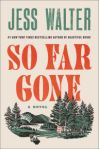
So Far Gone by Jess Walter. This was such fun to read, packed with humor, great characters, and a crackling story about love and loss. Crusty old Rhys Kinnick lives off the grid, preferring his own company to the craziness of the outside world. One day, without warning, his two pre-teen grandchildren show up at his door and the world crashes in on him once more. Their mother– estranged from Rhys since he sucker-punched her husband at Thanksgiving dinner–has gone AWOL and wants Rhys to take charge of the children. Garrulous nine-year-old Asher believes he’s a chess prodigy; Leah is a perceptive, wise-cracking twelve-year-old, an expert at eye-rolling. To avoid their angry father and his right-wing associates, the three take to the road, but here I must stop and let you have the pleasure of reading on. I read Walters’ first novel, Beautiful Ruins and loved it. His books are catnip for fans of Carl Hiaasen’s novels and the novel Norwegian By Night by Sheldon Horowitz. It also reminded me of the movie Oh Brother, Where Art Thou? in the best possible way. 
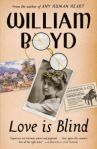
Love is Blind by William Boyd. Boyd is one of the great prose stylists of contemporary British literature. That doesn’t mean that his novels are stuffy, it just means he tells a great, beautifully written story. Years ago, I read his earlier novel, Any Human Heart and loved it; I’ve been waiting for another opportunity to read more of his writing. This new novel is a rich, absorbing tale, set in fin-de-siècle Europe. The main character is Brodie Moncur, a young Scottish piano tuner, talented enough to be just the least bit arrogant. He lands his first job, tuning pianos in Edinburgh, through a favor, moves on to Paris and impresses a piano virtuoso who hires him as his personal piano tuner. When he falls in love with the virtuoso’s lover, Lika, a beautiful seductive singer, his life becomes complicated. Their forbidden passion is more dangerous than Brodie realizes and it sets his life on a different course. 
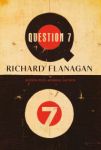
Question 7 by Richard Flanagan

It’s hard to know where to begin describing this book. It’s a memoir, but a memoir unlike any other I’ve read recently. Flanagan’s Question 7 interweaves stories and incidents from his life with descriptions of some of the most destructive episodes in human history, including the bombing of Hiroshima, the Holocaust, and the eradication of the native population in  Tasmania. Like the chain reactions in an atomic bomb, Flanagan builds to a moving, haunted climax by building his narrative around these events of ruin and loss.

Flanagan opens the memoir by describing his trip to the site of a World War II camp in Japan where his father had been interned as a slave laborer in a coal mine. Guides at the camp deny the existence of slave labor there. Flanagan writes, “Sometimes I wonder why we keep returning to beginnings–why we seek the single thread we might pull to unravel the tapestry we call our life in the hope that behind it we will find the truth of why. But there is no truth, there is only why.” His father’s experience has been erased; it’s one of several lessons in the power and fragility of memory.

In exploring the “why” of memory, Flanagan ranges over various subjects, starting with H.G. Wells’ prescient novel The World Set Free, written in 1913, in which Wells predicted the creation of a weapon of more destructive power than any previously known. Flanagan links Wells’ novel to the scientist Leo Szilard, who helped create the atomic bomb, but then, terrified by what he had done, tried to stop its use in Hiroshima. Chapters about Wells, Szilard, and other scientists and writers (including Vonnegut) circle around sections devoted to Flanagan’s childhood. The last chapter is the harrowing story of his almost-fatal kayak journey down the Franklin River in Tasmania when he was twenty-two. The trauma of that near-death experience–which is foreshadowed from the beginning–informs the entire book and connects to the story about his father’s experience in the slave labor camp. Time, memory, destruction, and literature are all woven together. I also now have a deeper appreciation of the way colonial history is embedded in the DNA of Australians and Tasmanians. Living “down under,” with its unique and savage history, ethnography, and geography, has had profound psychological ramifications.

Kirkus Reviews called Question 7 “a haunting, jagged, sparkling narrative puzzle in which the pieces deliberately refuse to fit.” That’s a great description of this ruminative, absorbing, and unsettling memoir. Flanagan leaves us with lots to think about.

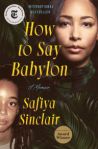
How to Say Babylon by Safiya Sinclair

My book group chose this book a few months ago and I was dragging my heels, putting off reading another memoir of escape from childhood. But I’m a good book club member so I took it out of the library. Before I had a chance to start reading, someone told me that the audio version of How to Say Babylon was wonderful, so I found it on Audible. I’m so glad I did! Safiya Sinclair is a poet, and her writing is sublime. Since she reads the audio version in her lilting Jamaican accent, it’s a double treat. I highly recommend it. She reads slowly and clearly, so the audio version takes longer than reading the book, but make time for it if you can.

Sinclair grew up in a Rastafarian family, the oldest of four children. Her charismatic father was a reggae musician who was in a popular band for a while, playing at hotels and events in Jamaica, sure he would soon make the big time. He never received the success he felt he deserved, lost the rights to his music in shady deals, and became angry and bitter. The family bore the brunt of his fury and disappointment. His religious beliefs gave him cover for serial adultery and the abuse he inflicted on his wife and children. Safiya alternately yearned for his approval and despised him for his hypocrisy and arrogance.

Rastafarians believe that Haile Selassie, former emperor of Ethiopia, embodies the second coming of Jesus Christ. Very briefly, their religion requires them to be vegetarians, live in harmony with nature, keep their hair in dreadlocks, and smoke weed for spiritual purposes. The Devil inhabits the non-Rastafarian world, known as Babylon. Safiya’s father, in his anger, took these beliefs to an extreme, sometimes keeping the children imprisoned in their home, ostensibly trying to protect them from the evils of Babylon. In turn, Rastafarians were persecuted for their beliefs and appearance.

Safiya and her three siblings were brilliant, winning Caribbean-wide academic awards and always first in their classes. Their mother was a gifted teacher, often tutoring neighborhood children, whose parents wanted to know the secret of the Sinclair brilliance. But aside from occasional visits to relatives, their lives were sealed behind locked doors. Their father’s red belt kept them in line.

From an early age, Safiya was a gifted writer and poet, using literature to express profound emotions that were not acceptable in her family. Her journey to poetic and personal freedom is heartbreaking to read at times, but an important testimony to the power of literature in our lives.

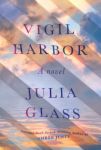
Vigil Harbor by Julia Glass

I’ve read most of Julia Glass’s novels because I love the way she develops characters. The plots are often slightly improbable, but the characters bring it off. Somehow, I missed Vigil Harbor when it came out in 2022 and recently found a used copy at my local bookstore. I was absorbed in it almost immediately. The book is set in the near future, with all the attendant issues of our warming planet.

Vigil Harbor is a town on Boston’s North Shore, an old fishing village that evolved into a wealthy enclave with a mainly white population. The residents feel lucky to live there, even though floods, severe storms, and high sea levels threaten the shore and wetlands, as they do everywhere on the coasts. People adapt as best they can. There are also threats from eco-terrorists, and that becomes an important part of the story.

When the novel opens, several marriages in the town have fractured and several families have suffered other kinds of losses. Austin, a local architect, hopes that the divorces will mean more work for him to build and renovate houses. His stepson, Brecht, home from college after a traumatic incident in New York, is trying to recover his equilibrium. Brecht is working for Celestino, the local landscaper, one of the few working-class people who live in town. A stranger arrives who knew Celestino years ago, someone who stirs up dangerous memories. Celestino is frightened as he watches Ernesto ingratiate himself with all the women. Another new arrival in town is Petra, posing as a journalist. She contacts Austin about writing a biography but her real motive is revenge for his abandonment of a former lover. In a lovely, fantastical touch, the mermaid Issa takes human form to warn the world about damage to the ocean. Her innocence is a heartbreaking contrast to the rest of the characters, who are anxious and uneasy in a world of ongoing catastrophes. Each chapter is told from the point of view of a different person, their stories gradually interlocking until the explosive ending.

What I love about Julia Glass’s novels is her generous spirit towards her characters, the way she gives them back stories and fully formed lives, inviting us to share their dreams and fears. There’s real life on the page, and that’s what I look for in a novel.

Now that I’ve checked my Goodreads list, I can see that I’ve read all her novels–I guess I’m a fan. If you haven’t read any of her novels, I’d recommend starting with Three Junes.

Three Junes

The Whole World Over 

I See You Everywhere

The Widower’s Tale

And the Dark Sacred Night

A House Among the Trees

Unlikely Spy Fiction

I’ve read several books in the last few years about ordinary people recruited as spies. I think it’s a mini-genre. Have you noticed? Here they are in order of how much I enjoyed them.

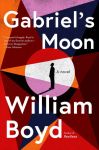
This past year, I read Gabriel’s Moon by William Boyd, about a young man, a travel writer, who accidentally scores an interview with Patrice Lumumba, newly elected president of the People’s Republic of the Congo. (The time is the early 1960s.) The next thing Gabriel knows, Lumumba’s been assassinated and his interview has been buried by the press. Suddenly he acquires a handler from MI6 and his life is turned upside down. A frightening incident from Gabriel’s childhood ratchets up the tension. Boyd is a lovely, graceful writer; this one’s a keeper.

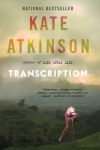
Then there was Transcription by Kate Atkinson, in which a young woman is recruited during World War II to keep an eye on British Fascists. Years later, when she’s sure that part of her life is a thing of the past, it catches up with her. Atkinson’s one of my favorite authors and I thought Transcription was quite good. Anything Atkinson writes about World War II is excellent.

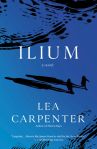
I enjoyed Ilium by Lea Carpenter, in which an unnamed young woman, looking for adventure, falls in love with, Marcus, a sophisticated older man. Just when everything is going well, he asks her for a “favor.” Marcus turns out to be a spy, involved in a CIA/Mossad plot called Operation Ilium. Our narrator agrees to help; she becomes the unlikely art advisor to a wealthy Russian family on Cap Ferrat. Various unreliable players ratchet up the suspense as our narrator tries to find the moral center.

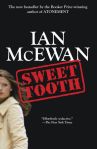
And lastly, there’s Ian McEwan’s Sweet Tooth, set during the Cold War, about a young woman recruited by MI5 to encourage writers with the right sort of politics to keep writing. Some reviewers took it seriously as a spy novel, some thought it was a spoof of spy novels. I thought it was lightweight McEwan, moderately entertaining, a good book for the summer.

l

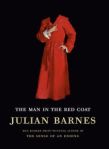
The Man in the Red Coat by Julian Barnes

This book is not for everyone, but it was the right one at the right time for me. If you are interested in Belle Epoque Paris, John Singer Sargent, Proust, Oscar Wilde, and the literary feuds and affairs that kept Paris buzzing, then you’ve found a story to savor. I had to read it very slowly, twenty pages at a time, so I wouldn’t finish too soon. The structure is idiosyncratic: no chapter breaks and a rambling through-line. Barnes jumps about from character to character, incident to incident, but the reader ends up with a full picture. Few writers could pull it off. And if you’re familiar with Barnes’s fiction, this is nonfiction. I’ve been reading about John Singer Sargent lately, getting ready for the exhibit of his Paris work at the Metropolitan Museum.

The eponymous red-coated man is Samuel Pozzi, an gynecological surgeon, who, Zelig-like, turned up in all the most interesting places and knew all the right people in the arts and sciences. He was also incredibly handsome and knew it. Barnes was inspired to write the book after he saw Sargent’s painting of Pozzi in the National Portrait Gallery in London, on loan from its home at the Armand Hammer Foundation in Los Angeles. Like many of Sargent’s best portraits, it’s large, almost lifesize. I was so delighted to see it at the Met exhibition. It is positioned so that it draws your eye from several galleries away. And yes, Pozzi is extremely good-looking, with curly black hair, pale skin, and classically beautiful features. Barnes unpacks the portrait’s insinuations: Sargent’s choices in how he positioned Pozzi, the suggestive position of his hands, and the placement of the tassels of the red robe.

For Barnes, the portrait is the jumping-off point for musings about Pozzi and his friends. Barnes is witty — often snarky, insightful, and very entertaining. He takes great pains to describe the differences between the French and the British, who often bewilder each other, e.g., there’s no such thing as a crime passionel in the English court, but there certainly is in France and murderers (at least in the Belle Epoque) were often acquitted with that defense. The French skewer the English, especially the women. I can’t resist quoting this passage from Count Robert de Montesquieu on his first trip to London. At a restaurant, he comments on the ladies around him: “…robust Englishwomen with boyish faces, teeth as big as palette-knives, cheeks as red as apples, long hands and long feet. They were enthusiastically attacking helpings of rump-steak pie.” (Montesquieu is presumed to be the model for Charlus in Proust’s opus.) There are literary feuds that end in duels, many of them injurious but not fatal, with pretenses as trivial as a disagreement about whether the divine Sarah Bernhardt is thinner now than she used to be. Competition among writers leads to scurrilous reviews, hastening the feuds. Pozzi rides (mostly) above it all, traveling around the world to learn new surgical techniques, especially the treatment of gunshot wounds to the stomach (those duels, again). His marriage to Thérèse is unhappy, partly because of his many affairs, all discreetly managed, except the one that lasted for twenty years.

It’s hard to know where to begin and end in describing this book; there are so many characters, and it’s clear Barnes had fun writing it. The physical book is beautifully put together by Knopf: heavy white paper that contrasts nicely with an elegant font, generous margins, and beautifully reproduced paintings. In addition, Barnes includes Felix Potin’s collectible cigarette card photos of many of the characters in the book. I scored a copy of The Man in the Red Coat, on the sale table of my local bookstore; it looked too interesting to pass up and I was quite right to grab it.

Another recent title about Sargent that I enjoyed is Family Romance: John Singer Sargent and the Wertheimers by Jean Strouse, about Sargent’s relationship with the Wertheimers, for whom he painted many portraits.

The Voyage Home by Pat Barker

Pat Barker’s novel, The Voyage Home is the third volume in a trilogy called The Women of Troy, a retelling of the Trojan War that foregrounds the women’s experiences.  When this book opens, the Trojan War is just over after ten long years; the Greeks have sacked Troy and reveled in their victory by murdering the population in horrific ways. (Greek literature is not for the faint of heart.) Now the proud conquerors, they’re sailing home.

Agamemnon, the commander-in-chief, sets sail for his kingdom, Mycenae. With him is the young Trojan priestess Cassandra and her slave Ritsa, part of Agamemnon’s spoils of war. Cassandra is a fascinating and tragic character in Greek myth: she was kissed by the god Apollo, who gave her the ability to tell the future. When she refused to sleep with him, he cursed her, saying that no one would ever believe her prophecies. She becomes an outcast, even in her own family, the weird sister, spouting madness.  Agamemnon rapes her and carries her off. She is no longer Trojan royalty, she is in a strange limbo between concubine and slave.

We know the story of faithful Penelope, Odysseus’ wife, who waited twenty years for him to return home, meanwhile fending off dozens of suitors. This is not a repeat of that story. Agamemnon returns to Clytemnestra, a wife who despises him. Ten years earlier, he had sacrificed their daughter Iphigenia to the gods when the Greeks needed a favorable wind to sail for Troy. Clytemnestra has arranged a welcome that’s dark and bloody. For ten years, she’s been stoking the flames of her hatred. In Greek mythology and literature, Clytemnestra is the archetypal bad wife. Pat Barker has other ideas.

Cassandra and her slave Ritsa are thrown into the center of this minefield of a family reunion, and although Cassandra knows what will happen, there’s tension in the thought that she can change her fate.  Ritsa, her slave, is the main narrator, although some chapters are written from the point of view of Cassandra or Clytemnestra. You may know the story of Agamemnon and his forebears from Aeschylus’ plays, or from reading Homer and Greek mythology; those accounts are written from the male point of view. In The Voyage Home, the story is told by the women and takes on an emotional weight missing from the classic accounts. Barker uses all the elements of the myth but transmutes them into something very different. I found it riveting. 

I love retellings of Greek and Roman mythology, especially when the author uses the basic elements to flesh out the characters in a way that makes them walk off the page. Years ago, I read several of Mary Renault’s books about Theseus: The King Must Die and The Bull From the Sea. Those novels were so wonderful that I’ve read many more mythological and historical retellings. It’s pretty easy to find poorly written novels in this genre, so I’ve added a list of some of my favorites below.

The Silence of the Girls by Pat Barker (the first novel in the trilogy Women of Troy)

The Women of Troy by Pat Barker (the second novel in the trilogy Women of Troy)

The Song of Achilles by Madeline Miller (one of my all-time favorite books)

Circe by Madeline Miller

Imperium by Robert Harris (the first novel in the excellent trilogy about Cicero, the Roman statesman)

The Penelopiad: The Myth of Penelope and Odysseus by Margaret Atwood

Pandora’s Jar: Women in the Greek Myths by Natalie Haynes

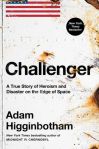
Challenger: A True Story of Heroism and Disaster on the Edge of Space by Adam Higginbotham

I started writing about this book last summer when it was next up on my book group’s reading list. It was so fat–did I want to read such a thick, serious book in the summer? It turns out I did because Higginbotham’s an excellent narrative nonfiction writer. Challenger recalls all those years of excitement about the space program that I remember so well. The last third, about the Challenger disaster, is very, very sad. It’s so hard to read about those seven astronauts who lost their lives. There was so much excitement about Christa McAuliffe, the teacher in space; it was devastating to lose her. There’s a middle school named after her in Jackson, NJ; I was there about fifteen years ago and I cried when I saw the displays in the lobby. I can’t forget what she said: “I touch the future. I teach.”

Higginbotham begins in the early 1960s when President Kennedy committed the U.S. to a program of landing a man on the moon by the end of the decade. Competition ramped up after the 1956 launch of the Russian orbiter Sputnik galvanized NASA and changed educational curricula to focus on science in a more structured way. I remember how little science there was when I was in elementary school. In the early 1960s, JFK challenged NASA to put a man on the moon.

This book, of course, focuses on the Space Shuttle program, which was active from 1981 to 2011. It was an effort to make space travel and experiments frequent and safely repeatable with reusable low-Earth orbit spacecraft. In the early 1980s, we became familiar with the sight of those shuttles on TV news reports, lifting off and returning. It seemed like the problems of space flight were solved.

When the Challenger exploded on our TV screens that morning in 1986, we were reminded in the most horrific way that these flights were hardly routine. Higginbotham writes about the technical challenges of launching those shuttles, the complicated and delicate components that had to work flawlessly each time. For the Challenger flight, many of the engineers had serious reservations and the flight was delayed several times. By January 28th, the federal government was pressuring NASA to go ahead, to save the embarrassment of another postponement. The weather was wrong and there were serious doubts about how the critical O-ring seals would perform in the cold. The astronauts were, of course, shielded from these discussions, and at the last minute, the engineers from Morton Thiokol, the manufacturers of the solid rocket boosters, were intimidated and threatened into giving a go-ahead.

In the aftermath of that disaster, there were whistleblowers and cover-ups; it’s a sad and difficult story to read. People lost their jobs, others lived with guilt. While it’s amazing how many successful space missions we had, it’s important to remember that it was hubris that doomed this mission.

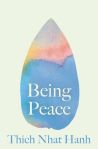
Being Peace by Thich Nhat Hanh

I don’t think I’ve mentioned that I’ve practiced Buddhist meditation for several years. I started during a period of anxiety; I just couldn’t let go of all the things that might go wrong. A Mindfulness class helped and I began to attend Sunday morning meditation and dharma talks at the Community Meditation Center in Manhattan, which follows a Theravada practice. It did help with the anxiety, but more than that, I discovered that Buddhism sees the world in a way that feels comforting and relatable to me.

Those Sunday morning sessions introduced me to several inspiring teachers and their writings. I’ve also taken part in a few one-day meditation retreats. I keep a small collection of books by my favorite Buddhist teachers on my nightstand and re-read them often. They remind me how to face the world. I’ve listed them at the end of this post. 

One of the most revered teachers of contemporary Buddhism is Thich Nhat Hanh, who died in 2022. I recently read a reprint of one of his books (he wrote many) called Being Peace.  It’s been added to my nightstand collection. It’s wonderful.

Thich Nhat Hanh writes about how we can’t create a peaceful world unless we practice peacefulness and compassion in our own lives. “If we are not happy, if we are not peaceful, we can’t share peace and happiness with others, even those we love…because without being peace we cannot do anything for peace.” The balance of the book is about steps we can take to achieve peacefulness for ourselves. Meditation, of course, is an important step. Being aware of the present moment is another important practice. “We tend to postpone being alive to the future, the distant future, we don’t know when.” It’s often true that we are waiting for some event in the future–then we’ll be happy, peaceful. 

In the opening section of the book, Thich Nhat Hanh explains three basic aspects of Buddhism: the Buddha, the dharma (the teachings of the Buddha), and the sangha (the community of Buddhists). His explanations of the meaning and importance of these three things is simple and elegant, a good introduction for non-Buddhists. In fact, everything about this little book is simple and elegant. 

 The books on my nightstand:

Olendzki, Andrew. Untangling Self: A Buddhist Investigation of Who We Really Are.  Wisdom Publications, 2016.

Olendzki, Andrew. Unlimiting Mind: The Radically Experiential Psychology of Buddhism. Wisdom Publications, 2010.

Liebenson, Narayan Helen. The Magnanimous Heart: Compassion and Love, Loss and Grief, Joy and Liberation, Wisdom Publication, 2019. 

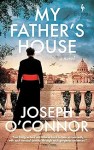
My Father’s House and Ghosts of Rome by Joseph O’Connor

I’ve read lots of mysteries and thrillers about people caught up in World War II, so when I had the opportunity to read The Ghosts of Rome by Joseph O’Connor before it was published (thank you, Europa Editions!) I jumped at the chance. I read and enjoyed it, but Ghosts of Rome is the second in a trilogy, so I felt I was missing out on something. Were the characters first introduced in the previous book, My Father’s House? I needed to know. 

I’m glad I went back to My Father’s House. That’s where I met Father Hugh O’Flaherty and the other members of the “Choir” that he assembled to help Allied soldiers, Jews, and prisoners of war escape from the Germans. (In 1943, Italy surrendered to the Allies and the Germans moved in and occupied northern Italy, including Rome.) My Father’s House takes place in Rome from Christmas Eve to Christmas Day, 1943. The Choir plans to carry out a mission, a rendimento, to distribute money to the escapees they have hidden. Complex plans, coded messages, and help from the Fascist Resistance ratchet up the tension in a story based on historical figures. 

There are eight members of the Choir, all from different backgrounds and religious persuasions, connected by the intensity of their hatred for the Nazis who capture, torture, and kill with callous impunity. Vatican City is neutral territory, a safe harbor, but also a prison: the inhabitants can only leave with permission from Paul Hauptmann, the vicious commandant of occupied Rome, who is under pressure from Himmler to shut down the escape line. The fugitives have all been secreted in Vatican City in various underground crypts and tunnels. The Choir calls them “books” and their locations are “shelves.” 

The high-stakes cat-and-mouse game between O’Flaherty and Hauptmann makes this a page-turner. O’Connor intensifies the reader’s involvement through character development of all the Choir members. The writing has vivid phrasing and descriptions, especially of the bitter, icy weather. You’ll need a warm scarf and a cup of hot tea to read this one. 

Ghosts of Rome continues the story of O’Flaherty and the Choir, who, despite harassment from Hauptmann won’t give up their rescue missions. Because he has failed to stop the Choir, Himmler moves Hauptmann’s wife and children to Berlin as hostages. In this second part of the trilogy, Contessa Giovanna Landini takes the lead role in planning and executing the missions. The Countess, elegant and charismatic, is relentless in her efforts. Finding safe places for the “books” becomes more difficult and the escapees are restless, hungry, bored, and not always cooperative. The situation is complicated by the discovery of a downed airman, a member of the Polish Resistance, badly injured. He becomes a liability that tests their resolve and resources, one of many moral and logistical problems that the Choir wrestles with. 

As in the first book, O’Connor intersperses chapters with memories of the Choir members recorded some years later, which flesh out their characters and fill in the details of the missions. They become real to the reader and as we learn more of their own troubled histories, we’re invested in their survival. A young English girl named Blon, full of fire and determination, becomes crucial to the survival of the wounded airman, but she’s also a loose cannon, disobeying the Choir protocols and taking frightening risks. Dark, literary, and full of tension, Ghosts of Rome is a welcome addition to the canon of resistance thrillers. I’m  looking forward to part three of the Rome Escape Line trilogy. 

Other books about Italy in World War II that I’ve enjoyed: 

A House in the Mountains: The Women Who Liberated Italy From Fascism by Caroline Moorehead. HarperCollins, 2021 nonfiction. (I’ve read several books by Caroline Moorehead and enjoyed them all.) 

Alibi by Joseph Kanon. Picador, 2006.  (fiction)

A Thread of Grace by Mary Doria Russell. Random House, 2005. (fiction)

Bread and Wine Ignazio Silone. reprint. Penguin, 2005. Silone’s classic novel about resistance to Fascism is beautifully written. I read it in high school and still remember it.