Category Archives: Fiction

My Top 20 Faves from 2010

Everyone’s been posting “best” lists so here’s mine, but it’s a little different than most. It’s not my take on the best books published in 2010. It’s  a list of some of the most memorable books of fiction and nonfiction I read this past year, no matter what year they were published. There are so many others, but I feel it would be overwhelming to list any more than this. So here they are, alphabetically by author, grouped into fiction and nonfiction. Forgive me for not ranking them, but they’re so diverse it just wasn’t impossible.

FICTION

Bender, Aimee. The Particular Sadness of Lemon Cake. Doubleday, 2010, 293p. A heartbreaker of a story told by a young girl who suffers from exquisite sensitivity to the emotions of the people around her. It’s haunting and lovely. This is on the Great Group Reads list for 2010.

Boyden, Joseph. Three Day Road. Penguin Canada, 2006, 400p.
Thanks to Katherine Johnson at NoveList for directing my attention to this remarkable novel about two Native Americans who enlist in the Canadian army in World War II. Spare and very affecting.

Gwin, Minrose. The Queen of Palmyra. Harper Perennial, 2010, 432p.
I’m so sorry this came out hard on the heels of Stockett’s The Help. I liked that one, but I liked The Queen of Palmyra even more. It’s set in the summer of 1963, in a town in the Deep South, where racial prejudice rules the lives of black and white like a nasty, pervasive drug. This is also on the Great Group Reads list for 2010.

Daniel, Susanna. Stiltsville. Harper, 2010, 310p.
When Frances Ellerby  goes to Miami for a wedding, she makes a best friend, Marse, and falls in love with Dennis DuVal, whose family owns a wonderful beach house on stilts in Biscayne Bay. No plot to speak of, except life itself with all the subtle and seismic changes that come from marriage, motherhood, and friendship. An author to watch.

Jones, Sadie. Small Wars. Knopf, 2009, 352p.
Hal Treherne, a young British soldier and his wife Clara are stationed in Cyprus in 1956 as part of the British occupying force. As the terrorist campaign escalates, Hal finds that his responsibility to quell the violence puts him in untenable moral situations while Clara feels the effect on their marriage and young daughters.

Lamott, Anne. Imperfect Birds. Riverhead Books, 2010, 278p.
Lamott’s a great, insightful prose stylist and this dissection of the life of a family in Marin County, CA is a stunner, a painful account of high school senior Rosie, drug addicted and unmoored and how her parents are unable–or unwilling–to push through the layers of lies and deceit that are dragging her down.

Moody, Rick. Four Fingers of Death. Little, Brown, 2010, 725p.
The story is loosely based on the 1950s scifi flick The Crawling Hand, but Moody turns it into a serio-comic dystopian tour de force. It starts with a voyage to Mars that goes horribly wrong; back in the U.S. we are treated to an outrageous vision of our future. You’ll love it—or not, but you won’t be indifferent.

Shteyngart, Gary. Super Sad True Love Story. Random House, 2010, 334p.
This almost indescribable sad and hilarious novel tells the story of 39-year old Lenny Abramov and his doomed love for Eunice Park. Lenny and Eunice live in some not-so-distant future USA where books are considered smelly artifacts and a constant stream of data from a device that you wear around your neck sends your rankings to everyone you pass on the street. Just read it.

Soli, Tatjana. The Lotus Eaters. St. Martin’s Press, 2010, 384p.
Soli recreates the moral quagmire that was the Vietnam War from the perspective of a group of photojournalists caught up in trying to convey the horrors to the folks back home. Unfortunately the concerns about war reporting that she raises are still quite relevant. This is on the Great Group Reads list for 2010.

Toibin, Colm. Brooklyn. Scribner, 2009, 262p.
Toibin tells this haunting story from the point of view of a young Irish woman, and it’s a triumph of character creation that we are completely inside Eilis’s head, seeing, hearing, and feeling what she does. Eilis leaves her village to come to Brooklyn in the early 1950s in hopes that she’ll have more opportunities here. Loneliness and inexperience combine to change her life. See my review.

Trollope, Anthony. The Way We Live Now. Orig. published 1875, many editions.
I read one of Trollope’s Barchester Towers novels a few years ago, but it just didn’t grab me. This is brilliant, with a cast of characters from all social classes, satire that’s still timely, and a plot that barrels along propelled precisely by the foibles and pretensions of the characters. It was the first book I read on my nook and I was totally absorbed. I’ll eventually get to the TV movie as I work through my Netflix queue, but I’m glad I read it first.

NON-FICTION

Chabon, Michael. Manhood for Amateurs: the Pleasures and Regrets of a Husband, Father, and Son. Harper, 2009, 320p.
I listened to Chabon read this collection of memoir-essays and was charmed by his voice, candor, and scintillating prose.

Flynn, Nick. The Ticking is the Bomb: A Memoir. W.W. Norton, 2010, 240p.
Riveting and raw, Flynn manages to combine some unusual topics. See my review.

Kennedy, Edward. True Compass. Twelve, 2009, 544p.
I listened to Kennedy’s memoir, written shortly before his death in 2009, and loved hearing his stories about growing up as the youngest brother, idolizing his older, charismatic brothers Joe, Jack, and Bobby. The portion about the 1960s is riveting; Kennedy’s recounting of his family’s losses in this decade is painful to hear but it also recalled for me the incredible energy of this time and our certainly that we were on the cusp of momentous change–in politics, personal relationships, and culture.

Pan, Philip. Out of Mao’s Shadow: the Struggle for the Soul of a New China. Simon & Schuster, 2008, 448p.
Pan personalizes issues of human and civil rights in China by telling the stories of people who have defied the government. My book group read it and loved it.

Skloot, Henrietta. The Immortal Life of Henrietta Lacks. Crown, 2010. 369p.
There’s hardly a “best” list that doesn’t include Skloot’s book and deservedly so. It has everything for a compelling read. See my review.
Property Values

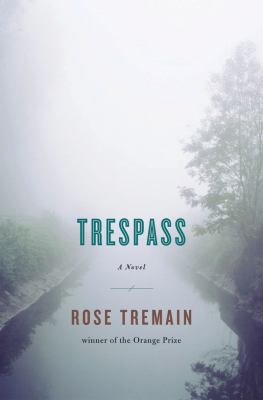
Rose Tremain’s 2010 novel Trespass is a dark story about two pairs of brothers and sisters with convoluted relationships and how property further entangles them in old quarrels and sorrows, with disastrous results. It’s also a tale of outsiders and insiders, as is often the case with novels set in France. (If you haven’t read Diane Johnson’s elegant, satirical novels Le Mariage, Le Divorce, and L’Affaire, now would be a good time.)

Trespass opens when a young girl, wandering away from a class trip, discovers a crime; Tremain uses this event to tell story of the roiling emotions that have led to this point. Anthony Verey, once a wealthy, celebrated British antiques dealer, decides that living near his cherished sister Veronica will cure his depression and give him a fresh start. Veronica lives in Provence with her lover, Kitty, who hates Anthony. He sets off to find the perfect house, one that will be an elegant setting for his “beloveds,” a few perfect treasures from his shop. Anthony’s quest made me think of David Sedaris’s comment about “the rejuvenating power of real estate.” (It appears in  Dress Your Family in Corduroy and Denim.) But lest you think that there’s humor in Tremain’s book, I’ll remind you right away that this is a dark story, filled with the awful baggage the characters bring from childhood.

Anthony is enchanted by Mas Lunel, an old stone house owned by Aramon Lunel, a dissipated, alcoholic wretch, who has relegated his sister Audrun to a makeshift cottage on the edge of the property. The rifts in their relationship are seismic and Mas Lunel looms as a symbol of all that went wrong. Anthony’s narcissistic interest in Mas Lunel as a canvas for his life sets in motion a chain of events with fatal consequences.

This bare outline of the story doesn’t reveal how Tremain’s damaged characters come alive on the page, with all their hopes and sorrows. I read an earlier novel, The Way I Found Her, several years ago and always meant to read more of her novels. Now I will.

Below I’ve put together a short list of novels and memoirs about houses and how they affect family relationships. It’s a common dream that the place we live in will change our lives. Anyone who reads the articles in the Sunday NY Times Real Estate section sees that weekly.

Novels:
Barker, Pat. Another World
Forster, E.M. Howard’s End
Lively, Penelope. Family Album
Mawer, Simon. The Glass Room
Memoirs:
Bechdel, Alison. Fun Home: A Family Tragicomic
Boylan, Jennifer Finney. I’m Looking Through You: Growing Up Haunted
Fiennes, William. The Music Room: A Memoir

Penelope Lively

Family Album by Penelope Lively
Lively has been one of my favorite authors through the years; she never disappoints me with her stories of the emotional turmoil  at the heart of her characters’ relationships. The family in question here is the Harpers, 6 children, two parents, and the au pair who stays on after the children are grown. Their large Edwardian house, Allersmead, is meant to be the gracious center of a warm and loving family, but harbors a shocking secret and painful heartaches. Lively shifts the point of view from one character to another and we get to know them all quite well. There’s no plot to speak of, just the rubbing together of a set of complex personalities,  which is quite engrossing enough.

Summer reading

I been reading like mad since August 1, done with several required-reading projects and enjoying the chance to read serendipitously. I always have a folder filled with clipped reviews and handwritten notes about must-read books, reminders of favorite authors that I want to read more of, and recommendations from friends and colleagues. I’ve also been listening to audiobooks on my tiny MP3 player when I walk in the early morning, in my car through a nifty cassette player adapter, or when doing mindless work around the kitchen. As always, books remind me of other books–fiction crosses over to nonfiction and I remember books read years ago.

I’ll post about the most memorable books I read and the books they recalled, starting with…

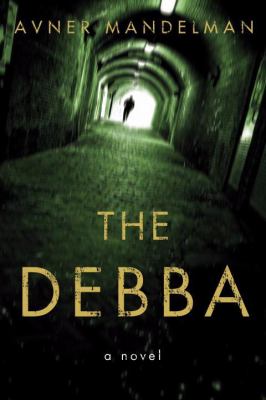
The Debba by Avner Mandelman. (July, 2010)
Mandelman’s a terrific writer–tough-minded and good at creating tension and the expectation of violence. I discovered Mandelman several years ago when I was on the first Sophie Brody Medal selection committee and we chose his short story collection Talking with the Enemy for the prize. The first story in that collection was a perfect  thriller,  a little gem, and I was hooked. This new novel is also a thriller, and a mystery too, filled with twists and turns, enigmatic characters, and overlaid with the powerful myth of a shape-changing creature–the Debba–a hyena who can rise up and walk like a man. The novel is set in Israel, told in the first person by David Starkman, who returns from self-imposed exile in Canada to investigate his father’s brutal murder. Nothing is quite what it seems: art and politics mix in strange and wonderful ways, an old love is revived, and the mystery of the Debba’s identity is dangled before the reader until the end. Of course the story also concerns itself with the contradictions and paradoxes of Israeli history and politics–all in all a very satisfying and thought-provoking tale.

In The Debba, David stages a play written years earlier by his father, an incendiary play that is catastrophic for the people involved. It made me think about another novel where art (in this case music) and politics mix in incendiary ways–Appassionata, by Eva Hoffman, about a musician who gets caught up with a man who either a terrorist or a freedom fighter and the effect of their affair on her life. It’s another excellent and thought-provoking story.

What I’m reading now: Freedom by Jonathan Franzen and listening to The Wrong Mother by Sophie Hannah

Oh, that unreliable narrator!

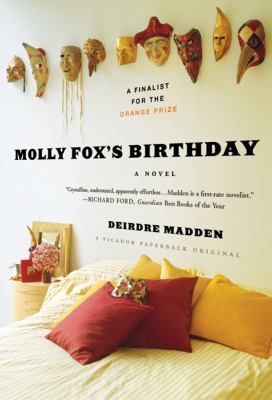
I just finished Molly Fox’s Birthday by Deirdre Madden and I may just have to read it again. I need to see if what I now know about the characters changes how I feel about them from the start. The story is told by the unnamed narrator who is staying in Molly Fox’s Dublin apartment while Molly is in New York. She tells the story of her friendship with Molly, an acclaimed stage actress, and the friends they’ve had in common while observing how Molly’s flat reflects its owner. The narrator is a successful playwright, a close observer, a writer who finds material in small, unusual incidents.

Over the course of one day her thoughts range over their friendship with its ups and downs and other (mostly male) friends and family members, particularly Andrew, a well-known art critic. Molly is something of an enigma to the narrator despite the fact that they are very close. But the narrator is something of an enigma to the reader, and we realize that these two women may be incapable of closeness because of the professions they’ve chosen. Or, because of their detachment, have the professions chosen them? Madden–and the narrator–dole out information in bits and pieces; maddeningly, tantalizingly, we don’t always have the information we need to assess what we’re being told. There’s no plot to speak of–the plot’s in our heads as we try to understand the characters and their motivations. It’s a very absorbing “take” on an old plot device. In addition, there’s great food for thought about the craft of acting and, by extension, the creation of character in writing. 

When it comes to memoirs, the unreliable narrator is the ground under our feet. If we used the same narrative device–following our thoughts and actions for a day–how much would we choose to tell when we sat down that night to write it up? What would we embellish, omit, analyze, forget, or misinterpret? If we imposed a narrative structure to make it interesting, would that edge it over into fiction? Maybe that’s the fascination of memoirs–the different ways that writers use their material. I’m thinking about this in the light of several memoirs I’ve just read. More to come…

Matchmakers

On Tuesday, April 27th, I’ll be speaking about how memoirs can be paired with fiction, to encourage librarians to suggest memoirs to their genre fiction readers. For example, if you enjoy reading fiction about different cultures, you might like  Marie Arana’s American Chica or Rory Stewart’s The Places in Between. Our handout lists the fiction-memoir matches we’ve suggested; it’s posted here.
The occasion is the New Jersey Library Association conference. Yvonne Selander, from Somerset County Library is the fiction expert. We hope our audience enjoys it as much as we enjoyed putting the talk together. I’m planning to add other lists that match memoirs and fiction in the next few weeks, so check back to see what’s new by clicking the Memoirs tab above.

My Favorite Books of 2009

‘Tis the season of best lists, so I’ll chime in with my own. It covers books I read this year, regardless of when they were published. I’ve divided it into fiction and nonfiction and provided publisher and date of publication.

FICTION

Arana, Maria. Cellophane. 2006. (Dial)

Atwood, Margaret. The Year of the Flood. 2009. (Nan A. Talese)

Boyle, T. Coraghessen. The Tortilla Curtain. 1995. (Viking)

Byatt, A.S. The Children’s Book. 2009. (Knopf)

Carleton, Jetta. Moonflower Vine. 2009 reprint of 1962 title. (HarperPerennial)

Grodstein, Lauren. A Friend of the Family. 2009. (Algonquin Books)

Hoffman, Eva. Appassionata. 2009. (Other Press)

Kline, Christina Baker. Bird in Hand. 2009. (Wm. Morrow)

Livesey, Margot. The House on Fortune Street. 2008. (Harper)

Moore, Lorrie. A Gate at the Stairs. 2009. (Knopf)

Strout, Elizabeth. Olive Kittredge. 2008. (Random)

Petterson, Per. Out Stealing Horses. 2007 (Graywolf)

Robinson, Roxana. Cost. 2008. (Farrar, Straus and Giroux)

Walbert, Kate. A Short History of Women. 2009. (Scribner)

NONFICTION 

Alison, Jane. The Sisters Antipodes. 2009. (Houghton Mifflin Harcourt)

Austin, Paul. Something for the Pain: One Doctor’s Account of Life and Death in the ER. 2008. (W.W. Norton)

Eggers, Dave. Zeitoun. 2009. (McSweeney’s)

Fiennes, William. The Music Room: A Memoir. 2009. (W.W. Norton)

Grann, David. The Lost City of Z: A Tale of Deadly Obsession in the Amazon. 2009. (Doubleday)

Pollan, Michael. The Botany of Desire: A Plant’s Eye View of the World. 2001. (Random House)

Rogers, Douglas. The Last Resort: A Memoir of Zimbabwe. 2009. (Harmony)

Simon, Rachel. Building a Home With My Husband: A Journey Through the Renovation of Love. 2009. (Dutton)

Small, David. Stitches: A Memoir. 2009. (W.W. Norton)

Tamm, Jayanti. Cartwheels in a Sari: A Memoir of Growing Up Cult. 2009. (Harmony)

Umrigar, Thrity. First Darling of the Morning: Selected Memories of an Indian Childhood. 2008 (HarperPerennial)

Warmbrunn, Erika. Where the Pavement Ends: One Woman’s Bicycle Trip Through Mongolia, China & Vietnam. 2001. (Mountaineers Books)