
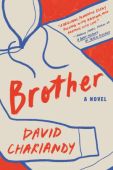
I read this short, powerful novel in three sittings over a day and a half, reluctant to finish it but compelled to compelled to follow the story and characters to the end. Michael and his older brother Francis live with their mother in the Park, a public housing complex in Scarborough, Toronto. Their mother is an immigrant from Trinidad. Life for teenage boys like Michael and Francis is rough and tumble, filled with possibilities of disastrous life-changing–or life-ending–encounters with police and local toughs. Their mother works as many jobs as she can, traveling long hours on buses, to bring home enough money to feed and clothe her sons.
The story is told from the point of view of Michael, the younger brother. We know from the beginning, which is set in a later time, that Francis eventually disappears, so every scene in which Francis does appear is weighted with that knowledge. The brothers are close, but different; Francis, it’s clear, can teach his younger brother some life skills but he’s destined to go his own way. After a violent incident in the housing complex, life becomes more tense and the arc of the story accelerates. Not all the scenes are filled with violence: there are several wonderful scenes between Michael and a teenage girl, Aisha, and also in a barbershop.
Character, pacing, and atmosphere all combine in a powerful and heartbreaking tale. Even if you think you’ve read too many books about the lives of immigrants in violent communities, read Brother. It joins the rank of other standout books and short stories about that important sibling relationship because Chariandy get the psychology right.
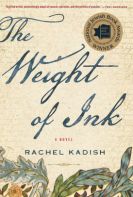 In the July 15th New York Times Book Review, in a review of Alexander Chee’s book How to Write an Autobiographical Novel, J.W. McCormack writes: “In Chee’s telling, the writer’s life always lurks just beyond the page…” I’m always interested in the writer lurking just out of reach and the relationship of the book to the writer’s life. I don’t mean that I expect incidents to reflect personal experience or characters to be modeled on friends and family. There’s a much more subtle relationship that I’m interested in.
 Sometimes a novel is just a story; sometimes it’s more than that. Sometimes a novel captures a place and time in such a way that it takes us beyond the characters’ lives. They’re part of the time and place, artifacts of it; their stories resonate with the social, political, and cultural environment. I’m thinking about Colm Toibin’s Brooklyn; The Girls by Emma Cline; City on Fire by GarthRisk Hallberg; and Emma Straub’s Modern Lovers to name a few.
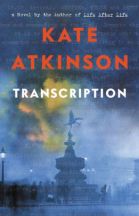 At the end of May I spent 2 wonderful days at the Javits Center in New York for the publishing trade show, Book Expo. If you’re unfamiliar with this annual book extravaganza, hundreds of publishers set up booths to promote their Fall titles and meet with booksellers from around the country. Advance copies of the titles that the publishers want to promote are given away, authors sign their books, and there’s lots of swag to be had. After 20 years of attending, I have a large collection of publisher-themed canvas tote bags. It’s a standing joke among friends and family.
  I was in the gym last week riding a stationary bicycle called an Expresso, which has a video screen and movable handlebars. It allows you to pick a scenic ride and steer around curves, change gears, etc. It’s something to distract you from the boring activity you’re engaged in. A way to trick the mind and body.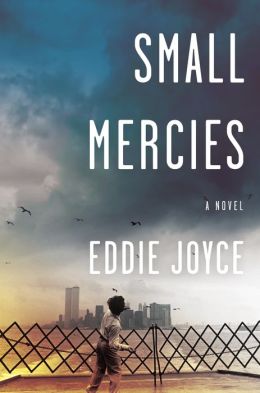

 A Reader's Place