
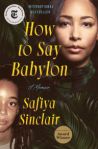
 My book group chose this book a few months ago and I was dragging my heels, putting off reading another memoir of escape from childhood. But I’m a good book club member so I took it out of the library. Before I had a chance to start reading, someone told me that the audio version of How to Say Babylon was wonderful, so I found it on Audible. I’m so glad I did! Safiya Sinclair is a poet, and her writing is sublime. Since she reads the audio version in her lilting Jamaican accent, it’s a double treat. I highly recommend it. She reads slowly and clearly, so the audio version takes longer than reading the book, but make time for it if you can.
Sinclair grew up in a Rastafarian family, the oldest of four children. Her charismatic father was a reggae musician who was in a popular band for a while, playing at hotels and events in Jamaica, sure he would soon make the big time. He never received the success he felt he deserved, lost the rights to his music in shady deals, and became angry and bitter. The family bore the brunt of his fury and disappointment. His religious beliefs gave him cover for serial adultery and the abuse he inflicted on his wife and children. Safiya alternately yearned for his approval and despised him for his hypocrisy and arrogance.
Rastafarians believe that Haile Selassie, former emperor of Ethiopia, embodies the second coming of Jesus Christ. Very briefly, their religion requires them to be vegetarians, live in harmony with nature, keep their hair in dreadlocks, and smoke weed for spiritual purposes. The Devil inhabits the non-Rastafarian world, known as Babylon. Safiya’s father, in his anger, took these beliefs to an extreme, sometimes keeping the children imprisoned in their home, ostensibly trying to protect them from the evils of Babylon. In turn, Rastafarians were persecuted for their beliefs and appearance.
Safiya and her three siblings were brilliant, winning Caribbean-wide academic awards and always first in their classes. Their mother was a gifted teacher, often tutoring neighborhood children, whose parents wanted to know the secret of the Sinclair brilliance. But aside from occasional visits to relatives, their lives were sealed behind locked doors. Their father’s red belt kept them in line.
From an early age, Safiya was a gifted writer and poet, using literature to express profound emotions that were not acceptable in her family. Her journey to poetic and personal freedom is heartbreaking to read at times, but an important testimony to the power of literature in our lives.

 A Reader's Place