
Monthly Archives: November 2020

The Cold Millions by Jess Walter

cold-millions-1I enjoyed Walter’s last book–Beautiful Ruins–so much, that I was eager to read The Cold Millions and have the same experience all over again. Well, it doesn’t happen like that. A good writer changes it up. Like Beautiful Ruins, there is a mix of historical and fictional characters in this new novel but it’s very different. I wasn’t disappointed.

The Cold Millions is set in Spokane, Washington in 1909 when the IWW, the workers’ union often known as the Wobblies, tried to hold a series of free speech rallies. Two brothers, Gig and Rye, have been drifting around Montana and Washington after the deaths of their parents and sister. They pick up jobs when they can and ride the rails to places where there might be work. Gig takes easily to this vagabond life, but Rye, only 17 years old, is not so sure this is the life for him. Gig worries that he can’t take care of Rye properly.

The brothers are drawn into the Wobblies’ world, caught up in the fervor for workers’ rights. Workers are the “cold millions” of the title, compared to the rich mining barons who run the town and live in warmth and luxury on the South Side. Enter Elizabeth Gurley Flynn, the historical rabble rousing young woman whose fiery speeches, determination, and charisma keep the Spokane workers riled up.

The rich industrialists won’t give in to the workers’ demands and they have the means to pay off the Spokane police and hire thugs. How Gig and Rye are tested in their loyalties forms the core of the story. Walters portrays Spokane as a wild and woolly town and the dialogue is rich in colorful slang and equally colorful secondary characters. It’s easy to picture the setting: rainy, muddy, and cold, and filled with cheap hotels, tawdry saloons, and prostitutes. As the story develops, the reader becomes attached to Gig and Rye, especially Rye, who is so young and vulnerable. What will happen to the brothers in this soup of labor violence? The historical characters drive the plot but the brothers are the real beating heart of the story.
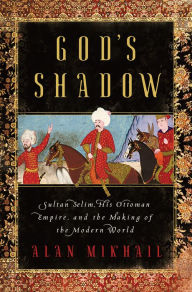
God’s Shadow: Sultan Selim, His Ottoman Empire, and the Making of the Modern World

gods-shadow-1

It’s often entertaining and enlightening to read about history from a new vantage point. We didn’t learn everything in our high school and college history courses, and, of course, we know the curriculum had a certain Eurocentric point of view. Alan Mikhail’s book God’s Shadow is a terrific repositioning of our view of European and Middle Eastern history in the late 15th and early 16th centuries. Shifting political fortunes made it a volatile–and violent–time and Mikhail has some interesting things to say, especially about the geopolitical considerations that sent Columbus across the Atlantic Ocean. It’s different from what we learned in high school.

The history that Mikhail tells so well focuses on the Sultan Selim, who ruled the Ottoman Empire from 1512 to 1520. His father, the Sultan Bayezit, had several sons by several concubines. In the royal court, once a concubine had given birth to a son, her obligation to the sultan was done. She was then expected to teach her son all he needed to know in case he became the next ruler. A strong bond between mothers and sons meant that many of these women, who often started life as slaves, became powerful members of the court, even sometimes the power behind the throne. There’s a great story in how Selim–the third in line for the throne–and his mother finessed their situation to his advantage. Family loyalty was not encouraged.

As sultan, Selim oversaw a great expansion of the Ottoman Empire; from Egypt in the West to Iran and Azerbaijan in the East. In his eight years as sultan, he spent most of his time leading his armies in these conquests, which paved the way for the much more peaceful era of his son, Suleyman the Magnificent. According to Mikhail, the growing power of the Ottoman Empire under Selim threatened the western European countries like Spain, France, Italy, and Portugal, which were barely nation states compared to the huge and well-organized Ottoman Empire. In Spain, Ferdinand and Isabella had just finished an exhausting–and violent–Reconquista, expelling Muslims (and Jews) and subjecting those that remained to the tortures of the Inquisition.

Selim controlled the best trade routes to the East, threatening access to lucrative trade with India and points farther east. In Mikhail’s explanation, Columbus’ voyage across the Atlantic was to make contact with a Great Khan in China who was rumored to be a convert to Nestorian Christianity. The plan was to make common cause with this ruler and, in a pincer movement, destroy the Ottoman Empire. Mikhail’s evidence for this theory is both fascinating and very compelling.

I enjoyed this book for so many reasons. The story is absorbing and the writing is perfectly matched–graceful, straightforward and clear. I was looking forward to learning more about this period but didn’t expect such a page turner. God’s Shadow clarified and expanded my understanding of a pivotal period of history. If you have any interest in how religion and geopolitics around the Mediterranean in this era shaped our world, this is a great read.

Note: If you enter the search string “that changed the world” in your library’s catalog, you’ll find lots of results. I’m thinking of books like Cod: A Biography of the Fish that Changed the World; Paris 1919: Six Months That Changed the World, also other books like Guns, Germs, and Steel whose authors claim that their point of view and subject matter will give you a different understanding of world history. I enjoy those books and so does my book club.

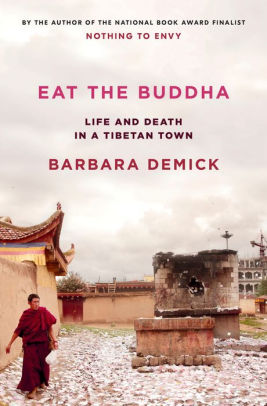
Eat the Buddha: Life and Death in a Tibetan Town by Barbara Demick

Eat the BuddhaWhen I was growing up, I thought there was no place more distant and forbidding than Tibet. Why would anyone want to live in such a fierce, frozen place? It seemed so strange to a child in an urban apartment with central heating. And the Tibetans didn’t want visitors! Then, in the early 1990s I read Henrich Harrer’s memoir Seven Years in Tibet and I was hooked on finding more about the history and culture. The more I read, the more Tibet began to feel like a special corner of the world to me, a place of ancient, mystical traditions that had survived because the Tibetans held fast to those traditions. In San Francisco I saw Tibetan monks patiently dripping colored sand to create an exquisite mandala. That patience that was a world away from the daily life I saw around me. The enormous Potala Palace, hovering over Lhasa, fascinated me as much as the Parthenon. (More about that another time.) The Chinese takeover of the country with the subsequent trashing of Tibetan culture felt like a terrible affront and it was made all the more disturbing by the exile of the Dalai Lama, whose compassion, resilience and moral strength have been so exemplary. Eat the Buddha satisfied my curiosity about what’s been happening to the Tibetans who remained. 

I had read Demick’s previous book, Nothing to Envy: Ordinary Lives in North Korea, a wonderful eye-opener that is exactly as described by the subtitle. She’s a terrific journalist who knows how to balance the general and the personal. I also felt that I needed to catch up on what was happening in Tibet. I was too focused on the Dalai Lama’s attempts to keep the flame of Tibetan life and Buddhism alive. It was time to read about what was happening to the Tibetans left behind.

Demick follows the lives of several Tibetans from the district of Ngaba, site of the former Mei kingdom, from the last Mei princess, to monks, nuns, teachers, and ordinary people trying to live their lives in a bewildering maze of Chinese hostility and ineptitude. She fills in the history we’ve missed, from the impact of Mao’s Long March to the flight of the Dalai Lama in 1959, to the way Tibetans live now, under the long arm of Chinese surveillance and centralized control. After so many years of Chinese indoctrination, many Tibetans have given up their own culture and acquiesced to the Communist worldview. It makes their lives easier but it also makes them exiles in their own land. Some continue to resist in any way they can. Others have managed to escape to India to join the Dalai Lama in Dharamsala. It’s a harsh story but Demick tells it well. I highly recommend it.