I intend to blog about every book I read, but writing about reading is very different than thinking about what you’ve read. The woolly thoughts in my head often don’t translate easily to words that work on paper. But that is, after all, what writing is all about and it’s the practice that makes it happen. I recently spent the afternoon with a writer friend from Israel, Pnina Moed-Kass. Pnina goes to the gym at 6:30am every morning, returns home to eat a big breakfast, and then sits down to write until 3pm. Of course, that doesn’t happen every single day, but it’s Pnina’s goal and she has some great children’s and YA books to show for it.
Even after a fit of self-disciplinary angst after seeing Pnina, I knew I would not write individual blog posts about the books I’ve been reading. I decided that in order to get back on track, I’d write in one omnibus post about a few of the books I’ve read recently. Here they are, with comments long and short.
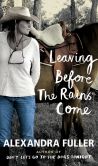 Leaving Before the Rains Come by Alexandra Fuller (Penguin, 2015)
I’ve read and loved all of Fuller’s memoirs: Don’t Let’s Go To the Dogs Tonight, Cocktail Hour Under the Tree of Forgetfulness, and Scribbling the Cat. “Love” is an awkward word to use with Fuller’s books since they contain so much pain, but it’s her ability to depict emotional states that makes her books so engrossing. This latest memoir may just be her best. Fuller’s childhood in Africa, living in countries that shucked off the British colonial yoke, was full of violence, but her parents stayed and moved from one not-quite-safe place to another. Their commitment to living on the edge became the way that Alexandra saw her own life: always at risk, fueled with adrenaline, and supported by her father’s pragmatic and fatalistic attitude. Her marriage to an American and move to Wyoming took her to a different place, physically and mentally, and ultimately she couldn’t make it work. Fuller, in addition to her talents in describing messy emotional states, is a great nature writer, and with Africa and Wyoming she has two of the most dramatic places to write about, and she does it very well.
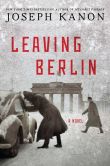 Leaving Berlin by Joseph Kanon (Atria, 2015)
Kanon’s thrillers are mostly set just after World War II, in that messy period of anarchy and revenge. This one is set a little later, 1948, and concerns Alex Meier, who is caught up in the Communist witch-hunts that were starting to upend people’s lives. He makes a deal with the CIA to work for them in East Germany; in exchange, he’ll return to his family with a clean slate. Alex thinks it will all be quite simple, after all, he’s not a trained spy, but almost immediately he’s caught up in a kidnapping and murder. East Berlin is still in post-War turmoil, with sspy agencies from several countries spying on each other. The double dealing makes Alex’s head spin and he works hard to find his footing. Filled with real characters, like Bertolt Brecht and Stefan Zweig, the twists and turns are fun to follow (or not!). I’ve read others by Kanon and always enjoy his atmospheric tales.
 A Fighting Chance by Elizabeth Warren (Picador, 2015)
I listened to this and hearing Warren read it herself was a treat. She tells a great story about her fight for better bankruptcy laws and her Senate race in Massachusetts. From a career teaching law, she’s drawn into legislative battles over bankruptcy and other issues, especially when she joins the Congressional TARP oversight committee. She ends with the story of her bruising but successful campaign for Massachusetts Senator. I don’t want to get into politics here, but will just say that she’s a compelling politician who speaks up for working families with an uncommon blend of common sense, intelligence, and charisma.
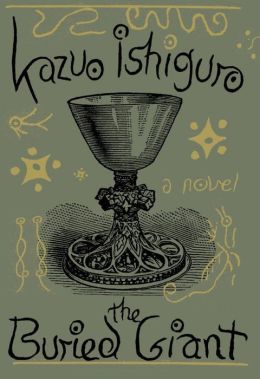
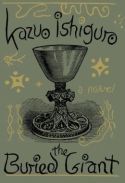 The Buried Giant by Kazuo Ishiguro (Knopf/Doubleday, 2015)
Not sure about this one. I kept hoping that it would get better, clearer, more compelling. Ishiguro’s story, set in the post-Arthurian Britain, about an elderly couple–Axl and Beatrice–who go in search of their son, encountering treachery and danger along the way. A mysterious fog has settled over the country clouding the landscape and clouding memory as well. As Axl and Beatrice travel some of the fog lifts and the many of the memories are painful. There is food for thought about the role of memory in our lives, but for me there were ultimately too many labored passages.
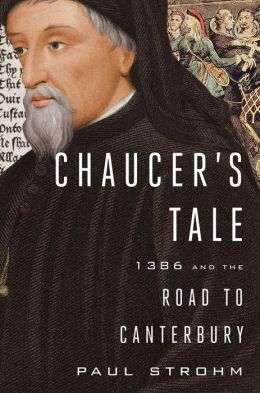
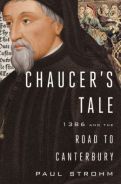 Chaucer’s Tale: 1386 and the Road to Canterbury by Paul Strohm (Penguin, 2014)
I never thought much about the kind of life that Chaucer lived, so this book was a revelation. A little dry, but very interesting. Chaucer married into a prominent family–his brother-in-law was the powerful and testy John of Gaunt–but he and his wife rarely lived together and he was estranged from his children. For a number of years, Chaucer had a position (gained through patronage) as the controller of customs at the Wool Wharf. The description of his dreadful accommodations, over one of the London gates, is sobering. In 1386, the year that Strohm focuses on, Chaucer lost his patronage job and with it his housing. Without a job or a place to live he is forced to leave London and the intellectual and social milieu that nourished him, however, it did give him the space to write his masterpiece, Canterbury Tales. Strohm has an interesting section on the nature of audience in the 14th century that’s very much worth reading.

 A Reader's Place