Monthly Archives: February 2014

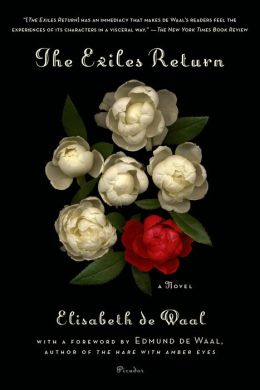
The Exiles Return by Elisabeth de Waal

Exiles ReturnI discovered this lovely novel because I’m a big fan of The Hare with Amber Eyes, a memoir written by the author’s grandson, Edmund de Waal. (More about that book at the end of this post.) Elisabeth de Waal survived “interesting times” as the Chinese proverb would have it; that is, she and her family survived World War II, as so many Jews did not. She was born Elisabeth von Ephrussi, in 1899, daughter of one of the great banking houses of Europe, growing up in a fabulous palais on the Ringstrasse in Vienna. She studied philosophy, law, and economics, and corresponded with Rilke, to whom she sent her poems. The Exiles Return is one of several novels she wrote; it was never published in her lifetime.

The Exiles Return is about three people who come to Vienna from the United States in the early 1950s for very different reasons. Austria, like much of Europe, was a mess after the War and it was partitioned by the Allies, who occupied it until 1955. Kuno Adler is a medical researcher who hopes to reclaim his old job; Theophil Kanakis is a wealthy Greek who hopes to reclaim a life of partying and subversion; Resi is a young girl whose Austrian immigrant parents hope that she will recover from depression in a new environment. These three people give  us entree into different parts of society; there are complex layers of expectations, disappointments, and thinly veiled violence that operate on their lives.

The pleasure of this novel is in the complexity of the characters and de Waal’s refusal to make things simple. The publisher compares her writing to Irene Nemirovsky’s books about World War II in France, and there is something to that comparison, but for me, de Waal is the more engaging writer.

Back to The Hare with Amber Eyes: in one of the great family memoirs of recent years, Edmund de Waal combines memoir with art and history in the most compelling way. The hare of the title is a piece of netsuke that becomes a leitmotif in the story of the Ephrussi family, who started in Odessa as grain traders and became a banking family in Vienna and Paris that rivaled the Rothschilds. Because Edmund de Waal is a well-known ceramicist, the memoir is not  just about a piece of art, but in the poignant and exquisite way de Waal tells the story, the book itself becomes a work of art.

A Time of Gifts by Patrick Leigh Fermor

Time of GiftsSometimes you get to a book by a circuitous route. I had heard about Patrick Leigh Fermor when I was reading lots of travel writing in the 1990s  but didn’t read his books then. Recently I began reading more about the two World Wars and came across The Ariadne Objective, by Wes Davis, the story of a British undercover operation in Crete during World War II when a handful of amateur British  spies kidnapped a German general. One of those swashbuckling figures was Leigh Fermor; I was intrigued so I picked up a copy of his first memoir, A Time of Gifts, about his travels across Europe in the mid-1930s. I was not disappointed.

Leigh Fermor was only 18 when he hit the road with a knapsack, determined to hike from Rotterdam to Constantinople, using his wits and a few introductions to get by. His parents were willing to send him four pounds a month for expenses. He had been expelled from yet one more school for his free-spirited inability to conform to expectations; it was time for him to make his own way. His father was in India, his mother and sister in England. He tried, briefly, to support himself by writing, but it was no go. Europe beckoned. He bought a ticket on a steamer sailing from the Tower Bridge to the Hook of Holland. On a rainy day in late 1933, several friends saw him off.

The delight of this memoir–the first of  two volumes–is in Leigh Fermor’s brilliant, evocative writing and the adventures he had. Ready for whatever came his way, willing to talk to people of all types and stations in life, curious about everything, he made friends wherever he went and put up with all the privations of a life on the road with minimal cash. Of course, 1933 was when it all began to go sour in Europe, so we get some insight into the political situation as well.

The writing is extraordinary:  here are a few sentences from his description of traveling through London in cab on the rainy day he left:

“A thousand glittering umbrellas were tilted over a thousand bowler hats in Piccadilly; the Jermyn Street shops, distorted by streaming water, had become a submarine arcade; and the clubmen of Pall Mall, with china tea and anchovy toast in mind, were scuttling for sanctuary up the steps of their clubs. Blown askew, the  Trafalgar Square fountains twirled like mops…”

The book is filled with wonderful, vivid descriptions like this, as Leigh Fermor travels across Holland, into Germany, Austria, Czechoslovakia, and Hungary. In the process of discovering these countries, he learns about himself and I like to think that he made peace with his wild childhood and saw his way clear into the adult world. Here’s another wonderful passage about how the natural world helped him achieve that, as he settles himself under a tree for a night’s sleep in the open air:

” The fidgeting of moorhens and coots and of voles and water-rats doing the breast-stroke through the stems grew less frequent and every half-minute or so two bitterns–one quite near, the other perhaps a mile away–sounded across the vague amphibian world: loneliest of muffled cries, plainly to be heard above the shrill rise and fall of millions of frogs. This endless population, stretching upstream and down for leagues, made the night seem restlessly alive and expectant. I lay deep in one of those protracted moments of rapture which scatter this journey like asterisks. A little more, I felt, and I would have gone up like a rocket.”

There’s a new biography out: Patrick Leigh Fermor, An Adventure by Artemis Cooper and while I’m interested in reading it eventually, I’m more interested in reading Leigh Fermor’s own writings right now. The next volume of his memoirs, Between the Woods and the Water, takes him to Constantinople and I’m hoping to go along with him.

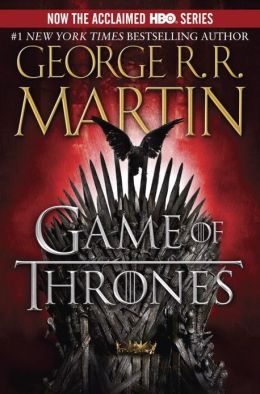
Game of Thrones by George R.R. Martin

Game of ThronesSo, I don’t normally read fantasy, but… I picked up a copy of this first book in the series A Song of Ice and Fire a few months ago when I was browsing in a bookstore and read the first few pages, just to see what all the fuss was about. I immediately bought the mass market edition, hooked by the clarity of Martin’s writing and the vivid setting. And those characters! They just jumped off the page. I took the book with me on a trip down to the British Virgin Islands last month (we should have stayed there all winter, not just 10 days) and read it obsessively.

So now I have the second book, A Clash of Kings, but I’m finding it hard to slot it in. I have a pile of library books, a bunch of books on my kindle, and some books on my nook, as well as a pile of unread books on my office bookshelves that I’m determined to read, but not just now. Starks and Lannisters await my return and I’m worried about Theon, up north at the Wall.

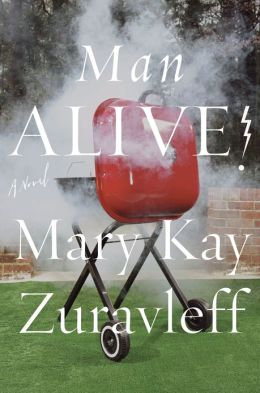
Man Alive! by Mary Kay Zuravleff

Man AliveI picked up this novel because of excellent reviews in various places (Publishers Weekly, Library Journal, and Kirkus) and was happily surprised. I’m always hoping that a good–especially a starred–review will translate into a novel I love, but it doesn’t always happen. Zuravleff has a great, zingy writing style which is fun to read.

Man Alive! (Farrar, Straus & Giroux) is a “domestic novel” which is a genre alive and well  and lately seems filled with stories of missing/kidnapped children or family secrets. Sigh. I’m tired of those plots. Man Alive! instead deals with a family literally struck by lightning and trying to recover its balance.  Dad Owen Lerner receives the blow as he puts coins into a parking meter on a blustery day; his physical and mental injuries strike deep into the heart of his family’s equilibrium. Wife Toni, college-age twins Will and Ricky, and teenage daughter Brooke find their lives spiraling away from the familiar patterns. And Owen’s not so sure that “recovery” means that he’ll be the same as before.  He develops a strange obsession with grilling meat and has less enthusiasm for his pediatric psychology career in the aftermath of his life-changing event.

In this lovely domestic novel, Zuravleff uses a family crisis to create real life on the page, characters that live and struggle in ways that are familiar to us, even if we haven’t experienced a bolt of lightning. It’s the finding of the universal in the domestic that works so well. Here’s one quote–a thought from Toni about raising three children: “With the kids, she tried to position herself midway between the poles of hovering and neglect, though it sometimes felt as if she were simply running to one pole, tagging it, and then running to the other.”  Nicely done.

Some other domestic novels that ring true, tell us something about ourselves that we maybe weren’t able to put into words:

The Grief of Others by Leah Hager Cohen (Riverhead)
When God Was a Rabbit by Sarah Winman (Bloomsbury)
A Friend of the Family by Lauren Grodstein (Algonquin Books)
Cost by Roxana Robinson (Picador)