
 I was lucky to be one of the moderators for this program last Wednesday–I love meeting authors and hearing them talk about their writing. In this case, since I had read and enjoyed all 5 books, I had a list of questions that I was burning to ask. The program was sponsored by the New York Chapter of the Women’s National Book Association, a professional networking and educational organization for people in all aspects of the book industry. The event was held at the Mint Theater, a small venue–only 100 seats–so everyone was close enough to feel that the authors were speaking directly to them. We had a wonderful discussion about writing and the writer’s life.
I’ve listed the authors and described their books below. I’ve linked the authors’ names to their websites or their publishers’ information.
Roxana Robinson, Cost (Picador, 2009) A 2009 Great Group Reads Selection
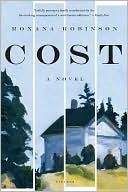 A family gathered at their Maine vacation home is torn apart by the news of one son’s heroin addiction. Robinson is a master at using shifting viewpoints to reveal old resentments and hostilities as family members cope with Jack’s destructive behavior. Robinson’s depiction of the addict, Jack, is scarily realistic; I’m sure it comes extremely close to the truth of the experience. I was especially taken by the way Robinson described the emotions of the younger brother, a mix of guilt, responsibility, and anger, but all the characters step off the page as we listen in to their thoughts.
Christina Baker Kline, Bird in Hand (Morrow, 2009)
Driving home from her friend Claire’s book launch party, Alison is involved in a car accident. She’s not at fault, exactly, but a child is killed and her feelings of guilt are overwhelming. 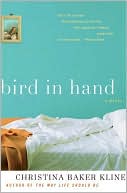 This incident sets in motion the breakup of her marriage and Claire’s. The two couples, longtime friends, have a complicated emotional history, dating back to graduate school. The structure of the novel is fascinating: each chapter is written from the point of view of one of the four characters, but interspersed are short chapters which unwind in reverse chronological order, tracing the history of the relationships. The effect is like opening box after revealing box as we learn more about each character; at the conclusion they stand revealed.
Eva Hoffman, Appassionata (Other Press, 2009) A 2009 Great Group Reads Selection
 Isabel, a concert pianist, has an affair with a mysterious Chechnyan who is either a freedom fighter or a terrorist, depending on your point of view. The affair with Anzor forces her to re-examine her beliefs about passion, politics, and art. In gorgeous prose, Hoffman contemplates the violence of our age and issues of guilt and responsibility. I found echoes of Henry James’s Portrait of a Lady in this novel (note the name of the protagonist) and heard echoes of Yeats’s Second Coming. This would be a great book for group discussion! I loved Eva Hoffman’s memoir, Lost in Translation, about her feelings of loss when she moved from Poland to Canada as a young teen. It’s a great coming of age memoir.
Julie Metz, Perfection: A Memoir of Betrayal and Renewal (Voice, 2009) A 2009 Great Group Reads Selection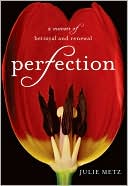
When Metz’s husband dies unexpectedly, she uncovers a trail of infidelities, exposing years of manipulation and self-deception. Her anger and obsession to uncover the truth make this an unusually candid and courageous memoir. Metz really bares her soul–and her anger–in this account in a way not often found in memoirs about marriage.
C.M. Mayo, The Last Prince of the Mexican Empire (Unbridled Books, 2009)
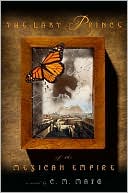 Mayo has taken a little-known incident in the history of Mexico and fleshed out the characters and the times in a broad, lush style. We may remember learning in school about the Emperor Maximilian and his wife Carlota, the (ultimately) mad Empress, who ruled Mexico for a short while after France’s misguided invasion. It all seemed a rather bizarre historical footnote; what we didn’t know is that Maximilian and Carlota were given a young Mexican child whom they designated as their heir. The story of this child, Agustin, and how his parents allowed him to be taken away by the royal couple, is quite a remarkable story. Mayo, a longtime resident of Mexico, researched this story for years, in archives in North and South America.
 A Reader's Place